The recent protest against heavy traffic on the roads has been marred by acts of railway sabotage. This contradiction diverts focus from the real problem: the lack of viable alternatives to road freight transport. While governments preach the green transition, their infrastructure continues to prioritize diesel trucks over an obsolete, unelectrified railway.
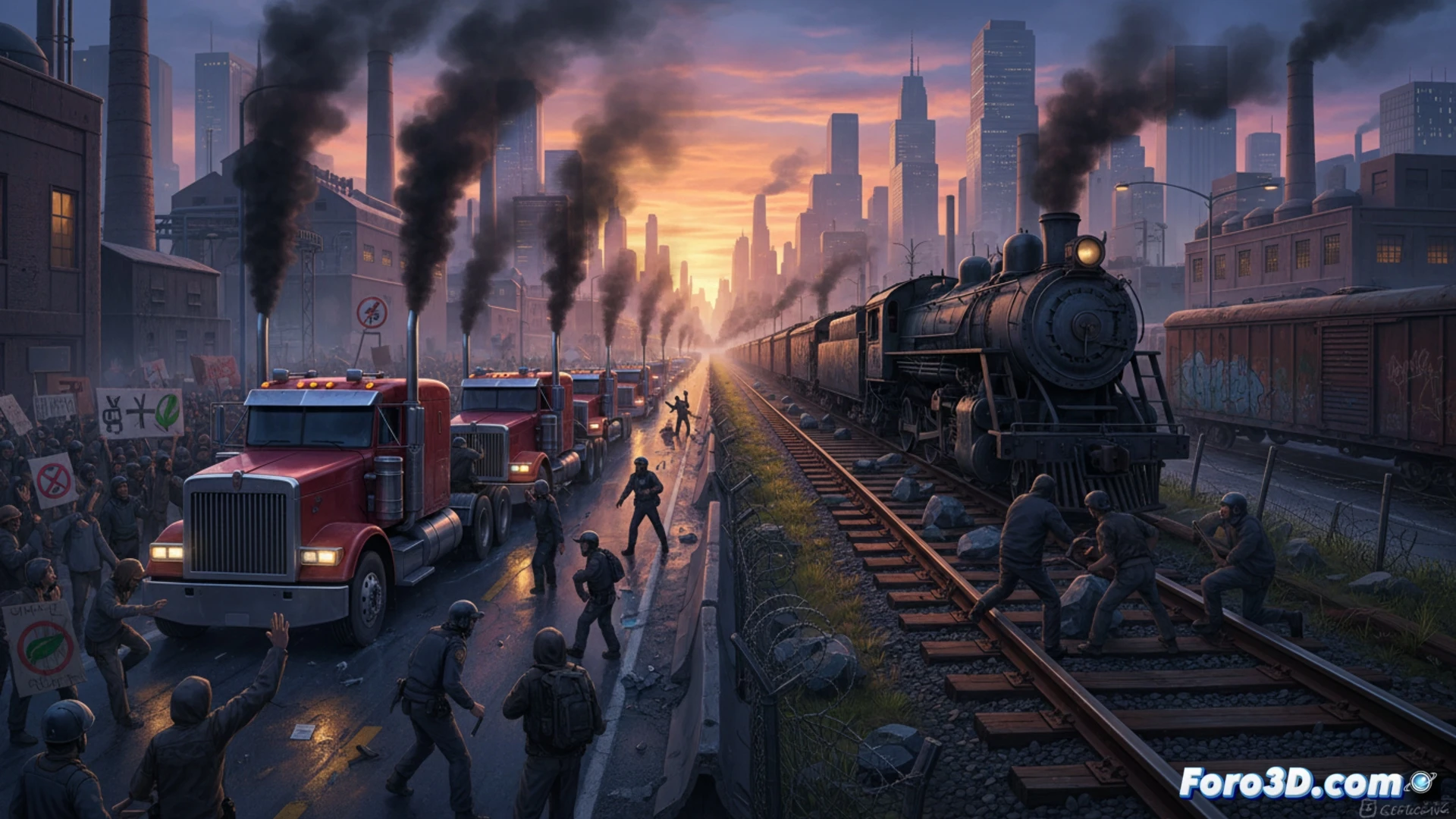
The missing railway technology: electrified and efficient corridors 🚆
The technical solution involves developing electrified railway corridors capable of absorbing freight traffic. This means modernizing tracks, installing catenaries, and optimizing intermodal logistics. However, public investment goes toward expanding highways, perpetuating dependence on trucks. An electric train can move a ton of cargo with 75% fewer emissions than a truck. The technology exists; the political will, not so much.
Selective environmentalism: protesting against smoke and then burning the tracks 🔥
It's curious: some peacefully demonstrate against truck pollution, while others decide the best way to defend the planet is to set fire to railway ties. Perhaps the next step will be to block a solar plant to protest climate change. In the end, between sabotage and roadblocks, the only one who doesn't pollute is the citizen who stays home watching the chaos.