EVR Studio has presented Project TH, an ambitious 1:1 recreation of the city of Seoul developed in Unreal Engine 5. The project impresses not only with its urban scale, but also with the integration of hyperrealistic digital characters. The key lies in a pipeline that combines facial scanning of real actors with Metahuman technology, seeking to break the uncanny valley barrier. 🏙️
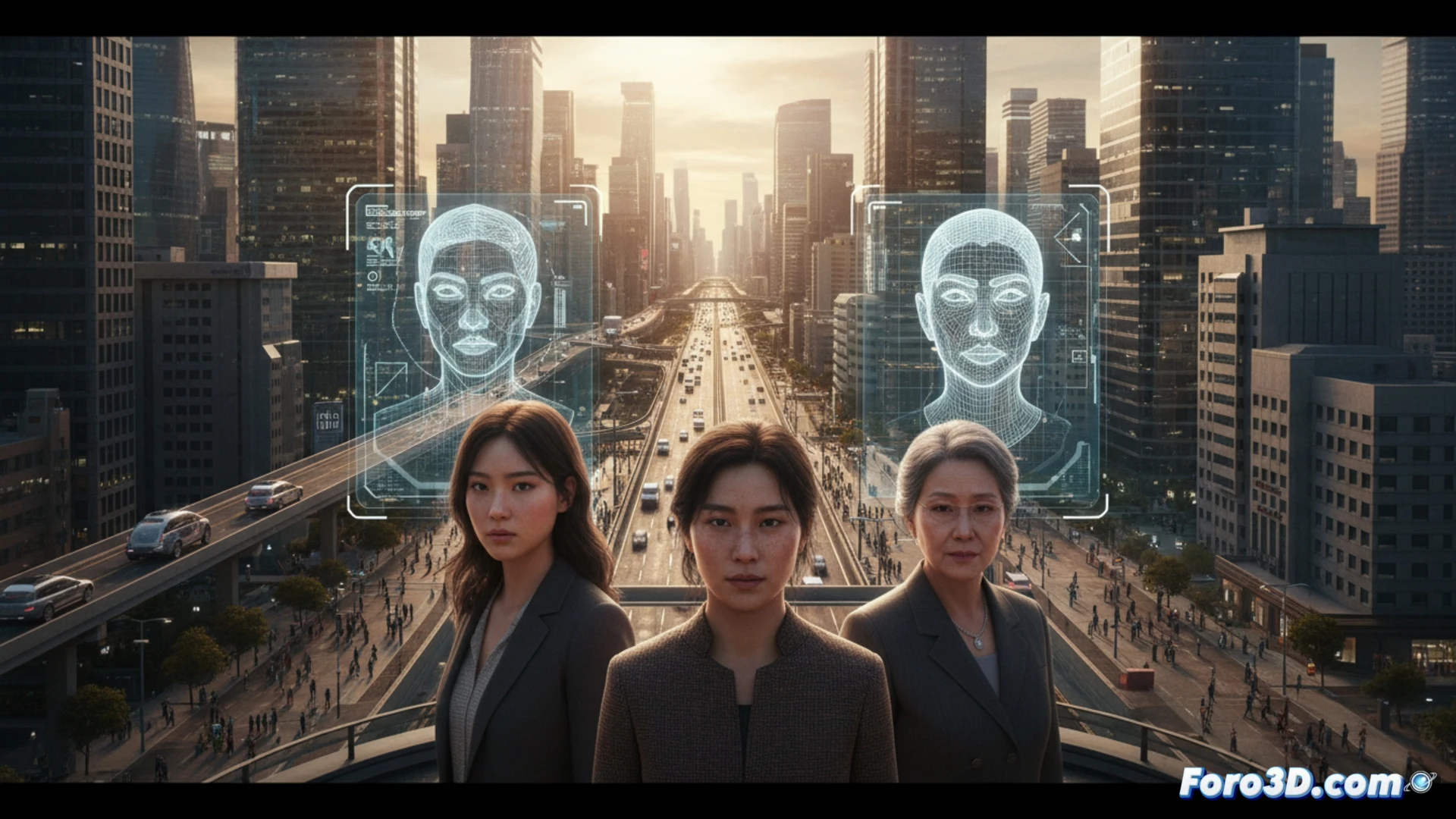
Technical pipeline: from facial capture to procedural city 🎭
The process begins with volumetric capture of real actors using high-resolution scanners. This data is processed in Maya to refine geometry and textures, before being imported into the Metahumans ecosystem in Unreal Engine 5. There, the assets are optimized for real-time animation. In parallel, the studio uses its own software CitiGen to procedurally generate the city, populating the scene with these avatars. The result is an environment where Unreal Engine 5's global illumination and Lumen system treat the characters as physical elements, integrating shadows and reflections that eliminate the typical visual disconnect of NPCs.
The challenge of realism in digital humanoids 🤖
The true innovation of EVR Studio is not just technical, but conceptual. By mapping human micro-expressions onto a digital model in a photorealistic environment, the studio forces the viewer to question whether what they see is real or simulated. This approach, applied to entertainment and military simulation, demonstrates that the key to overcoming the uncanny valley lies not only in graphical detail, but in the coherence between the character, the lighting, and the world around it.
Considering the level of detail required for a 1:1 recreation of a city like Seoul, how far is current technology from being able to automatically generate and populate that environment with digital humanoids that faithfully replicate the facial expressions and body language of its real inhabitants without massive manual intervention?
(PS: Digital humanoids have the advantage that they never complain about the rigging.)