The recent announcement of Project Skyline, NCSOFT's MMORPG set in the Horizon universe, marks a technical milestone by betting on Unreal Engine 5 with Nanite as its visual cornerstone. The promise of recreating Guerrilla Games' iconic robotic machines with cinematic fidelity in a persistent and massive world poses an unprecedented optimization challenge for video game development.
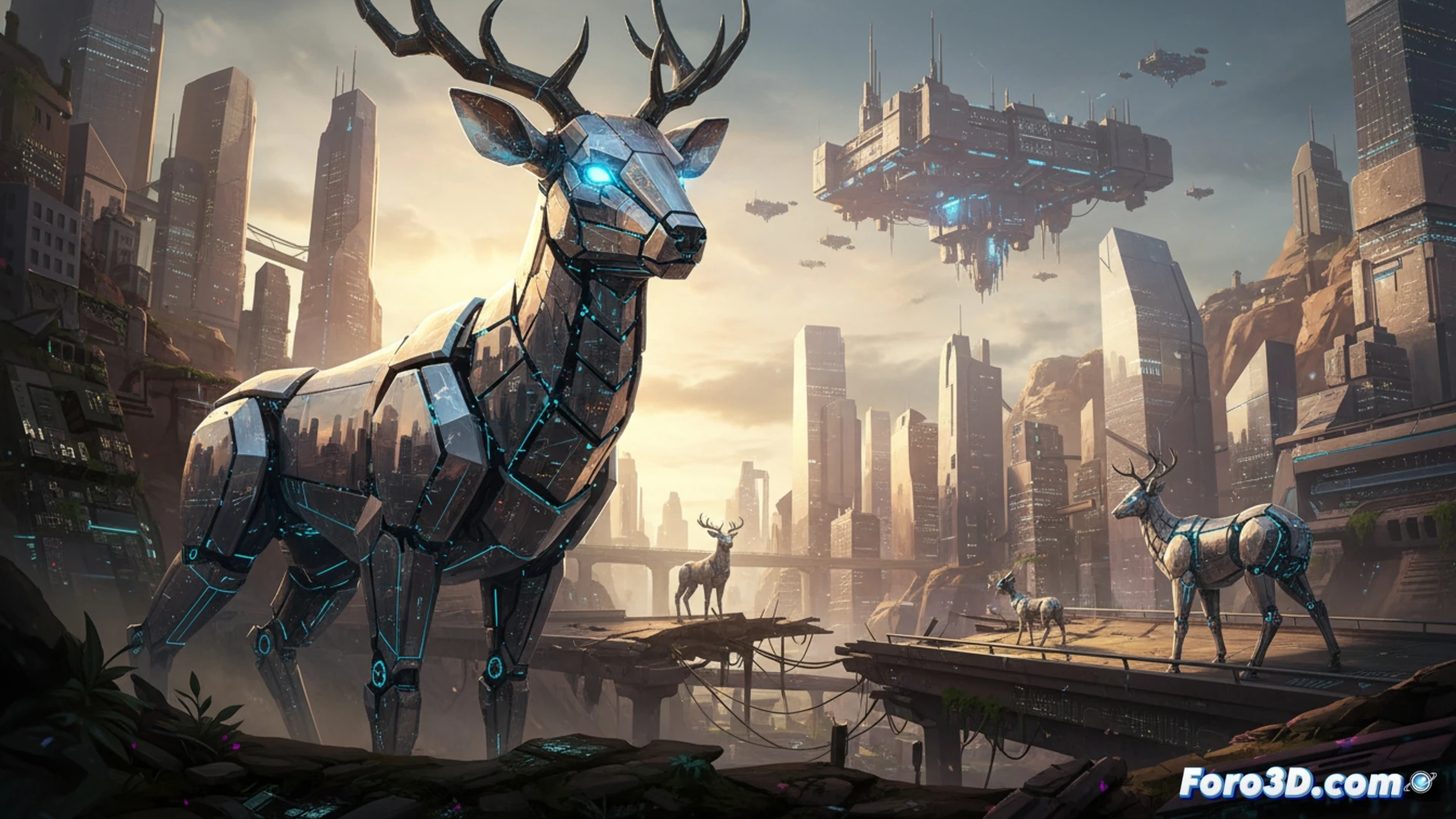
Technical Pipeline: From ZBrush to Unreal Engine 5 🛠️
The workflow between Maya and ZBrush for asset creation faces a unique challenge. Traditionally, MMOs sacrifice high-definition geometry to maintain performance on servers with hundreds of players. However, Nanite allows for the direct import of high-polygon meshes, eliminating the need for normal maps and manual LODs. Collaboration with Guerrilla Games is key here, as their expertise in designing complex biomechanical machinery (with gears, cables, and reflective materials) must be translated into a pipeline that respects the artistic heritage without collapsing the real-time game engine.
The Dilemma of Real-Time Scale ⚙️
The real challenge is not static quality, but the dynamics of an MMO. While Horizon Forbidden West controls the loading of each machine linearly, Project Skyline must manage dozens of simultaneous robotic creatures with Lumen lighting and destruction physics. The key will be how NCSOFT balances the use of Nanite for backgrounds and nearby creatures with aggressive culling systems for distant objects. If they manage to maintain stable 60 fps on mid-range PCs, this project could redefine the graphical standard for massively multiplayer games.
How does the implementation of Nanite in Project Skyline affect performance optimization in an MMO with massive open worlds like Horizon's?
(PS: game jams are like weddings: everyone is happy, no one sleeps, and you end up crying)