The announcement of Project Sirius, the spin-off of The Witcher developed in Unreal Engine 5, marks a visual turning point for the saga. Unlike the realistic and dense style of the original trilogy, this new title bets on a more stylized and vibrant artistic direction. The use of Lumen and Nanite allows developers to create dynamic lighting and detailed geometry without sacrificing performance, opening the door to worlds that react in real-time to light and destruction.
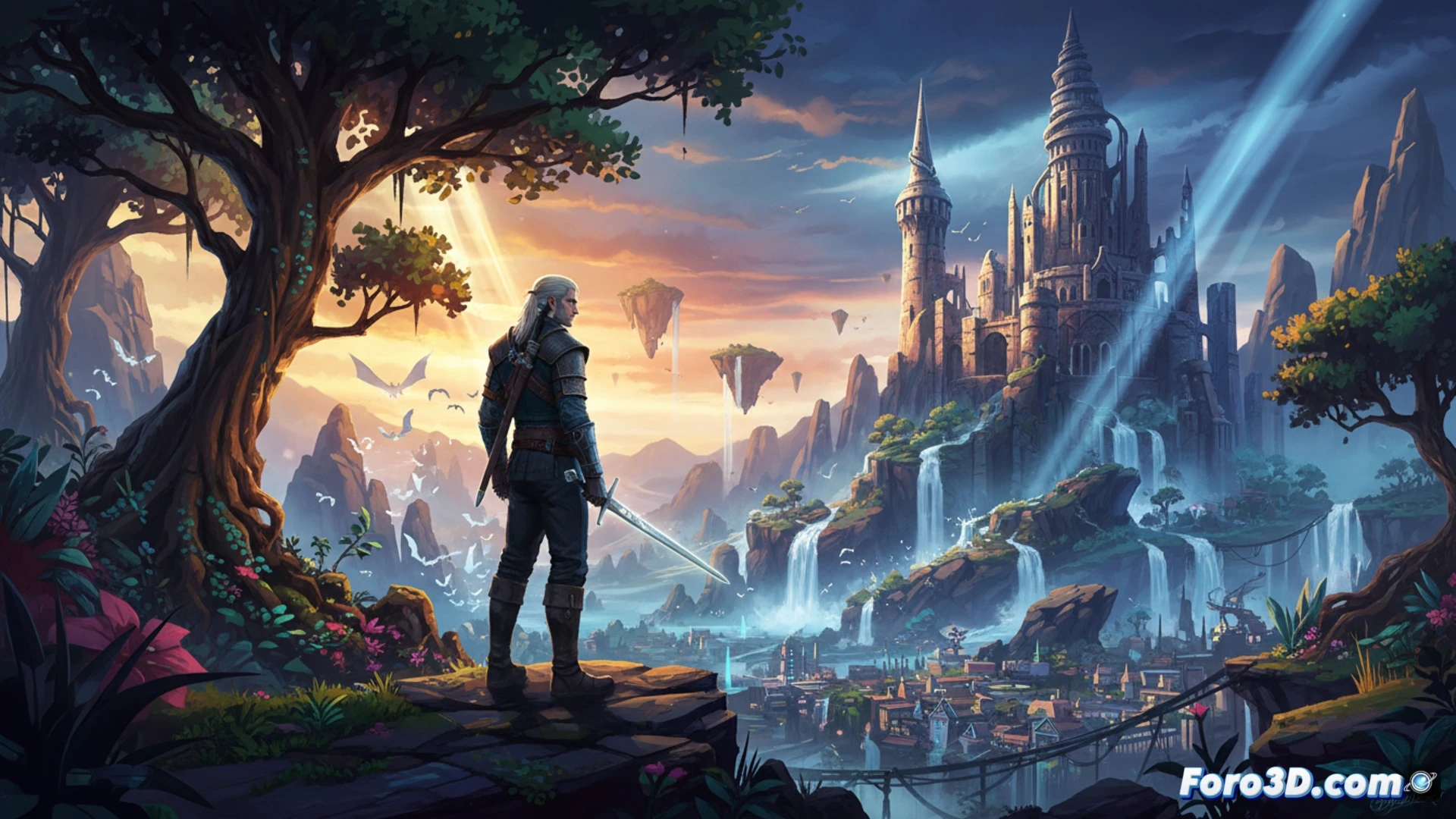
Technical pipeline: Houdini, Substance, and the power of UE5 🎨
The production of Project Sirius relies on a pipeline that combines Houdini's procedural generation, Substance Painter's detailed texturing, and final integration in Unreal Engine 5. Houdini allows artists to create terrains, ruins, and complex vegetation through algorithms, which are then imported into UE5 without losing quality thanks to Nanite. Substance Painter adds layers of wear, dirt, and PBR materials that respond to Lumen's light. The result is a workflow that reduces iteration times and allows small studios to achieve AAA quality, as the engine automatically manages levels of detail and indirect lighting.
Lessons for independent developers 🚀
Project Sirius demonstrates that current technology is not an obstacle, but an ally for creativity. For an independent developer, adopting UE5 with Lumen and Nanite means being able to focus on artistic design and narrative, delegating complex tasks like light baking or polygon optimization to the engine. The combination with external tools like Houdini and Substance not only speeds up production but also allows maintaining a unique visual identity. The future of video game development lies in understanding that technique must serve the vision, and not the other way around.
How Unreal Engine 5's new real-time rendering tools allow Project Sirius to translate the dark and detailed atmosphere of The Witcher into a more interactive and dynamic open world than in previous installments
(PS: game jams are like weddings: everyone is happy, nobody sleeps, and you end up crying)