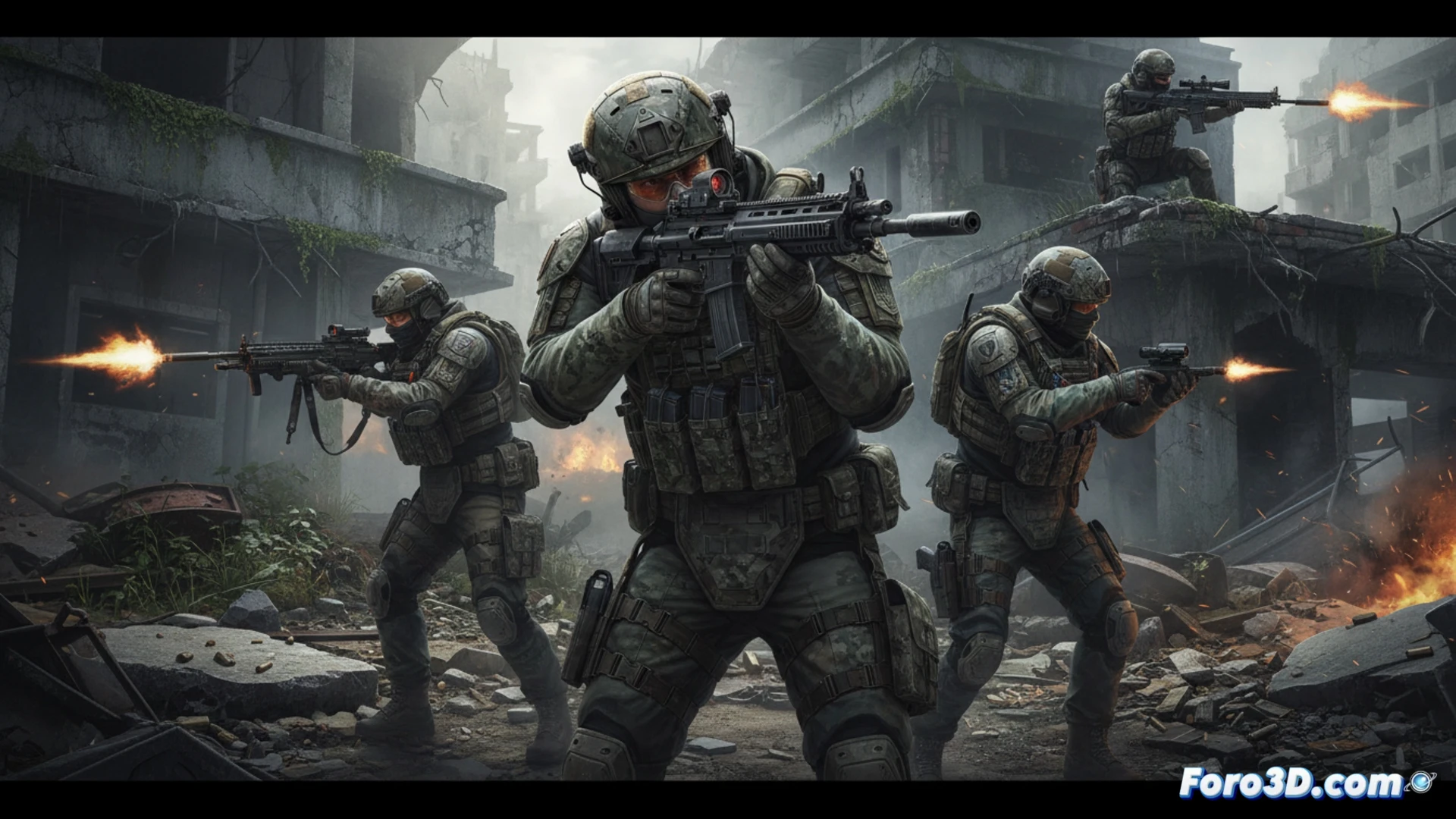
NetEase Games has unveiled Project: Sharp, an ambitious modern tactical combat title that aims to redefine real-time graphical standards. Developed on Unreal Engine 4, the project places extreme emphasis on ballistic representation and weapon materials. The production pipeline combines Maya, ZBrush, and Adobe Substance Suite to build assets that rival cinema, demonstrating how shader optimization and high-density geometry can function in interactive environments without sacrificing performance.
Asset pipeline and ballistic materials 🎯
To achieve photorealism, Project: Sharp employs a detailed sculpting workflow in ZBrush, transferred to Maya for retopology and UV unwrapping. The Substance suite handles PBR texture generation, applying specific wear and reflectance for modern weapon metals and polymers. In Unreal Engine 4, anisotropic shading is implemented to simulate steel scratching, and micro-occlusion maps for gunpowder residue. The emphasis on ballistics is not just visual: impact particles and penetration decals are calculated through physical collisions, integrating appearance with game mechanics for an immersive and believable experience.
Technical lessons for AAA developers 🛠️
This case study reinforces that photorealism in tactical combat does not rely solely on raw power, but on a disciplined pipeline. The key lies in coherence between high-resolution sculpting (ZBrush), polygonal optimization (Maya), and dynamic materials (Substance). For studios aiming for this level of detail, Project: Sharp demonstrates that investing in weapon wear simulation and realistic particle systems is as crucial as global illumination. The result is a technical standard where every shot counts both in gameplay and visual fidelity.
What real-time optimization techniques is NetEase Games using in Project Sharp to balance tactical photorealism with competitive performance in Unreal Engine 4?
(PS: 90% of development time is polishing, the other 90% is fixing bugs)