Lionheart Studio has revealed Project Q, a Norse-themed MMORPG that promises to redefine realism in Scandinavian landscapes. Developed with Unreal Engine 5, the title combines ZBrush's high-precision sculpting with Quixel Megascans' photorealistic library. This technical analysis breaks down the workflow used to achieve environments that rival photography, optimized for real-time rendering.
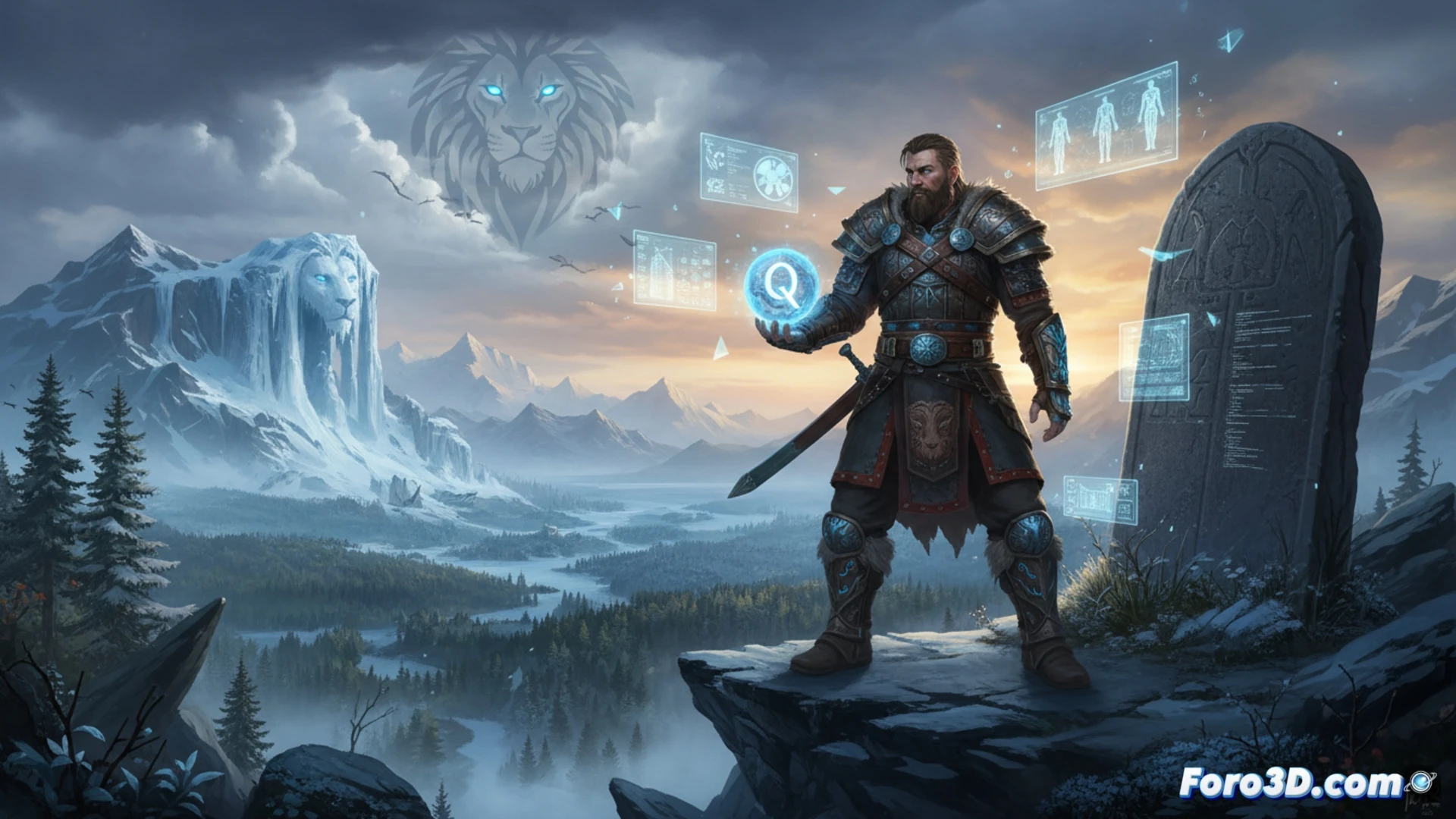
Workflow: Sculpting, Texturing, and Real-Time Optimization 🛠️
The process begins in ZBrush, where artists sculpt rock formations, vegetation, and Nordic architectural details with a resolution of millions of polygons. These meshes are retopologized and exported to Unreal Engine 5, where Quixel Megascans provides 8K textures captured from real environments, such as Scandinavian moss, snow, and granite. The key to photorealism lies in the integration of Lumen, which calculates dynamic global illumination, and Nanite, which allows rendering the sculpted models without loss of detail. The result is a landscape where every shadow and reflection responds to ambient light, eliminating texture popping and maintaining stable 60 fps on high-end hardware.
The Challenge of Photorealism in Persistent Worlds 🌍
Although the combination of ZBrush and Megascans is effective for static environments, Project Q faces the challenge of scaling this realism to an MMORPG with hundreds of simultaneous players. Optimizing Lumen in open scenes and managing Nanite's memory will be crucial to avoid performance drops. If Lionheart Studio manages to maintain visual consistency in massive areas like fjords or snowy forests, Project Q could set a new technical standard for online games, demonstrating that photorealism is not at odds with persistent gameplay.
How does Lionheart Studio manage to balance the extreme photorealism of Nordic landscapes with the optimal performance required for a massive MMORPG in UE5?
(PS: optimizing for mobile is like trying to fit an elephant into a Mini Cooper)