Neople has unveiled Project Over, an ambitious title that brings the frenetic action of Dungeon & Fighter into a three-dimensional world. Developed in Unreal Engine 4, the project seeks to capture the essence of the original 2D combat through detailed environments and kinetic effects. The adaptation involves not just a change in perspective, but a complete redesign of the graphics pipeline to maintain the fluidity and intensity that characterize the franchise, using tools like 3ds Max and After Effects to achieve a polished visual finish.
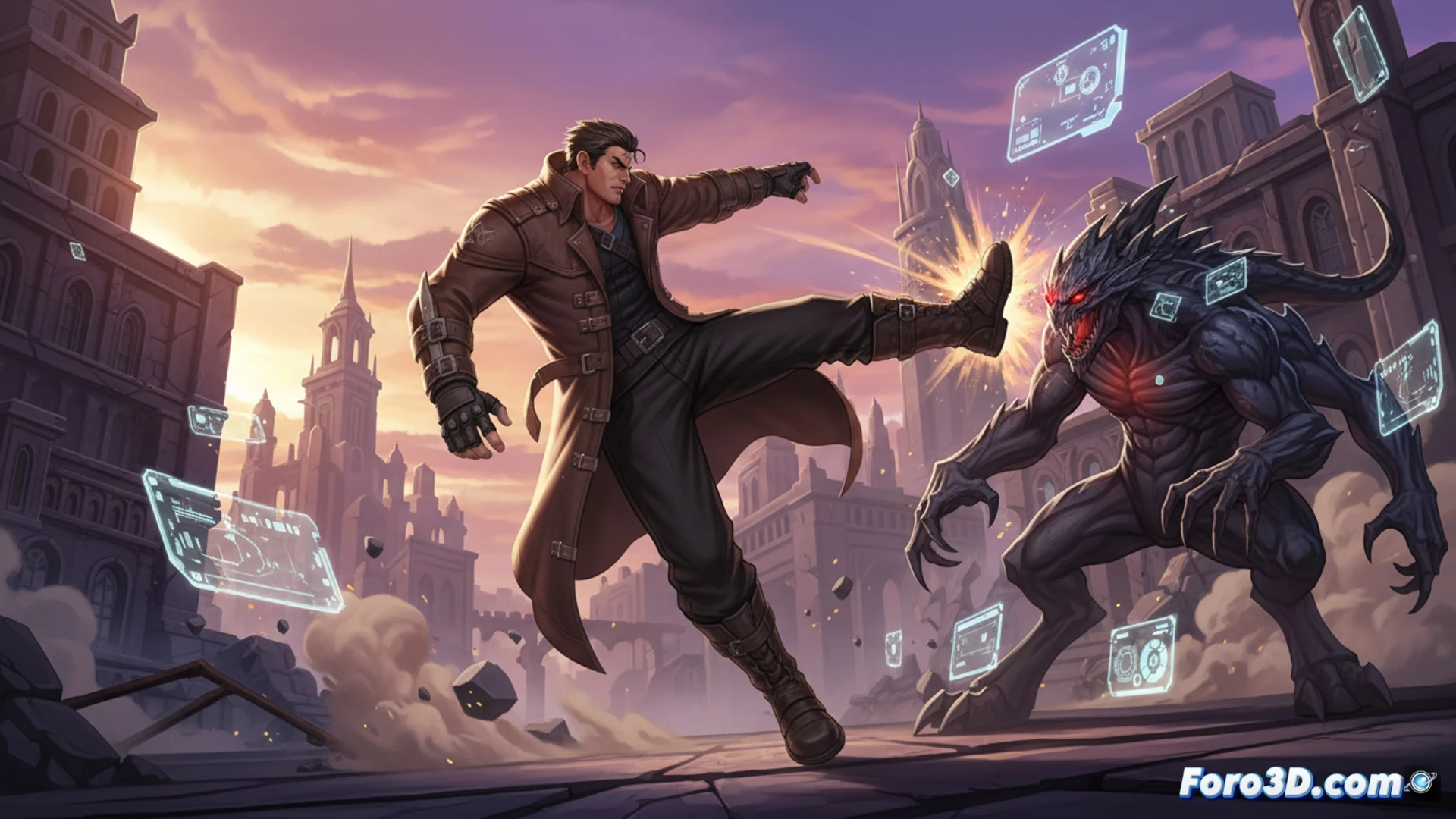
Technical Pipeline: Modeling, Integration, and Real-time VFX 🎮
The workflow begins in 3ds Max, where characters and environments are modeled with a high level of polygonal detail, optimizing topology for combat animation. These assets are imported into Unreal Engine 4, where materials and particle systems are configured. For VFX, After Effects is used in the post-processing phase to generate sprite textures and flash effects, which are then integrated as flipbooks in the engine. This hybrid approach allows Neople to maintain the vibrant aesthetic of Dungeon & Fighter while leveraging the dynamic lighting and shaders of UE4 to simulate impacts, slashes, and explosions with immediate kinetic response.
The Challenge of the 2D to 3D Transition ⚔️
The greatest technical challenge lies in preserving the sense of impact and speed of a 2D beat'em up within a three-dimensional space. Neople has implemented recovery animations and combo cancelations that depend on precise rigging in 3ds Max. Additionally, the camera behaves dynamically, zooming in during critical hits to emulate the visual clarity of the original. Project Over demonstrates that a franchise with roots in pixel art can evolve without losing its identity, as long as the technical pipeline prioritizes visual response and performance optimization.
How does the transition from the original Dungeon & Fighter, based on 2D sprites and precise side-scrolling combos, affect combat design and gameplay identity in Project Over when implementing a 3D system with Unreal Engine 4?
(PS: optimizing for mobile is like trying to fit an elephant into a Mini Cooper)