The recent announcement of Project: N, the Dungeon & Fighter spin-off developed by Nexon, has reignited interest in 2.5D rendering techniques in the industry. This title not only bets on the frenetic action characteristic of the saga but also implements a hybrid visual pipeline where three-dimensional models created in 3ds Max are textured and post-processed to emulate the appearance of a hand-painted animated frame. We analyze the technical workflow that enables this effect. 🎮
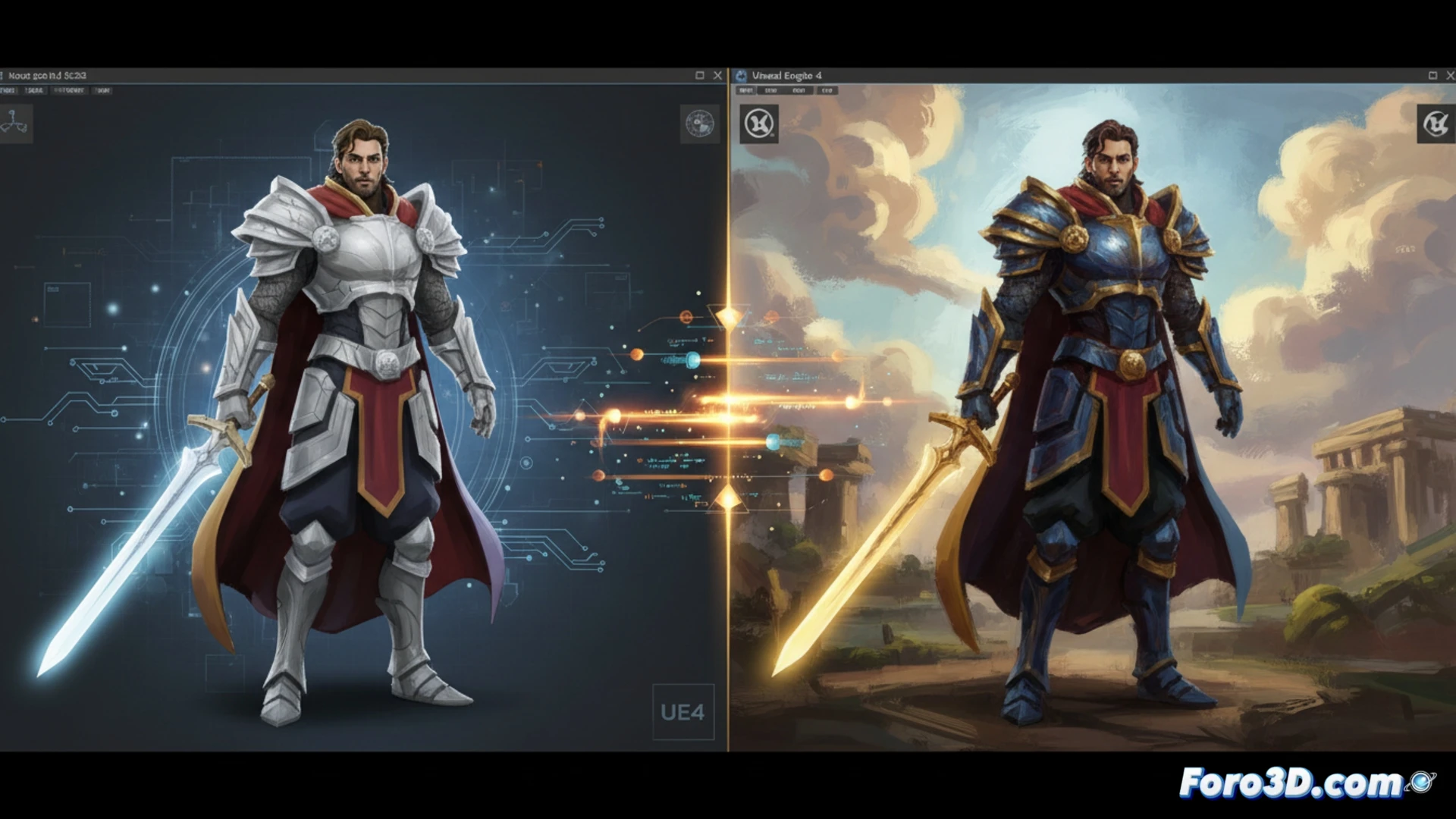
Technical Pipeline: From 3ds Max to After Effects in Real Time 🖌️
The artistic process of Project: N begins in 3ds Max, where modelers build characters and environments with polygonal geometry optimized for Unreal Engine 4. However, the secret lies in the treatment of textures. Instead of realistic normal maps, assets are exported with flat light maps and retouched in Photoshop to apply digital brushstrokes and irregular edges that simulate ink. Subsequently, After Effects is used to generate 2D animation spritesheets from 3D renders, capturing fixed angles that the game engine combines with dynamic lighting. UE4 handles this duality through custom shaders that apply an ink outline post-processing effect and a limited color palette, ensuring that 3D movement does not break the pictorial illusion.
The Value of Visual Restriction in Game Development 🎯
Nexon's decision to limit camera freedom to a 2.5D plane is not a step backward but a smart design choice. By restricting the perspective, developers can focus the performance budget on particle effects and combat animations, while hand-painted 2D art avoids the graphical obsolescence that many realistic 3D titles suffer years after their release. Project: N demonstrates that the fusion of tools like 3ds Max and After Effects, orchestrated by a modern engine like UE4, remains a viable path to creating memorable visual identities without the need for hyper-realism.
As a video game developer, what lighting and post-processing techniques in Unreal Engine 4 do you recommend to make a 3D model, like that of Project: N, faithfully simulate a 2.5D pictorial aesthetic without losing three-dimensional depth?
(PS: game jams are like weddings: everyone is happy, no one sleeps, and you end up crying)