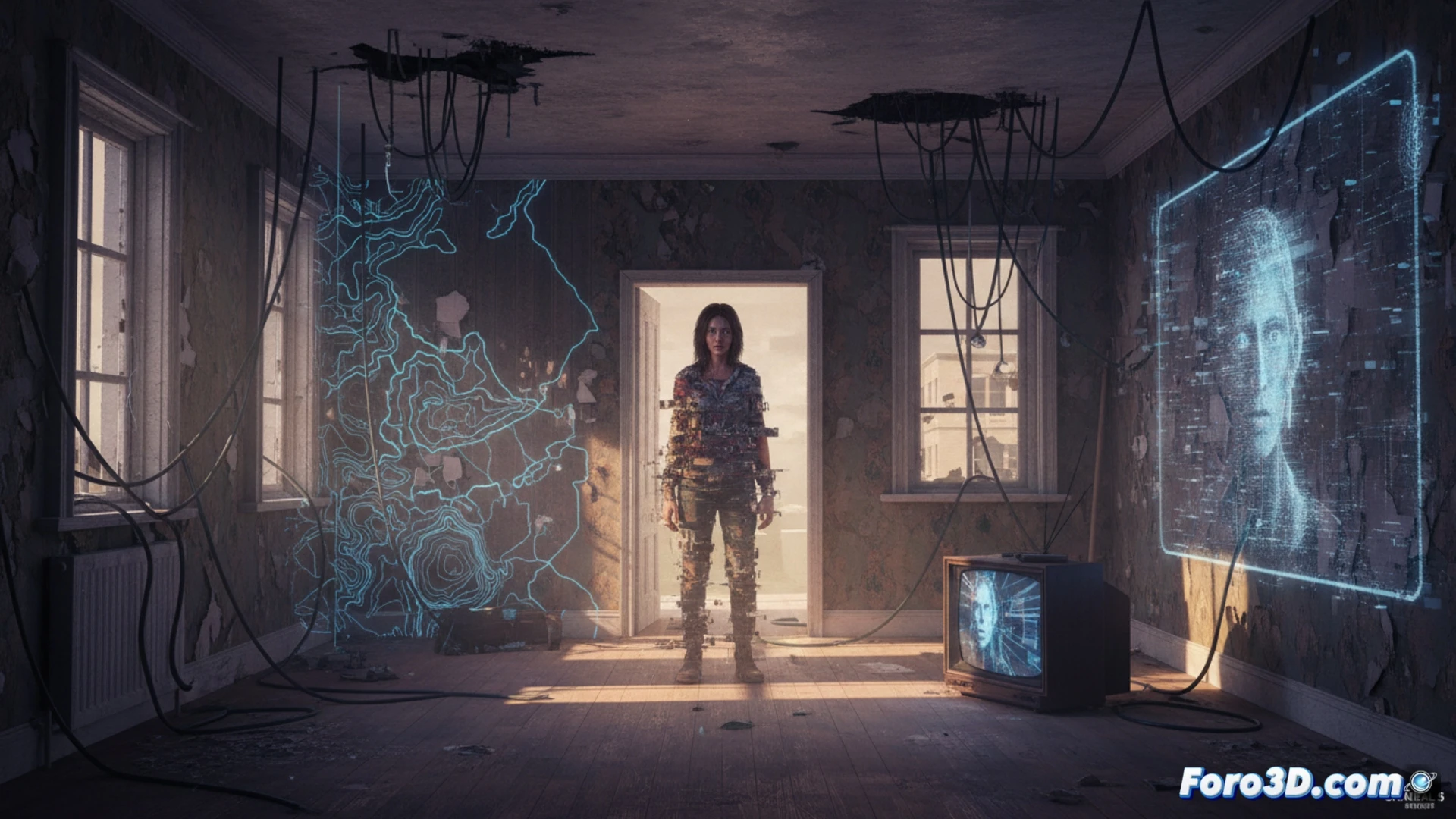
Ninja Theory has pushed realism to the limit with Project: Mara, an experimental narrative experience developed in Unreal Engine 5. The studio bets on a workflow based on LIDAR scanning and high-precision photogrammetry to capture real environments and replicate them digitally. The goal is not just to show stunning graphics, but to generate a psychological immersion that blurs the line between the real and the virtual. This approach redefines how sets are built in video game development. 🎮
Technical workflow: LIDAR, photogrammetry, and advanced audio 🔧
The process begins with capturing real spaces using high-resolution LIDAR scanners, which record the exact geometry of each surface, including cracks, textures, and depths. Subsequently, photogrammetry takes hundreds of images from multiple angles to generate albedo and normal maps with sub-millimeter detail. This data is imported into Unreal Engine 5, where Nanite's capabilities are leveraged to render millions of polygons without performance loss. Lumen's dynamic lighting reinforces the sense of realism, while advanced audio (with binaural recordings and acoustic modeling of the real space) synchronizes sounds with the player's position, creating a layer of auditory immersion that complements visual fidelity.
Narrative impact: when realism is the story 🧠
Project: Mara demonstrates that extreme realism is not a mere technical adornment, but a narrative tool. By replicating a real apartment with its imperfections, shadows, and everyday sounds, the game explores themes of paranoia and mental health. Every captured detail—from dust on a table to the echo of a hallway—becomes an active element of the plot. Ninja Theory makes the player question what they see and hear, using technology not to impress, but to unsettle. This is the future of video game development: technology at the service of psychology.
What real-world data capture and Unreal Engine 5 processing techniques does Ninja Theory use in Project: Mara to achieve an extreme level of realism in the representation of interior spaces and the character's psychology?
(PS: game jams are like weddings: everyone is happy, no one sleeps, and you end up crying)