MercurySteam, the studio behind the Metroid series: Samus Returns and the acclaimed Metroid Dread, has revealed details of its next internal project, known as Project Iron. This dark fantasy title promises exceptional visual fidelity in armor and medieval environments, thanks to the combination of its proprietary engine with standard industry tools like Maya and ZBrush. We analyze the technical pipeline that enables this graphical leap. 🎮
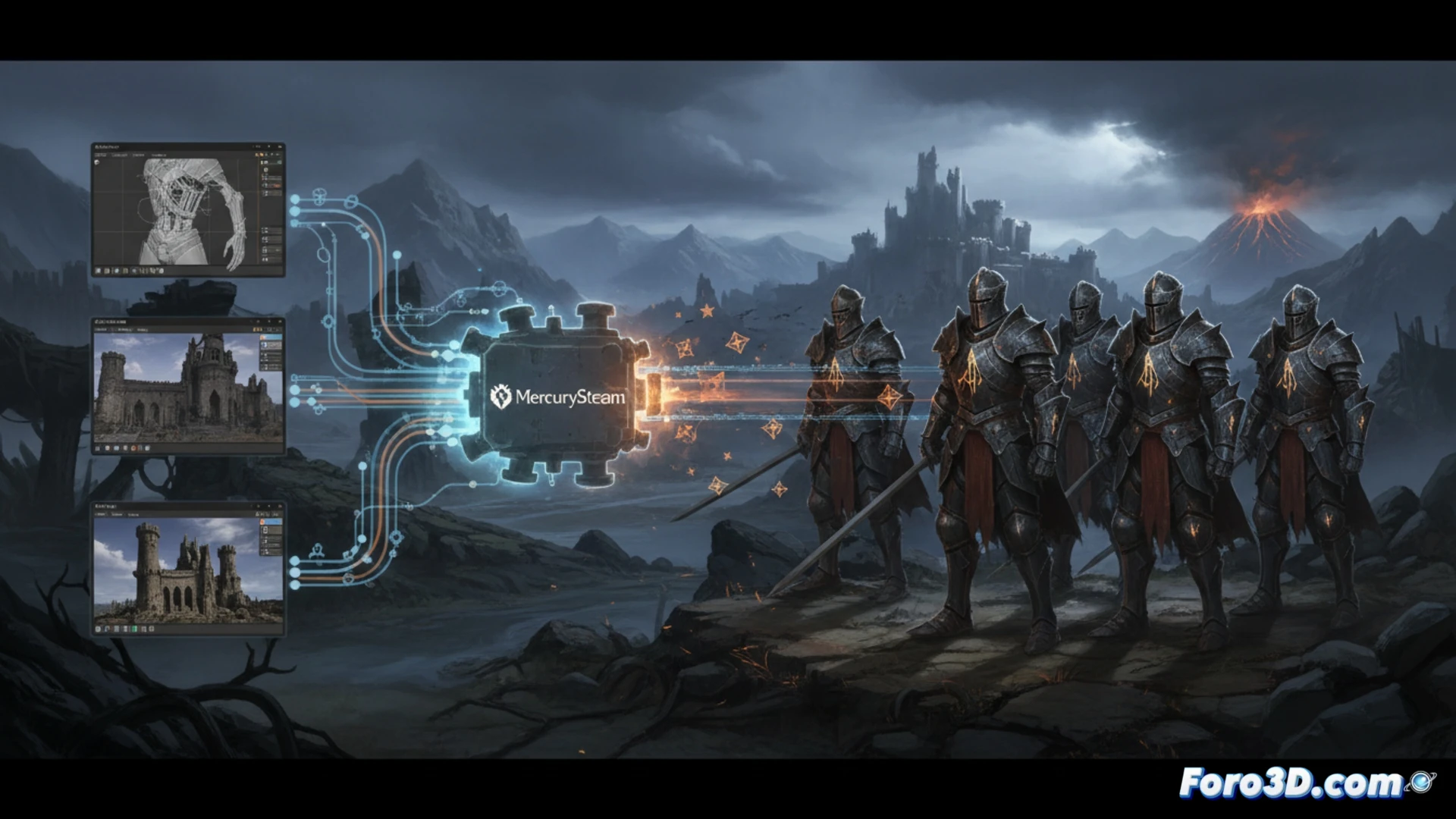
Asset pipeline: From ZBrush to Maya and the proprietary engine 🛡️
MercurySteam's workflow for Project Iron focuses on high-resolution sculpting in ZBrush to capture every detail of the armor, from metal reliefs to wear textures. Subsequently, the models are retopologized and prepared for animation in Maya, where rigging and UVs are applied. The studio's proprietary engine, optimized for real-time, uses normal maps and ambient occlusion generated directly from the ZBrush sculptures. This allows maintaining the hyper-realistic appearance of the assets without sacrificing performance on consoles and PCs, making the medieval environments and armor look dense and tactile.
Optimization and the art of dynamic lighting 💡
The key to Project Iron's visual success lies in how the proprietary engine manages dynamic lighting on the created assets. Instead of relying solely on static textures, the team uses internal tools to calculate real-time light bounces on metallic surfaces and stone environments. Maya is used for scene layout and pre-visualization of global illumination, while the engine interprets that data to generate soft shadows and precise reflections. This technical approach ensures that the dark fantasy atmosphere remains consistent in every corner of the game.
How MercurySteam manages the transition from a technical pipeline optimized for linear and exploration titles like Metroid Dread to the needs of an open world and more complex game systems in Project Iron, without compromising performance or the visual identity of its dark fantasy
(PS: a game developer is someone who spends 1000 hours making a game that people complete in 2)