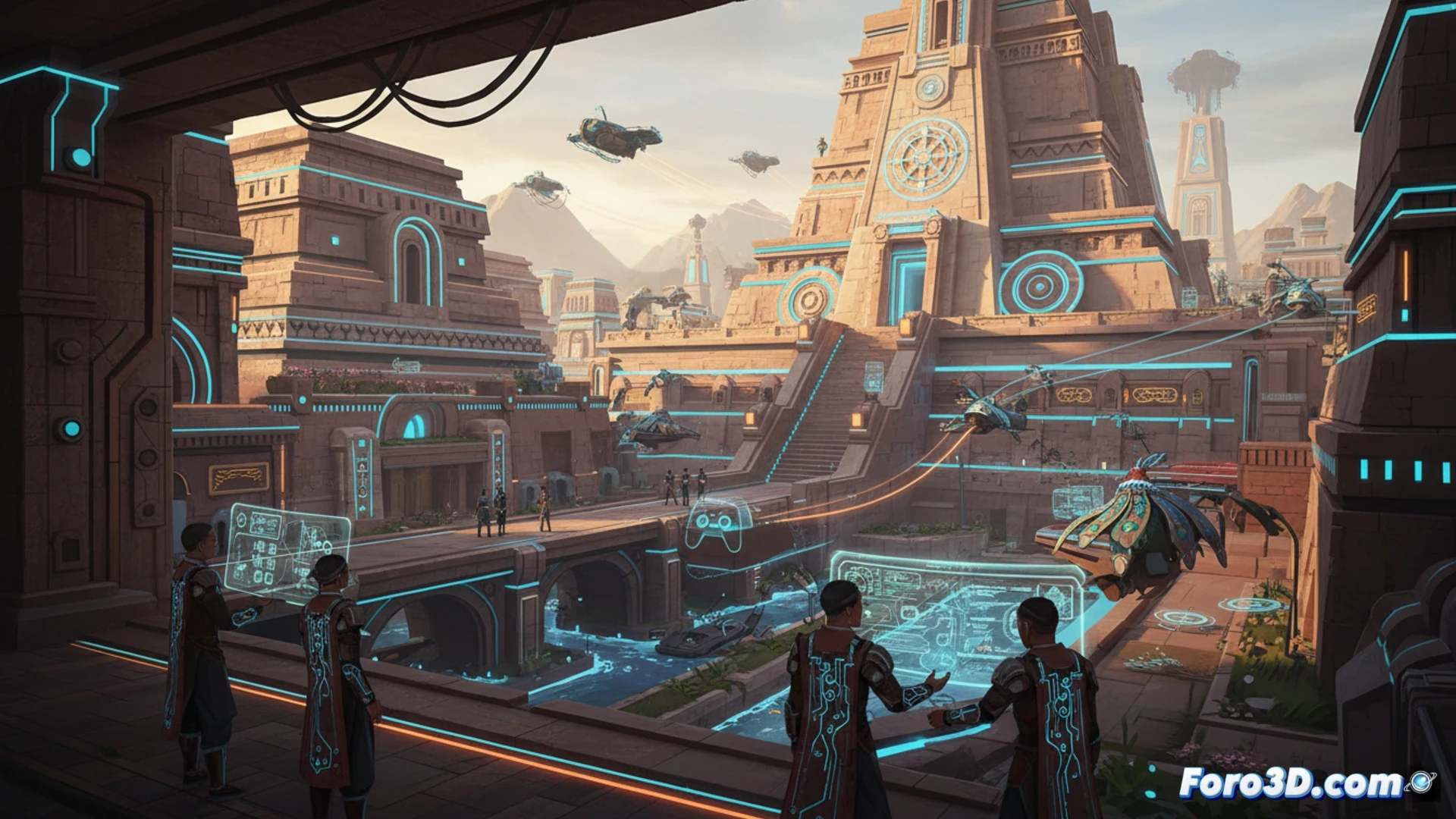
SuperGaming has unveiled Project: Indus, an ambitious title that seeks to capture the essence of the Indian subcontinent through a visual style called Indo-futurism. The project, developed in Unity and powered by the proprietary Indus Engine, focuses on delivering a rich visual experience without sacrificing performance on mid-range mobile devices. The key to development lies in an optimized asset pipeline and aggressive memory management.
Technical pipeline: Blender, Unity, and the Indus Engine 🎮
The workflow of Project: Indus relies heavily on Blender for creating 3D models and textures. To achieve the Indo-futuristic aesthetic, the team uses normal map baking and ambient occlusion techniques directly in Blender, reducing the real-time polygon load. Subsequently, the Indus Engine, a customization layer over Unity, implements a dynamic LOD (Level of Detail) system and software-based occlusion culling. This allows detailed characters and environments, featuring specific cultural elements, to render smoothly on chipsets like the Snapdragon 600 or 700 series. Additionally, the integration of SuperPlatform manages data persistence and social connectivity without affecting the main rendering thread.
Lessons for mobile developers 📱
Project: Indus demonstrates that cultural identity can be a graphical pillar without being a technical burden. SuperGaming's decision not to rely exclusively on high-resolution PBR (physically based) textures, but to combine them with flat colors and defined silhouettes, is a lesson in efficiency. For indie developers, using Blender as a pre-optimization tool and creating a hybrid engine on top of Unity are replicable strategies to reach a mass audience without sacrificing the game's visual personality.
What optimization techniques for mobile devices is Project Indus implementing to maintain the visual fidelity of Indo-futurism without sacrificing performance on low and mid-range hardware?
(PS: a game developer is someone who spends 1000 hours making a game that people complete in 2)