NCSoft has unveiled Project: G, an ambitious real-time strategy MMO that breaks away from the traditional aesthetic of the genre. Unlike classic titles with simplified units, this project bets on a level of detail typical of a third-person action game. The Unreal Engine 5 graphics engine, along with Houdini's procedural pipeline and classic 3ds Max modeling, are the technical pillars enabling this unprecedented visual leap in a massive RTS.
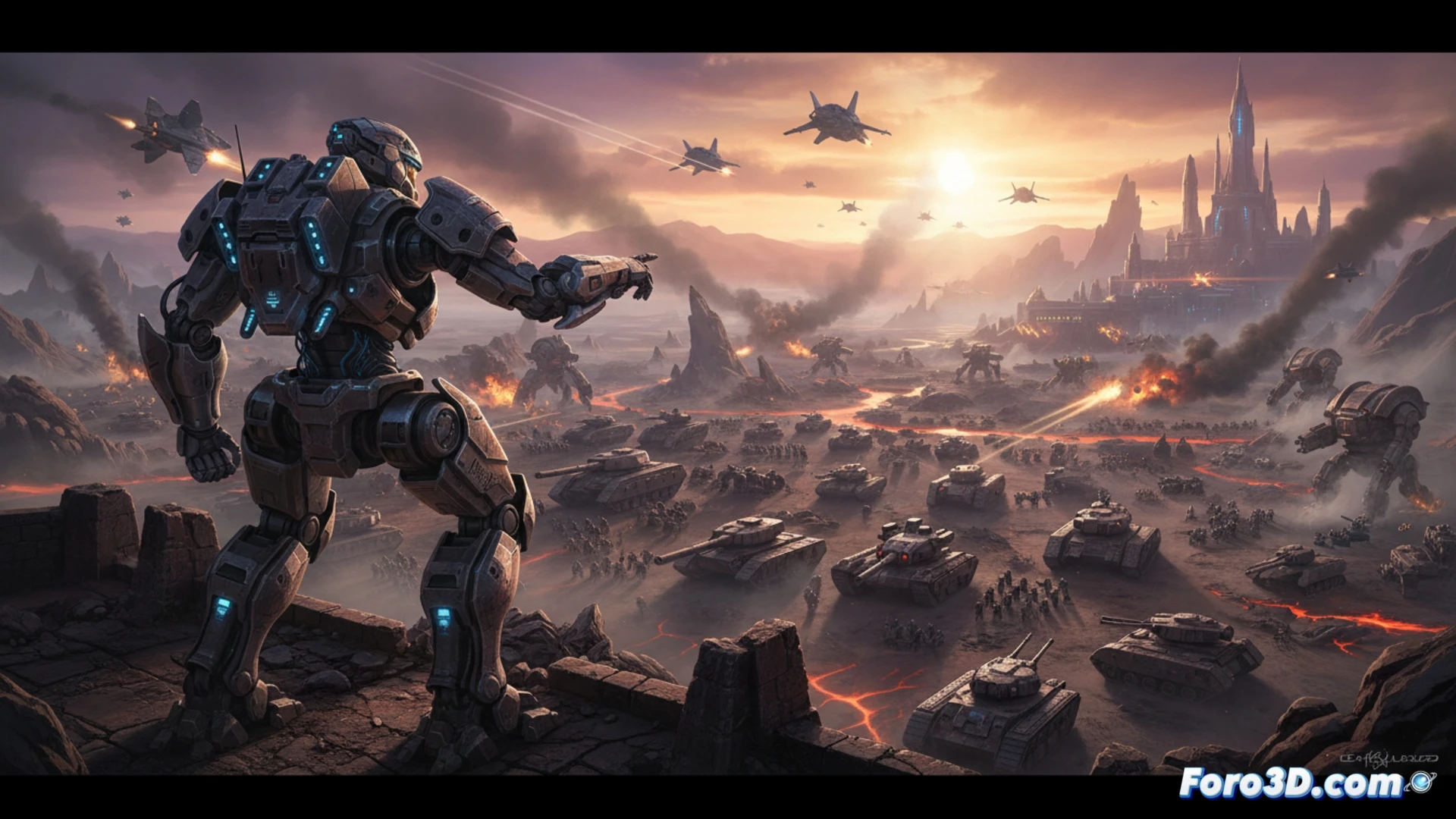
Technical Pipeline: From Houdini to Nanite Rendering 🛠️
The biggest challenge of Project: G lies in managing hundreds of high-detail units on screen without sacrificing performance. This is where Houdini comes into play, used for the procedural generation of variations and environment assets, reducing manual work and maintaining visual consistency. The units, modeled in 3ds Max, benefit from Unreal Engine 5's Nanite system, which allows rendering virtualized geometry with millions of polygons without the need for traditional LODs. This eliminates visual popping and allows each soldier or vehicle to look with the fidelity of an RPG protagonist. However, dynamic lighting and particle effects must be optimized using Lightmass and Niagara to avoid frame drops in matches with 100 players.
The Dilemma of Scale: Realism vs. Legibility ⚔️
Although the visual realism is impressive, it poses a classic problem in RTS games: battlefield legibility. If every unit has the same level of detail as an action character, the player's eye can become saturated trying to distinguish allies, enemies, and resources on a massive map. Project: G will need to implement outline systems and strategic color palettes so that technical detail does not overshadow gameplay. If it achieves this balance, it could mark a before and after in how we understand strategy game graphics.
As a developer, which technical aspects of Houdini's procedural integration in Unreal Engine 5 do you consider most challenging when scaling a massive RTS like Project G, and how does this affect real-time performance?
(PS: game jams are like weddings: everyone is happy, no one sleeps, and you end up crying)