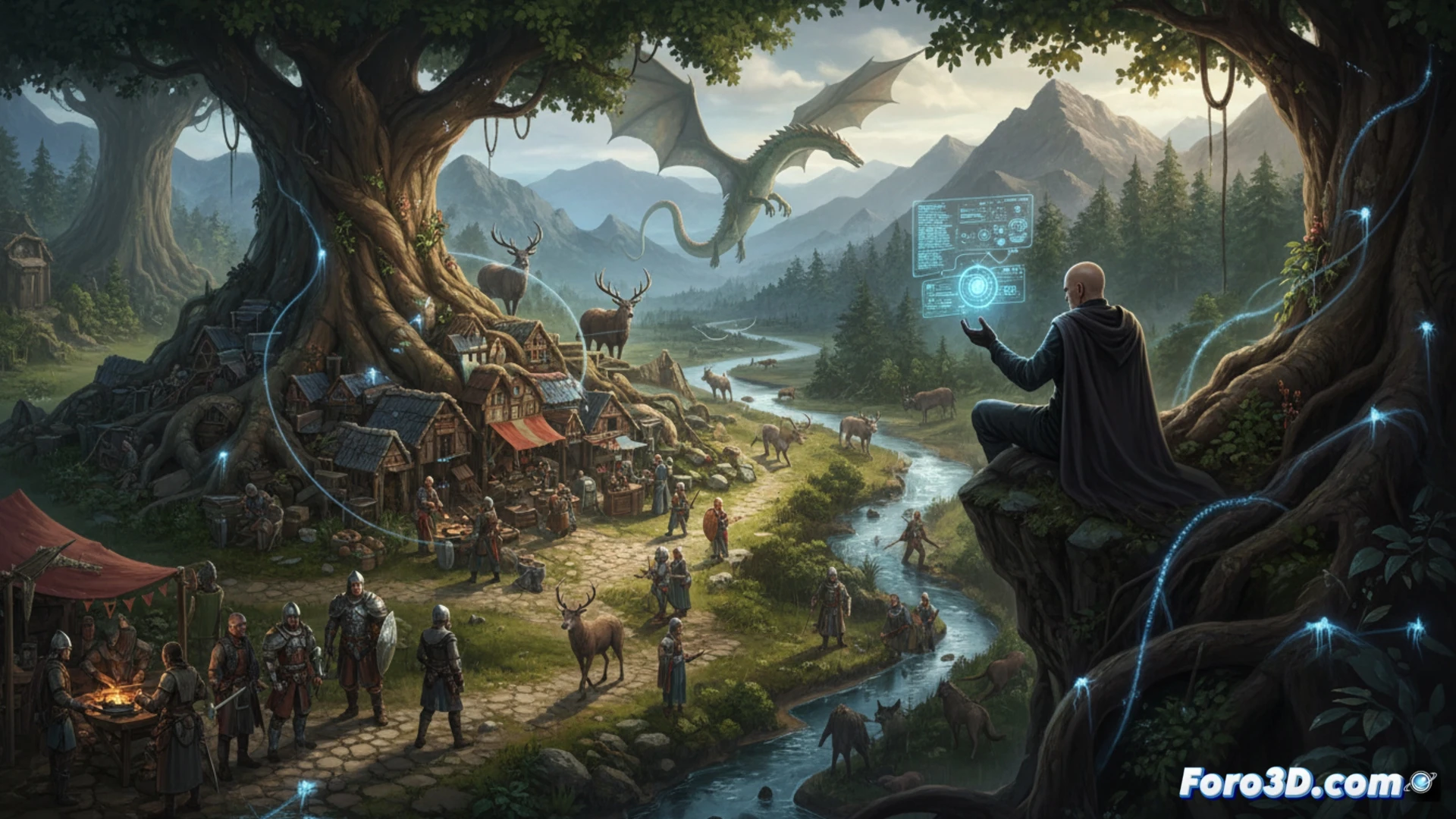
IO Interactive, renowned for the meticulous AI of Hitman, is applying that same knowledge to their new fantasy RPG, Project Dragon. The title promises a living ecosystem where every NPC reacts organically, inheriting the dynamic routine systems and behavior states that made Agent 47 famous. The Glacier Engine will be the technical pillar of this evolution. 🐉
Glacier Engine and Procedural Tools for Open Worlds ⚙️
The Glacier Engine, optimized for dense and destructible environments, now faces the challenge of generating a fantasy open world. IO Interactive combines the engine's native editor with Maya for creating high-quality assets, but the key lies in their internal procedural tools. These allow populating vast territories with unique details without saturating memory, applying ecological simulation rules. The NPC AI, inherited from Hitman, not only follows routines but now interacts with the weather, fauna, and environmental resources, creating an autonomous life cycle that reacts to player decisions.
Technical Innovation Redefining the RPG Genre 🧠
Project Dragon is not just a change of setting for IOI, but a technical proof of concept. By transferring Hitman's social simulation intelligence to a fantasy context, they demonstrate that the depth of an ecosystem does not depend on graphical realism, but on behavioral logic. If they manage to scale that AI to an open world without sacrificing performance, they could set a new standard for RPGs, where the world is not a backdrop, but a living organism that breathes with or without the player present.
As a developer, what is the greatest technical challenge when transferring the reactive and predictable AI of a stealth game like Hitman to an open-world RPG with living ecosystems that must feel organic and not scripted?
(PS: shaders are like mayonnaise: if they break, you start all over again)