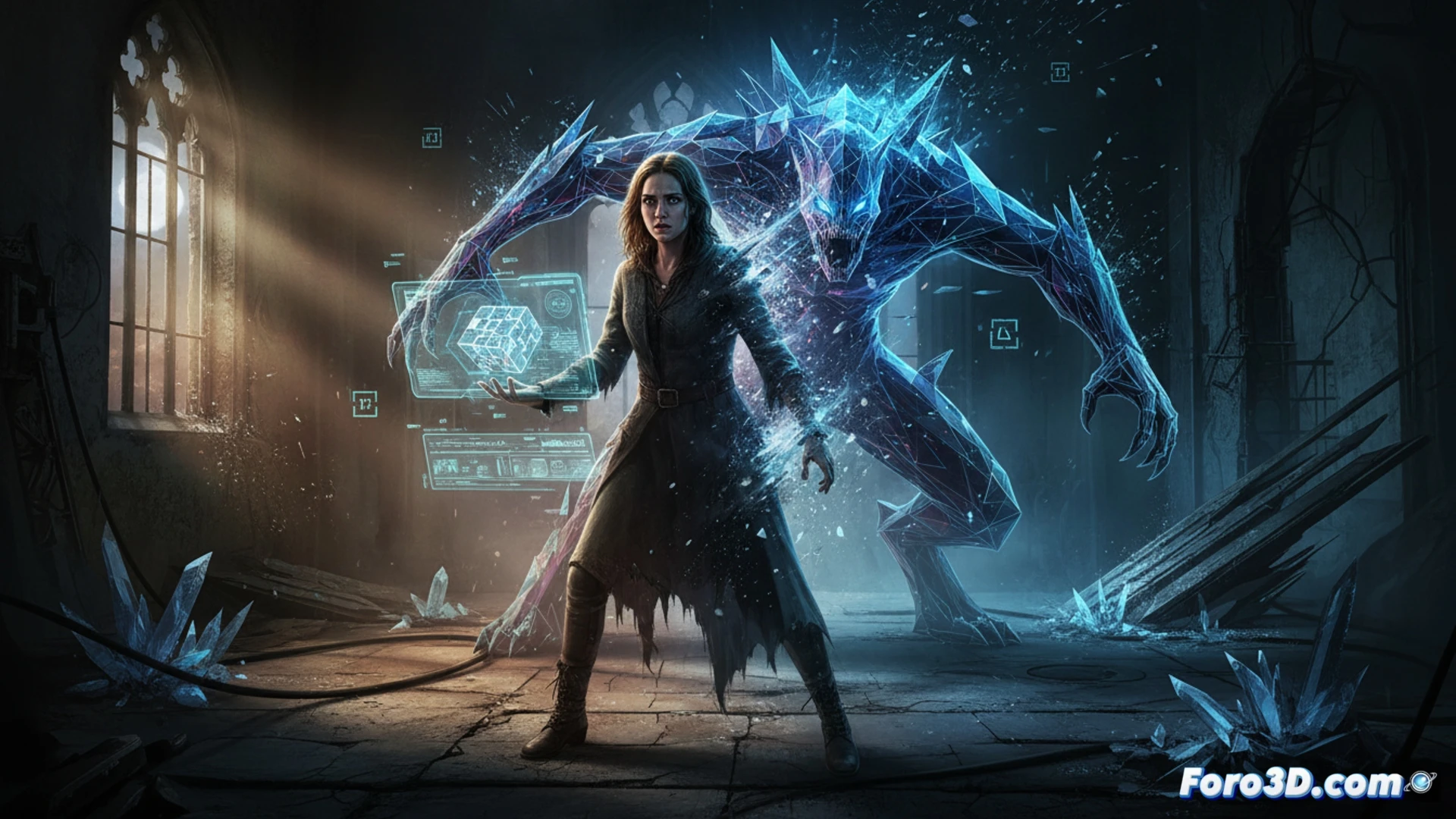
The recent announcement of Project: C, a collaboration between Half Mermaid and Blumhouse Games, has brought a fascinating technical challenge to the table: how to blend live-action footage with real-time 3D environments to create a horror/puzzle experience. Using Unreal Engine 5 as a foundation, the team is betting on cinematic rendering that breaks the barrier between video games and audiovisual production, demanding a highly specialized video compositing pipeline.
Compositing Pipeline and Asset Optimization in UE5 🎬
To achieve this organic fusion, Half Mermaid likely employs a workflow where sequences of real actors are recorded on set and subsequently integrated as textures or background planes within the engine. In Unreal Engine 5, this requires careful volumetric lighting and post-processing work to match the color temperature and grain of the live-action footage. The 3D assets, for their part, must be optimized using the Nanite system to maintain high fidelity without compromising the 60 fps needed in a horror game, where camera smoothness is critical for immersion.
The Challenge of Atmosphere Without Sacrificing Performance 🎭
The true technical achievement of Project: C lies in balancing cinematic aesthetics with puzzle interactivity. By using real-time video compositing, the team avoids the long loading times of pre-rendered cutscenes but must deal with layer synchronization and memory management. This hybrid approach not only redefines visual horror but also sets a roadmap for indie studios seeking AAA quality without a Hollywood budget.
How does the Unreal Engine 5 engine tackle the challenge of integrating interactive cinematic sequences with real-time horror gameplay without sacrificing immersion or performance in Project C?
(PS: game jams are like weddings: everyone is happy, no one sleeps, and you end up crying)