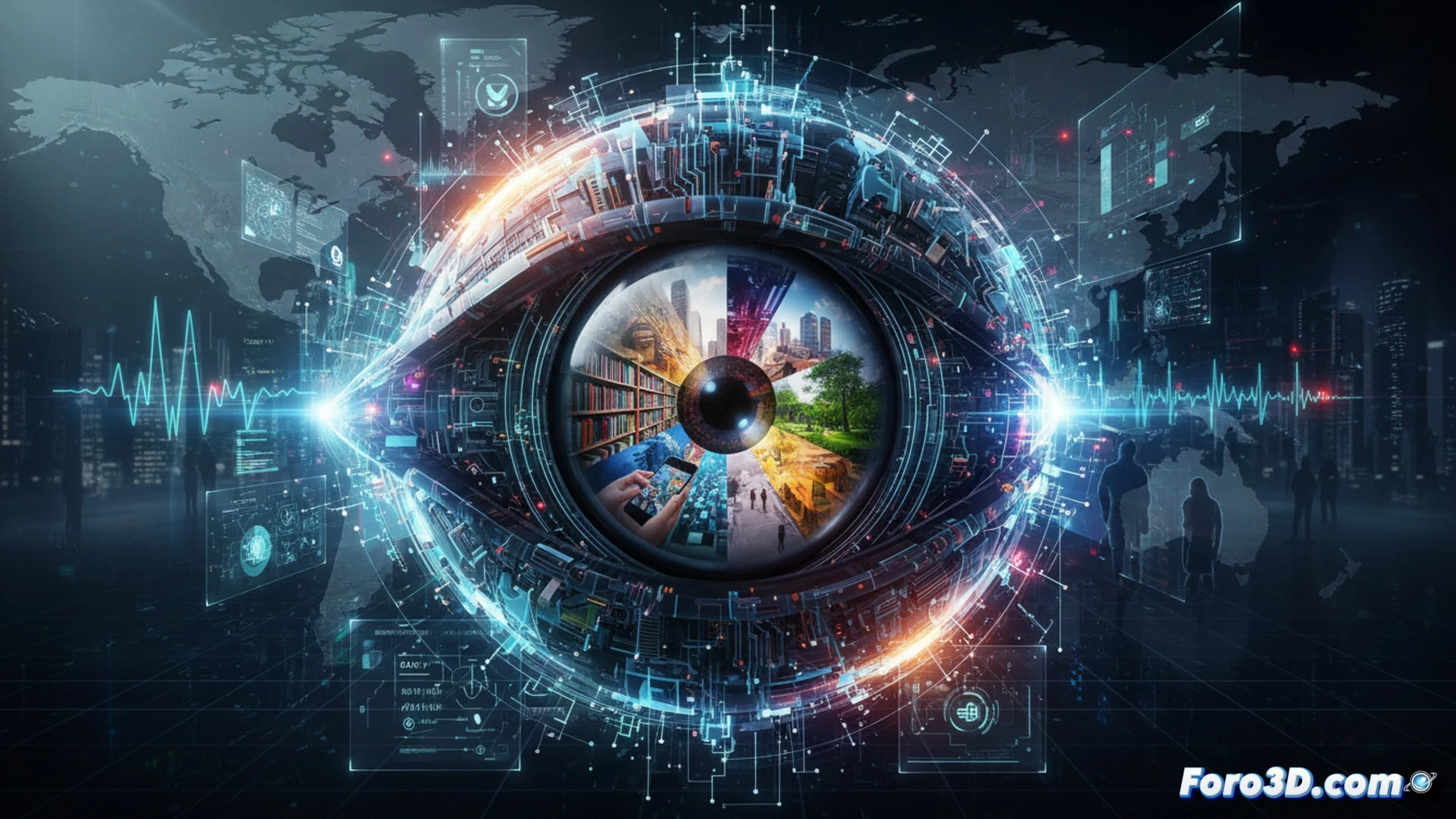
Google has introduced Project Astra, a prototype multimodal artificial intelligence assistant that integrates real-time vision with natural language processing. Unlike current assistants, Astra doesn't just listen to commands: it observes the environment through the device's camera, identifies objects, recognizes contexts, and responds instantly. This technical leap, combining computer vision models with large language models (LLMs), promises to redefine human-machine interaction, but also opens an urgent debate on privacy, surveillance, and technological dependency.
Multimodal architecture and zero-latency interaction 🤖
Technically, Project Astra operates on a unified architecture that processes continuous video and audio streams without relying on discrete commands. The system uses a vision model trained to segment and label objects in real time, while a next-generation LLM interprets the semantic context of the scene. The key lies in latency: Google has optimized the pipeline so that the response is practically instantaneous, eliminating the typical pause of current assistants. This allows, for example, the assistant to explain how a mechanical device works while the user moves it in front of the camera, or to identify a problem with a houseplant and offer care tips. However, continuous cloud-based video processing poses serious bandwidth and energy consumption challenges, which Google has not yet fully detailed for implementation on mobile devices.
The social dilemma: ubiquitous assistance or invisible surveillance ⚖️
The tech community is divided between enthusiasm for Astra's usefulness and concern over its ethical implications. If the assistant sees everything the user sees, who controls that data? Moderation of AI-generated content becomes critical: a system that interprets the environment could misinterpret private scenes or generate inappropriate responses. Furthermore, the risk of technological dependency is real. Delegating the interpretation of the physical world to an AI could erode basic human skills, such as visual memory or the ability to solve practical problems. Forums like this one are already debating whether we need a clear boundary between help and cognitive substitution, and whether transparency in video processing should be mandatory by law.
How will Project Astra change the dynamics of trust and privacy in digital spaces by becoming a constant visual witness to our daily interactions
(PS: the Streisand effect in action: the more you ban it, the more they use it, like microslop)