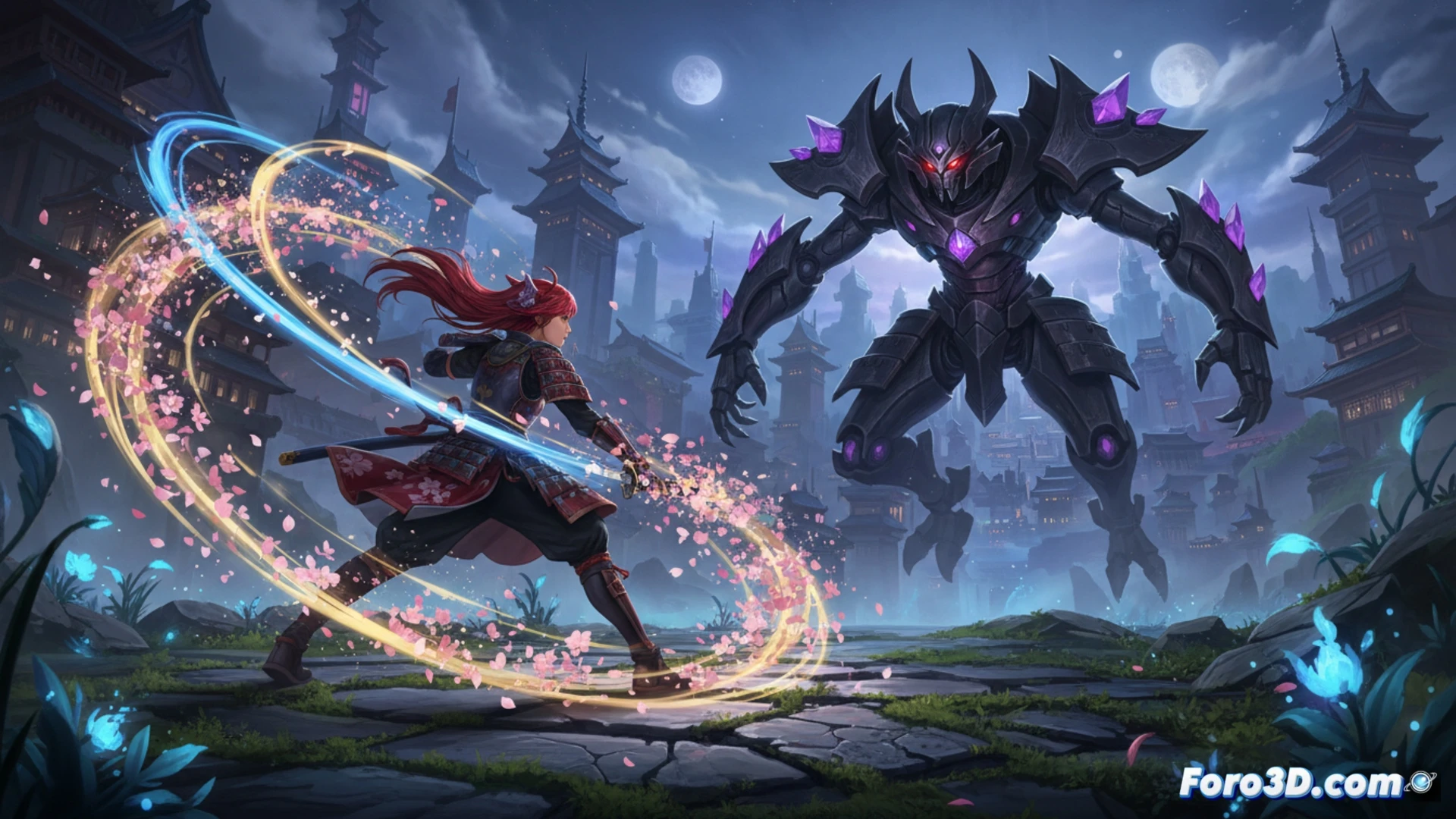
Square Enix has revealed technical details of its mobile project Project: Akane, a stylized JRPG developed in Unreal Engine 4. The studio combines Maya for character and environment modeling with internal optimization tools for mobile devices. The result is a graphical showcase that stands out for its dense particle systems and soft lighting reminiscent of console productions, adapted to portable hardware limitations.
Asset pipeline and optimization for mobility 🎮
The workflow begins in Maya, where high-polygon assets are created. Subsequently, a retopology and normal map baking process is applied to reduce the polygon count without losing visual detail. Square Enix's internal tools perform automatic analysis of draw call overhead and manage dynamic LOD. For dense particles, materials based on flipbooks and texture atlases are used, limiting the number of emitters per scene. Soft lighting is achieved through a system of baked light probes combined with a bloom post-process and tonemapping adjusted for mobile screens, avoiding the use of real-time dynamic lights.
The challenge of JRPG aesthetics in real time ⚡
Project: Akane demonstrates that the visual style of a JRPG depends not only on the graphics engine but on discipline in the pipeline. The decision to use Unreal Engine 4 instead of proprietary engines allows Square Enix to leverage already optimized particle and shader tools. The real challenge lies in maintaining artistic coherence while cutting resources to meet the battery and temperature limits of mobile devices. The studio achieves a functional balance that could set a trend in RPG development for smartphones.
How does Project: Akane maintain stable performance on mobile devices using Unreal Engine 4 without sacrificing the stylized JRPG aesthetic?
(PS: 90% of development time is polishing, the other 90% is fixing bugs)