The General State Budgets are like the family shopping list: something is always missing, in the end you pay more than expected, and you end up with whatever was on electoral offer. Allocations for everything, promises galore, but when it's time to balance the numbers, reality looks more like a supermarket receipt with items you didn't ask for. We analyze how these public accounts are cooked up between algorithms and promises. 🤔
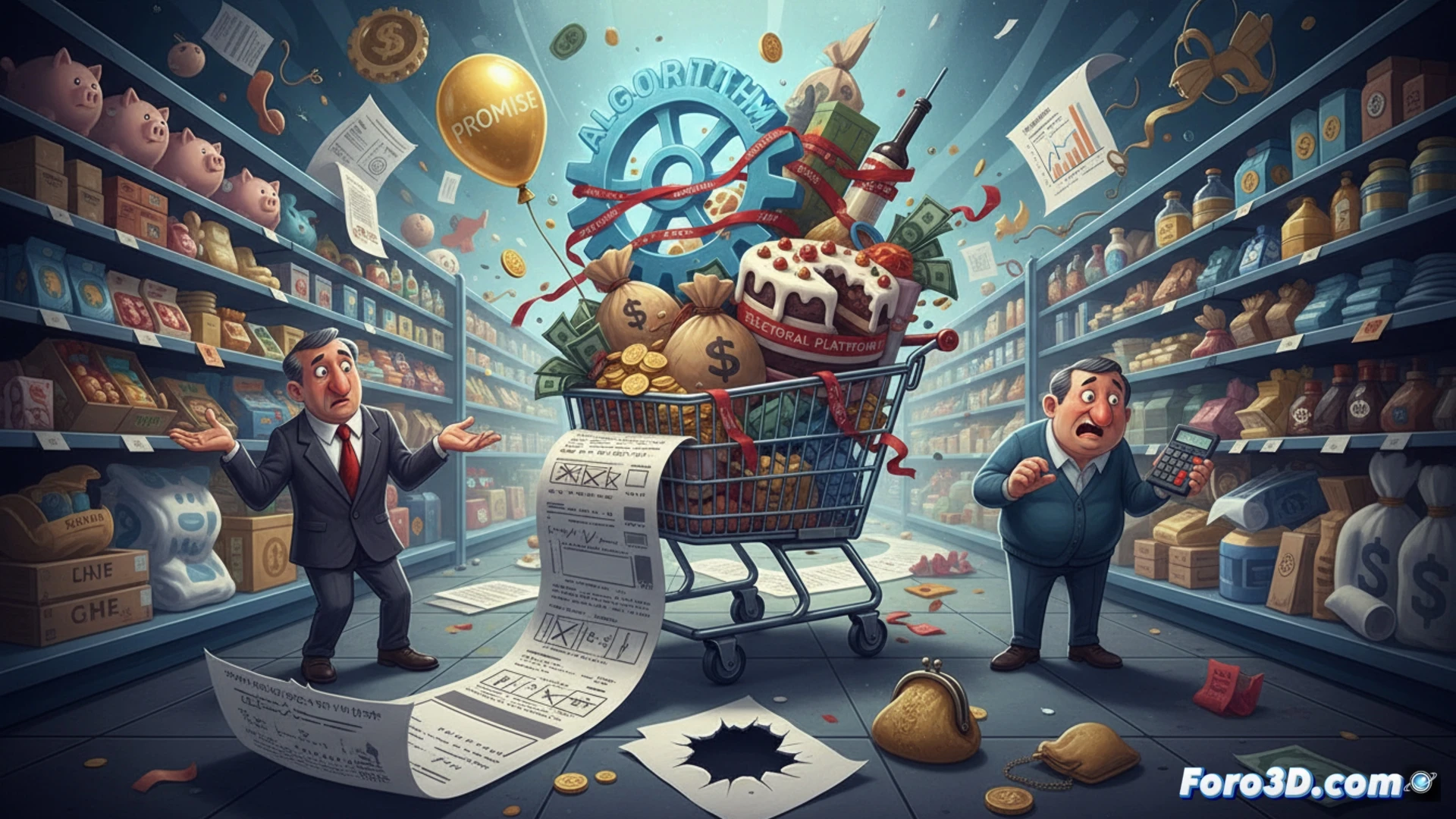
The back-end of public accounts: processes and allocations 🖥️
In the development of the PGE, the process is almost as complex as a distributed system. Each ministry sends its requests like microservices, the Ministry of Finance acts as an orchestrator with a load balancer called deficit. Allocations are assigned using a political priority algorithm, where electoral promises weigh more than actual execution data. The result is a budget that, like code without tests, has bugs that are discovered when executing the fiscal year. Public debt is the technical debt of this architecture.
This month's offer: bread, milk, and a new ministry 🛒
In the end, the citizen arrives at the checkout with their virtual cart and discovers that the VAT on bread has gone up, the milk has an ecological surcharge, and they've been given a new ministry they didn't ask for, like that expired yogurt that always appears at the back of the fridge. The worst part is that the state shopping receipt has no returns: if you don't like it, wait for the next electoral cycle, maybe there will be another offer. Sure, the cart is never empty, just poorly balanced.