Benjamín Prado turns his notebook into a dam against time. Without self-pity and with an intimate voice, he narrates how the fragility of the body and memory confront a diagnosis that changes the rules of the game. His new book is not just an autobiography, but a manual of resistance where creativity becomes a refuge. The author seeks to connect from vulnerability, showing that art can be a lifeline in the most hostile moments.
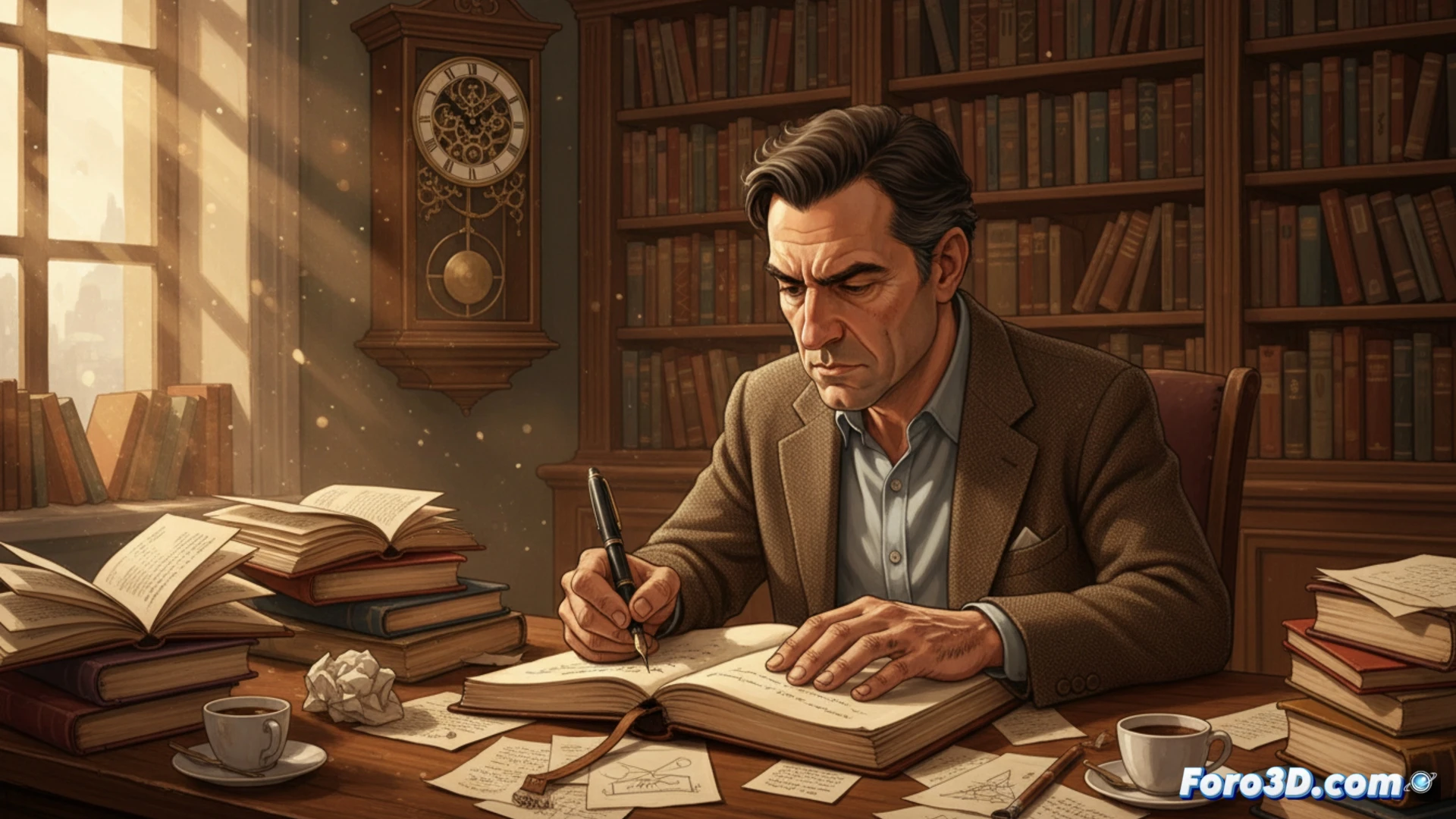
The pen as hardware and the page as a 60 Hz screen ✍️
Writing by hand, as Prado does, activates different cognitive processes than typing. Calligraphy requires a slower processing speed, allowing for real-time editing of thoughts. On a neurological level, manual tracing reinforces muscle memory and the connection between ideas. If we compare the process to a text editor, the pen is a direct input without an autocorrect buffer. The result is a rawer text, without digital filters, where imperfection becomes valid data.
Writing about death without having to do a firmware update ⏳
While Prado reflects on the end, many of us remain trapped in the tyranny of notifications. He uses paper; we use screens that remind us we haven't moved the cursor in hours. The irony is that to face the countdown, Prado chooses the oldest technology on the market: a pen and a notebook. Perhaps the lesson is that to talk about the ephemeral, the best thing is to disconnect the Wi-Fi and let the ink do its magic. Without security patches.