3,400 years ago, in what is now Louisiana, a group of hunter-gatherers decided that gathering berries was not enough. Without agriculture, without kings or armies, they moved millions of tons of earth to create a complex of geometric mounds. Modern archaeology is still scratching its head.
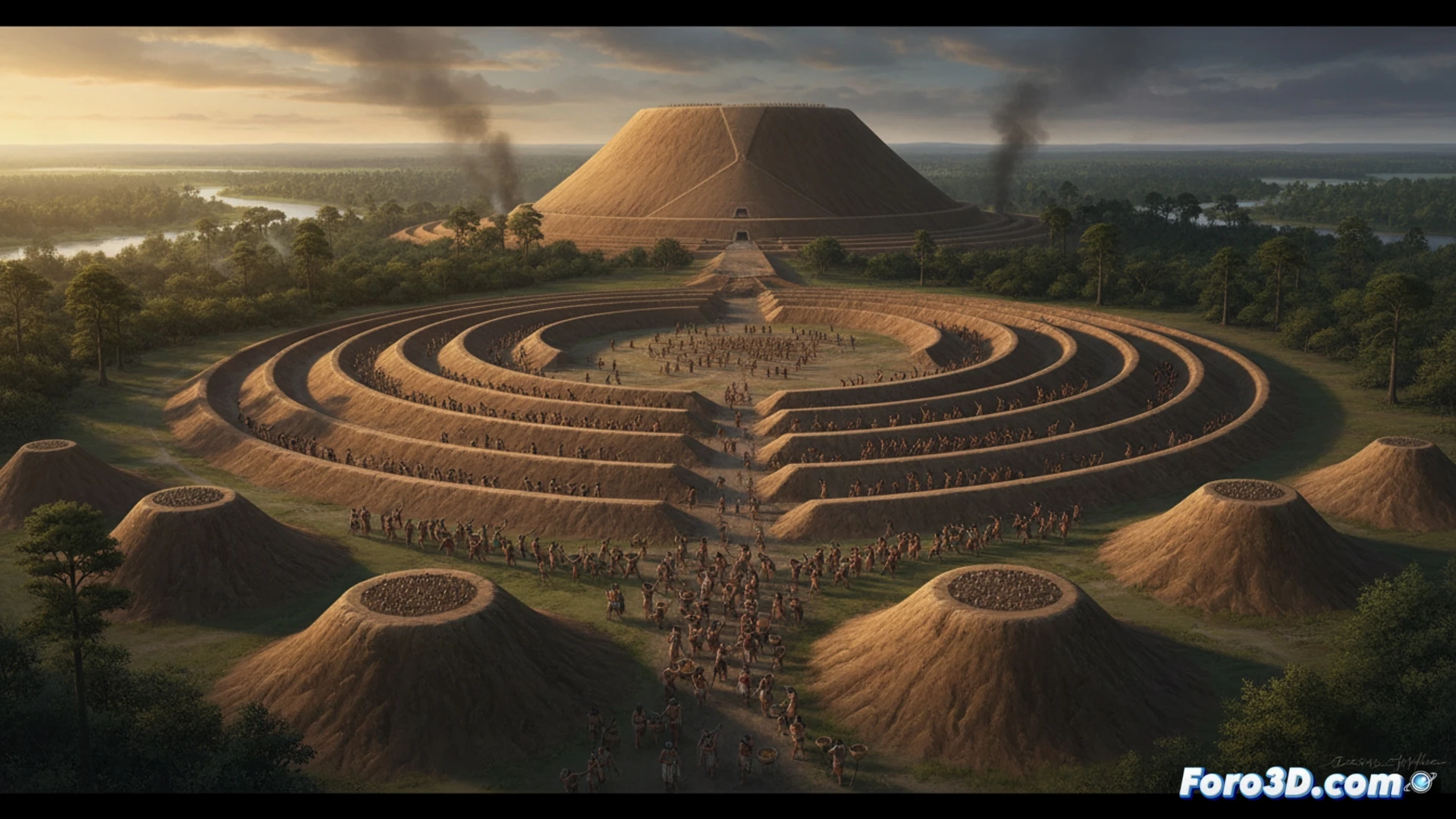
Engineering without blueprints: how to align six mounds with millimeter precision 🏛️
Poverty Point is not a random pile of dirt. Its six ridges form a semicircle 1.2 km in diameter, with a central plaza of 15 hectares. The builders used baskets to haul sediment from quarries 50 km away. The alignment of the mounds with the solstices and equinoxes suggests deep astronomical knowledge. All of this without wheels, without metal, and without pack animals. Only sweat, coordination, and a master plan that worked.
When your neighbor asks for help building a 22-meter mound 🧱
Imagine the scene: a group of hunters returns with a couple of fish and their chief tells them: Drop that, today we haul 3,000 kilos of dirt for the ceremonial terrace. And everyone nods, without complaint. He must have been a very charismatic leader, or there was the promise of an epic barbecue upon finishing the earth octagon. The truth is, they achieved something that modern engineers call giant ant logistics.