Summer, heat, siesta. You lie down hoping for a restorative coolness, and what you get is a mechanical hum that sounds like a miniature tractor. The fan spins, the blades cut through the air, but the noise outweighs the thermal relief. It's not your imagination: there is a physical and technical explanation behind this lost battle between decibels and breeze.
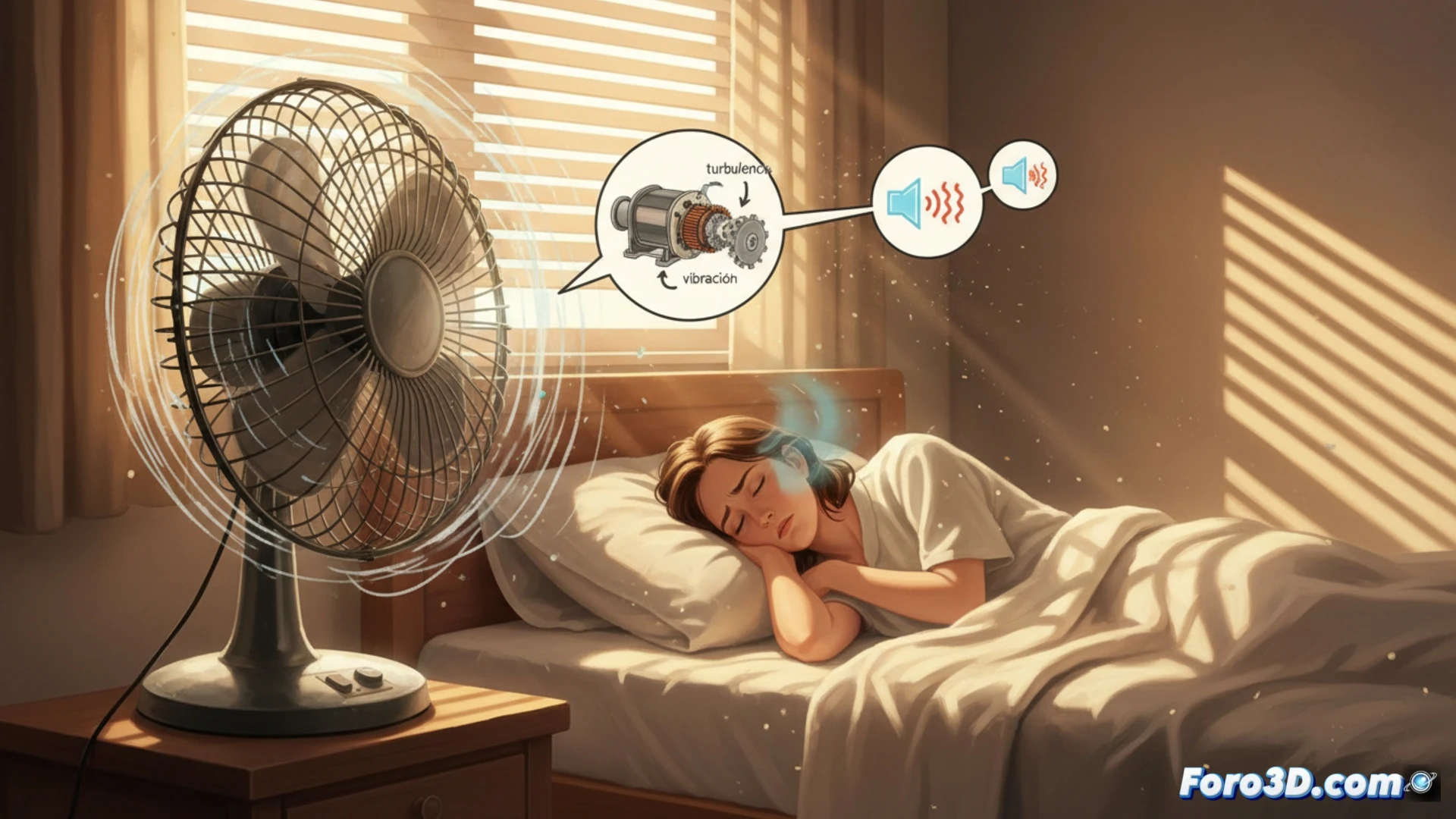
The physics of disaster: turbulent flow and resonance 🌪️
The noise originates from the interaction between the blades and the static air. At low speeds, the laminar flow breaks down, forming turbulence that generates audible frequencies. The alternating current motor, vibrating against the plastic casing, amplifies the sound through resonance. Additionally, unbalanced or dirty blades create an irregular wobble. The result is a sound spectrum that competes with the silence needed to sleep, while the actual airflow barely provides any cooling.
Ninja solution: put a pillow on the motor 🛠️
The most effective option is to disassemble it, clean the blades with a toothbrush, and add a few drops of oil to the shaft. If that fails, you can always hug the fan and whisper sweet nothings to it so it shuts up. Or, simply give up and sleep your siesta on the floor, where the cool air accumulates. After all, the floor never lets you down, even if your back hurts.