Every summer, the same scene plays out. You're in a hurry to get to the village for an urgent errand and you run into an endless line of caravans. They crawl along at 30 km/h, occupy both lanes on curves, and it seems their only goal is to make you late. It's not a conspiracy; there's a logical explanation, though no less frustrating for it.
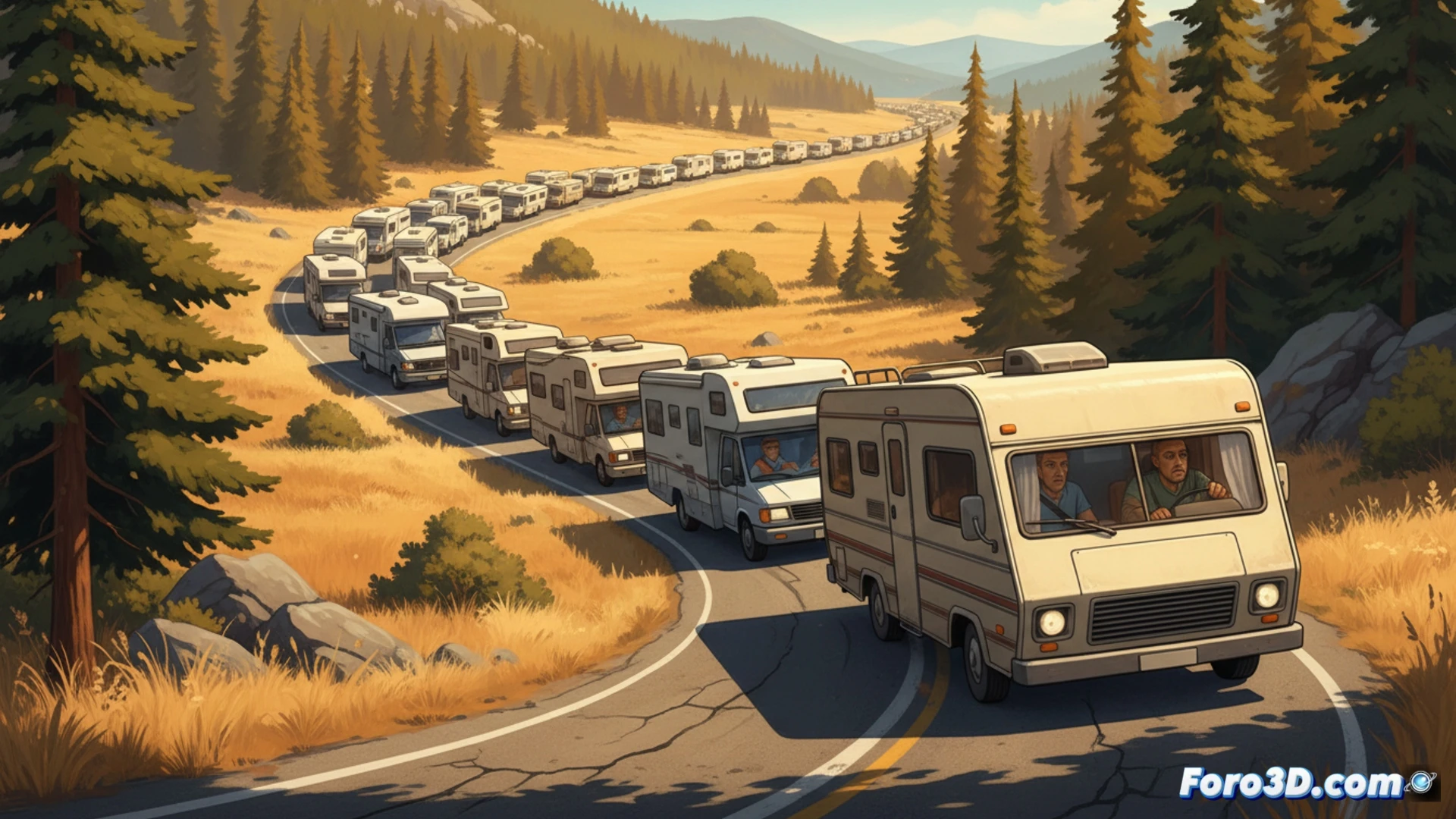
Caravan design and its impact on traffic 🚐
Modern caravans weigh between 1,200 and 2,000 kilos. When hitched to a conventional car, the power-to-weight ratio drops significantly. A car that accelerates well on its own loses climbing ability on gradients of 5% or more. Additionally, aerodynamics worsen: the drag coefficient skyrockets, forcing drivers to reduce speed to keep fuel consumption under control. Caravan drivers typically cruise at 80-90 km/h on straightaways, but on sharp curves or mountain passes, they slow down to 40 km/h. This creates bottlenecks, especially on secondary roads with no shoulder or additional lanes for passing.
The 30 km/h club and infinite patience 😤
It seems caravaners take a secret oath: never exceed 30 km/h on a straight stretch with good visibility. And if they also have a roof rack with bikes and a trailer with a kayak, you can forget about arriving on time. The worst part is when the caravan driver raises a hand to wave at you as you overtake, as if you've completed some epic mission. You just want to get to the village before the bakery closes. But no, summer is theirs, and the road belongs to them too.