Every Friday in July and August, at four in the afternoon, thousands of drivers repeat the same ritual: load the car, turn on the air conditioning, and get stuck in a 20-kilometer traffic jam on the AP-7. It's not bad luck, it's pure social physics. The summer exodus concentrates all of Barcelona heading for the coast within a two-hour window, while the road infrastructure is overwhelmed. The result: a 100 km/h parking lot that makes you rethink whether the beach town is worth three hours of honking.
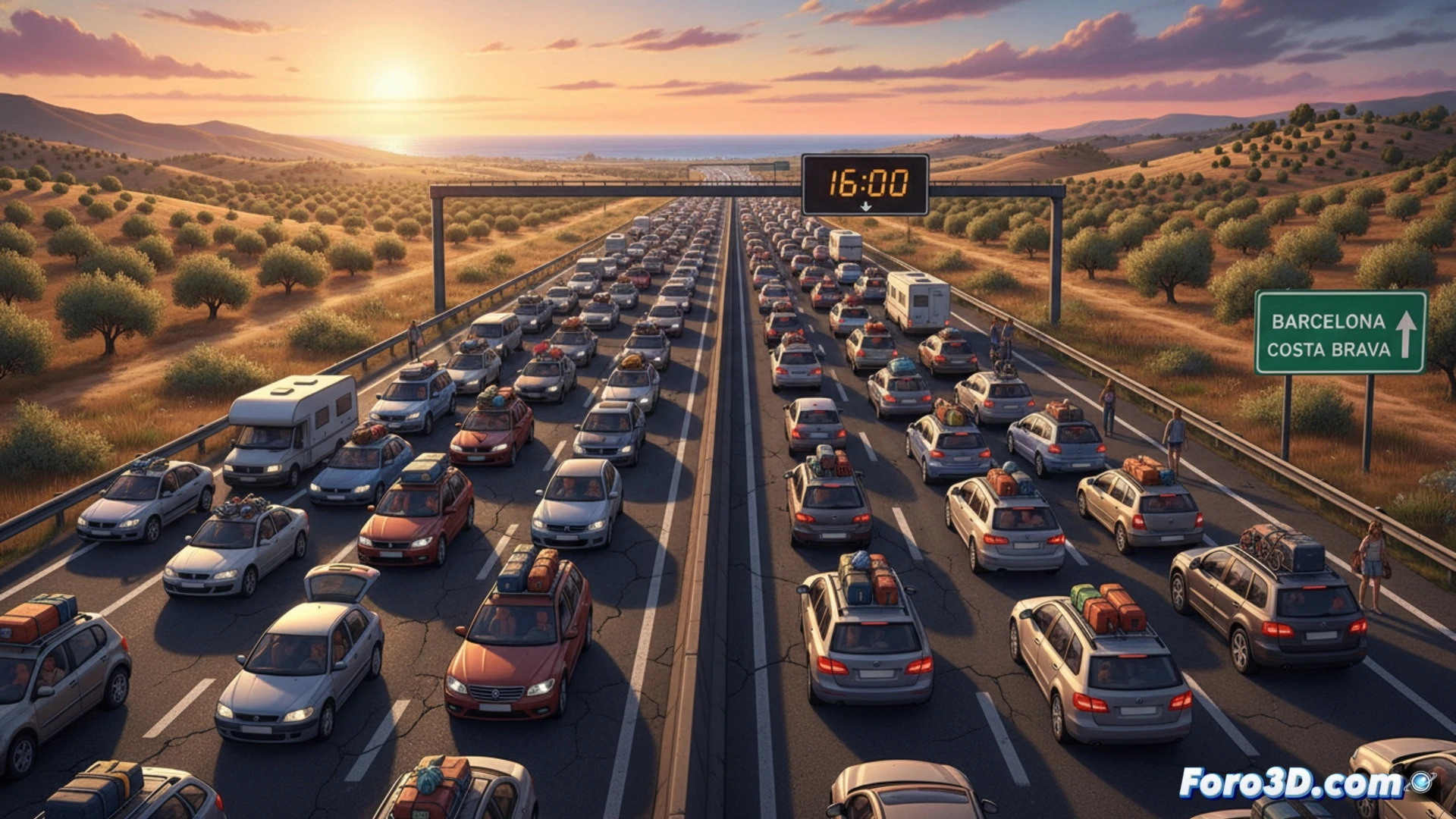
The digital and physical bottleneck of the AP-7 🚧
The problem isn't just about asphalt, but about data. The DGT's traffic sensors record peaks of 4,000 vehicles per hour on the stretch between Montmeló and Sant Celoni, when the optimal capacity is 2,200. Navigation algorithms like Google Maps or Waze redirect drivers to the N-II, which becomes saturated in minutes. No artificial intelligence can solve an 80% excess demand during peak hours. Traffic engineering calls this exceeded service capacity. You call it another Friday lost on the shoulder.
The GPS also knows you'll be late for dinner 🕐
The worst part is when the navigator, with a patient lady's voice, announces: Estimated arrival: 7:47 PM. And you think: Perfect, I'll make it just in time for the third round of bravas. But ten minutes later the time jumps to 8:15 PM, and you know your brother-in-law is already commenting that with this traffic, better take the C-32. The icing on the cake is seeing a guy in a Tesla reading a book in the middle lane while you're sweating buckets. The AP-7 in summer isn't a highway; it's a waiting room on wheels.