A new study from University College London reveals that predatory dinosaurs like Tyrannosaurus rex developed tiny arms because their heads became their primary killing tools. By analyzing 85 species of theropods, researchers found that more robust skulls and powerful bites made forelimbs redundant. Evolution opted for lethal heads instead of functional arms.
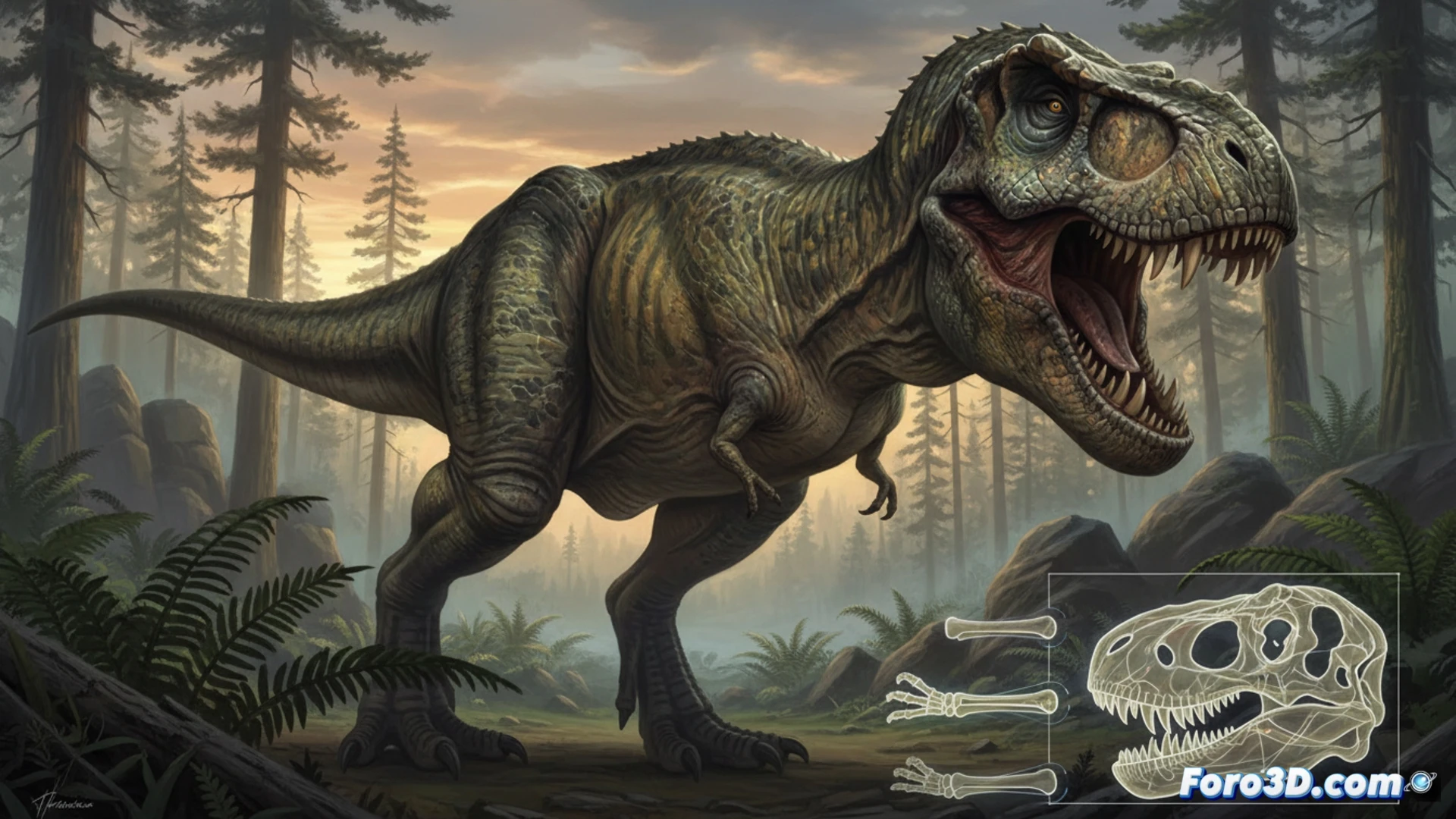
The science behind limb reduction 🦴
The team compared skull proportions, forelimbs, and body mass across 85 theropod species. They discovered a direct correlation: the greater the skull robustness, indicating a strong bite and structural rigidity, the smaller the arms. This suggests that natural selection favored massive heads as primary weapons for hunting large prey, relegating limbs to a secondary or null role. The data reinforces that T-Rex didn't need long arms if its jaw did all the work.
T-Rex arms: the evolutionary drama of not reaching the keyboard 😂
Imagine T-Rex trying to use a smartphone. It surely wondered why evolution left it with two toothpicks instead of useful limbs. Now science confirms they were just ornaments, like the pinky you lift when drinking tea. The most feared predator of the Cretaceous had T-Rex arms, and no, it wasn't to hug its prey. It was for nothing. Nature has a sense of humor.