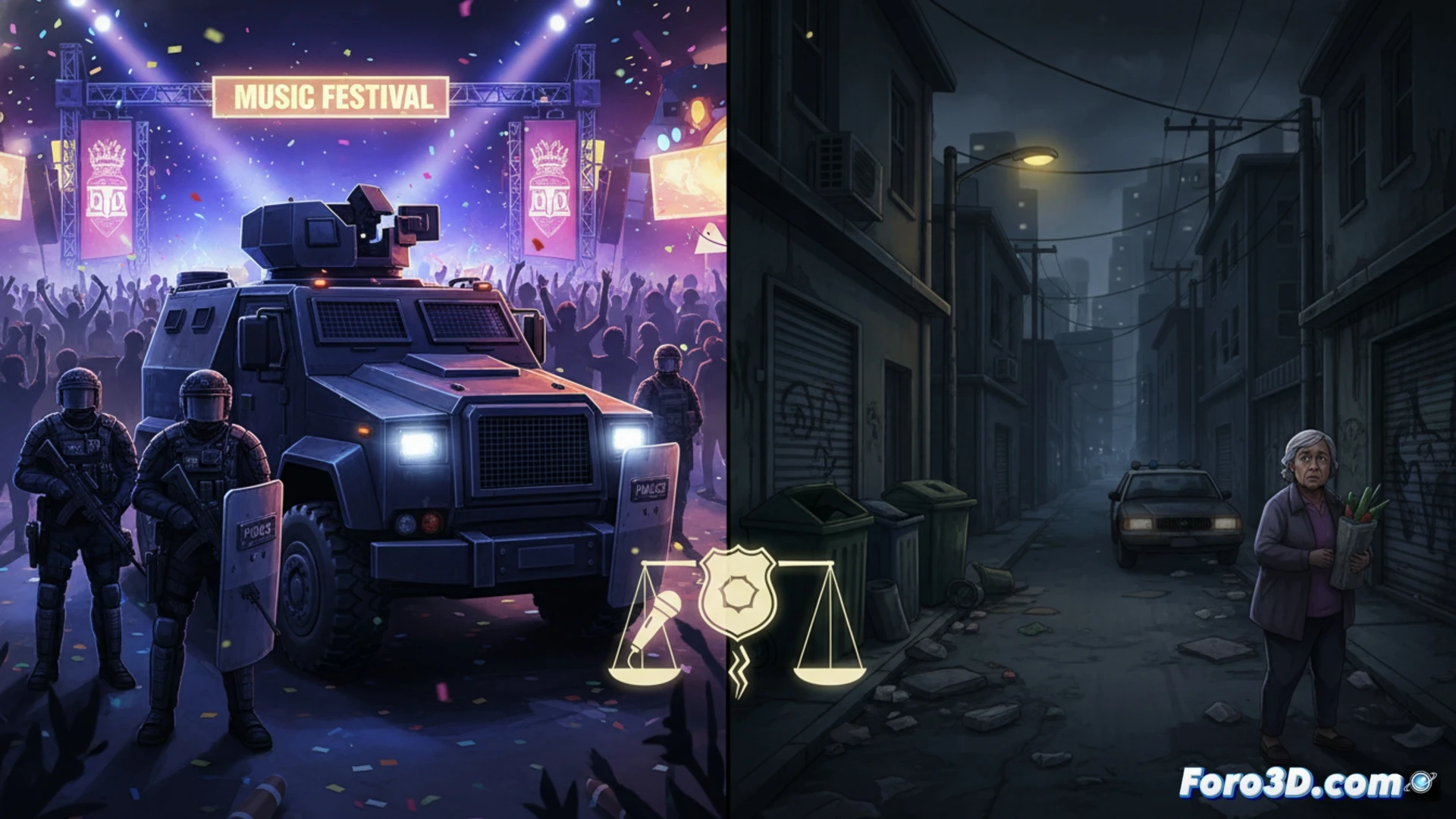
While thousands of officers secure concerts and massive events, vulnerable neighborhoods continue waiting for a patrol that passes more than once a day. The news reveals that police resources are mobilized based on media or economic interest, not on the actual needs of residents. The solution lies in redistributing personnel in a balanced manner throughout the year, ensuring constant surveillance in all areas, not just when there are major shows.
Priority algorithms: when code decides who deserves safety 🧠
Predictive analysis and big data systems allow authorities to allocate resources in real time. However, these algorithms often weigh variables such as the event's economic value or media impact, leaving social vulnerability indicators in the background. If they were recalibrated to prioritize objective data like crime rates or population density, patrol distribution would be fairer. The technology exists, but its application reflects a political decision, not a technical limitation.
Disposable security: they only see us when there's a concert 🎭
It's curious: when an international artist performs, the neighborhood fills with police vans as if there were a zombie invasion. But if you call because your bike was stolen, an answering machine picks up. It seems security is rented by the hour, like a carnival costume. In the end, residents learn to organize their own parties: they pool coins for a private guard, because the police only come when there are lights and a red carpet.