At the III Literary Essences Conference in Almagro, writer Federico Gallego defended poetry as a way to quench the thirst for knowledge and build bridges between people. The event vindicated Cervantes and his Don Quixote, presenting him as a living and universal character who continues to challenge today's reader. Gallego explained that poetry not only channels emotions but also allows us to explore reality and connect deeply with others, fostering literary dialogue and the enduring influence of the author.
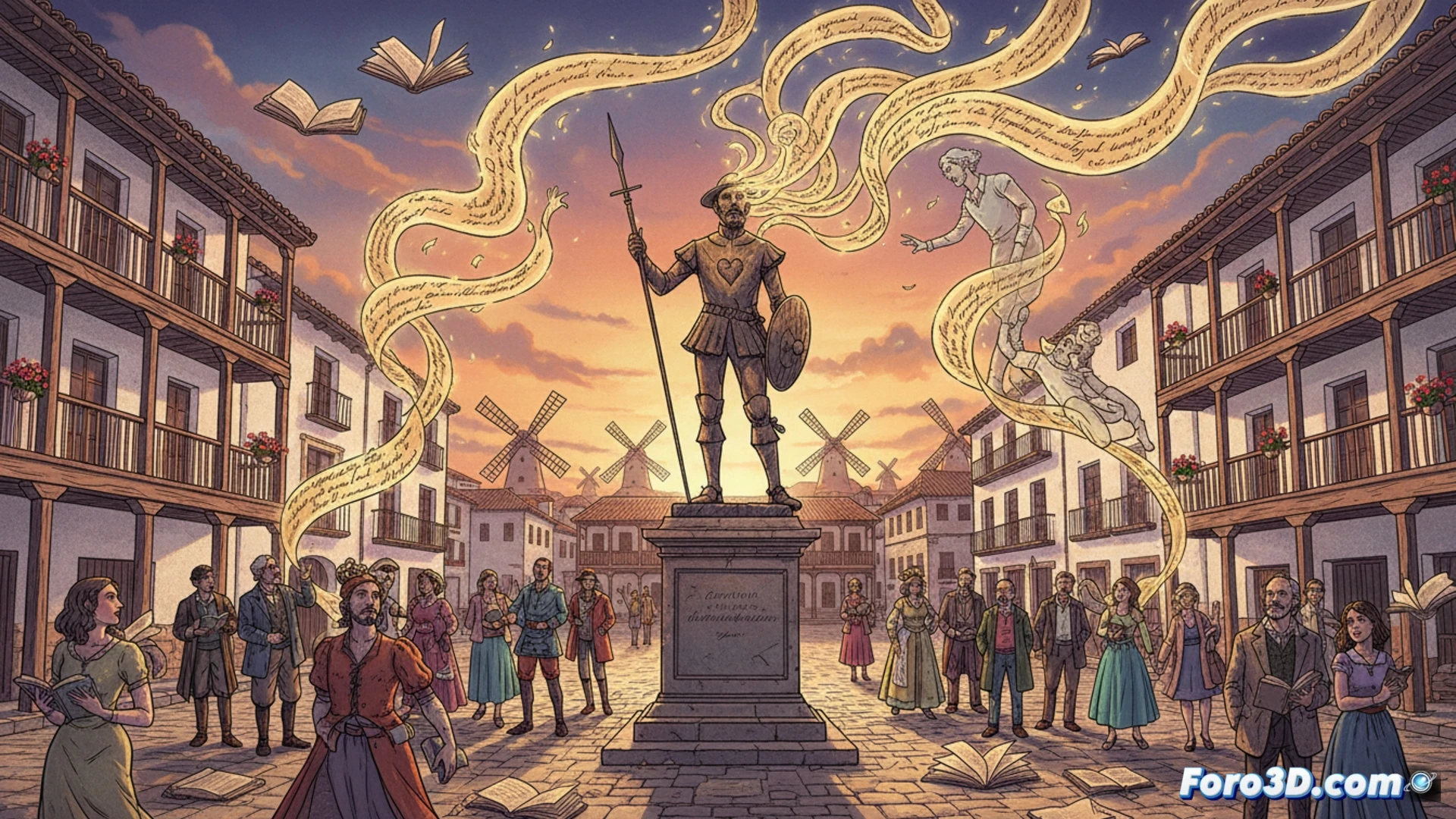
Technical update of the classic: algorithms to read Cervantes 📖
In the field of digital literary development, some projects explore how artificial intelligence can analyze the narrative structure of Don Quixote. Natural language processing tools allow breaking down its chapters, identifying dialogue patterns, and mapping character evolution. This facilitates new interactive editions and databases that connect passages with historical references. Technology does not replace reading, but it offers a scaffold for students and developers to access the complexity of the work without getting lost in its more than a thousand pages.
Cervantes already said it: the windmills were the first startups 🚀
Gallego assured that Don Quixote is a living character, but seeing how some entrepreneurs confuse giants with windmills, one suspects that Cervantes prophesied the startup ecosystem. The knight-errant invested his time in impossible causes without a business plan, something any investor would recognize as a failed funding round. At least Sancho Panza, with his realism, acted as a sensible co-founder trying to avoid disaster. The relevance of Don Quixote is assured: as long as there are crazy ideas, there will be someone to defend them.