The podiatrist faces a professional paradox: relieving others' pain while accumulating tension in their own spine. Repetitive bending over the patient's feet, exposure to fluids, and constant stress create a risk profile that traditional ergonomics can barely correct. 3D technology, however, offers a new map to avoid the specialist's physical wear and tear.
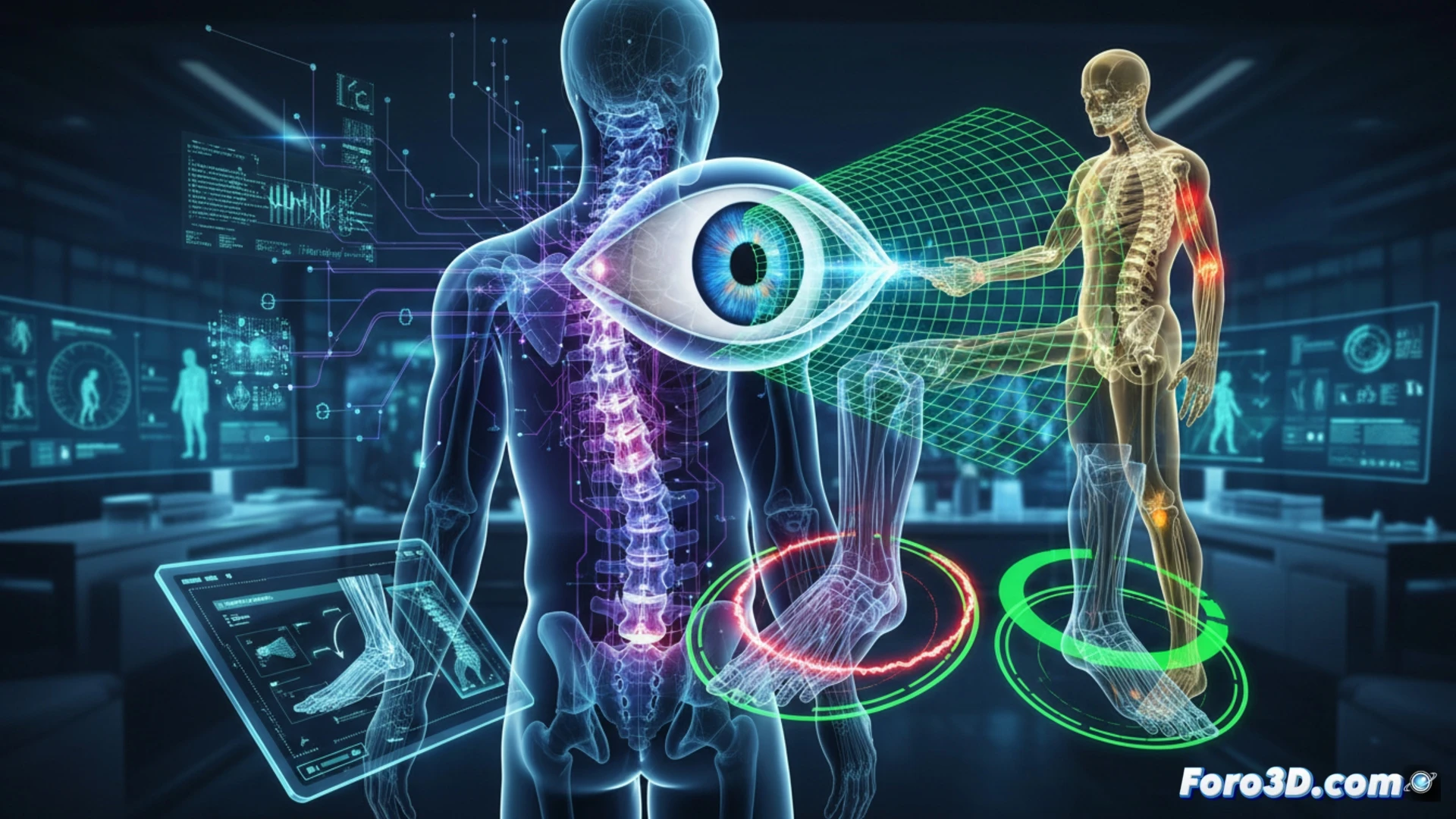
Biomechanical simulation and digital twins in the clinic 🦾
3D modeling allows building a digital twin of the podiatrist's workstation. Using motion capture and pressure sensors, a precise simulation of the forced postures of the trunk and neck during a real intervention is generated. Biomechanical analysis software identifies points of maximum tension in the lumbar and cervical vertebrae, revealing tilt angles that exceed safe limits. With this data, the patient's chair, the height of the stretcher, and the location of instruments are virtually redesigned, optimizing ergonomics before making physical changes in the clinic.
Instrument design and biological risk mitigation 🧤
3D modeling also transforms the design of cutting instruments and dermatological forceps. By simulating grip force and wrist rotation, ergonomic prototypes can be created that reduce pressure on the podiatrist's joints. Additionally, 3D printing allows for the manufacture of custom protectors and handles that minimize direct contact with aggressive disinfectants, reducing the incidence of dermatitis. Technology does not cure fatigue, but it allows anticipating overexertion, turning prevention into an interactive and measurable model.
Would you print this model in resin or filament?