The sequel to The Exit 8, titled Platform 8, brings the psychological horror experience to a claustrophobic setting: an infinite train car. Developed in Unreal Engine 5, this indie project bets on extreme photorealism in metallic surfaces and glass. The goal is not only to impress visually but to disorient the player through the artificial perfection of reflections and lighting, breaking trust in visual perception. 🚃
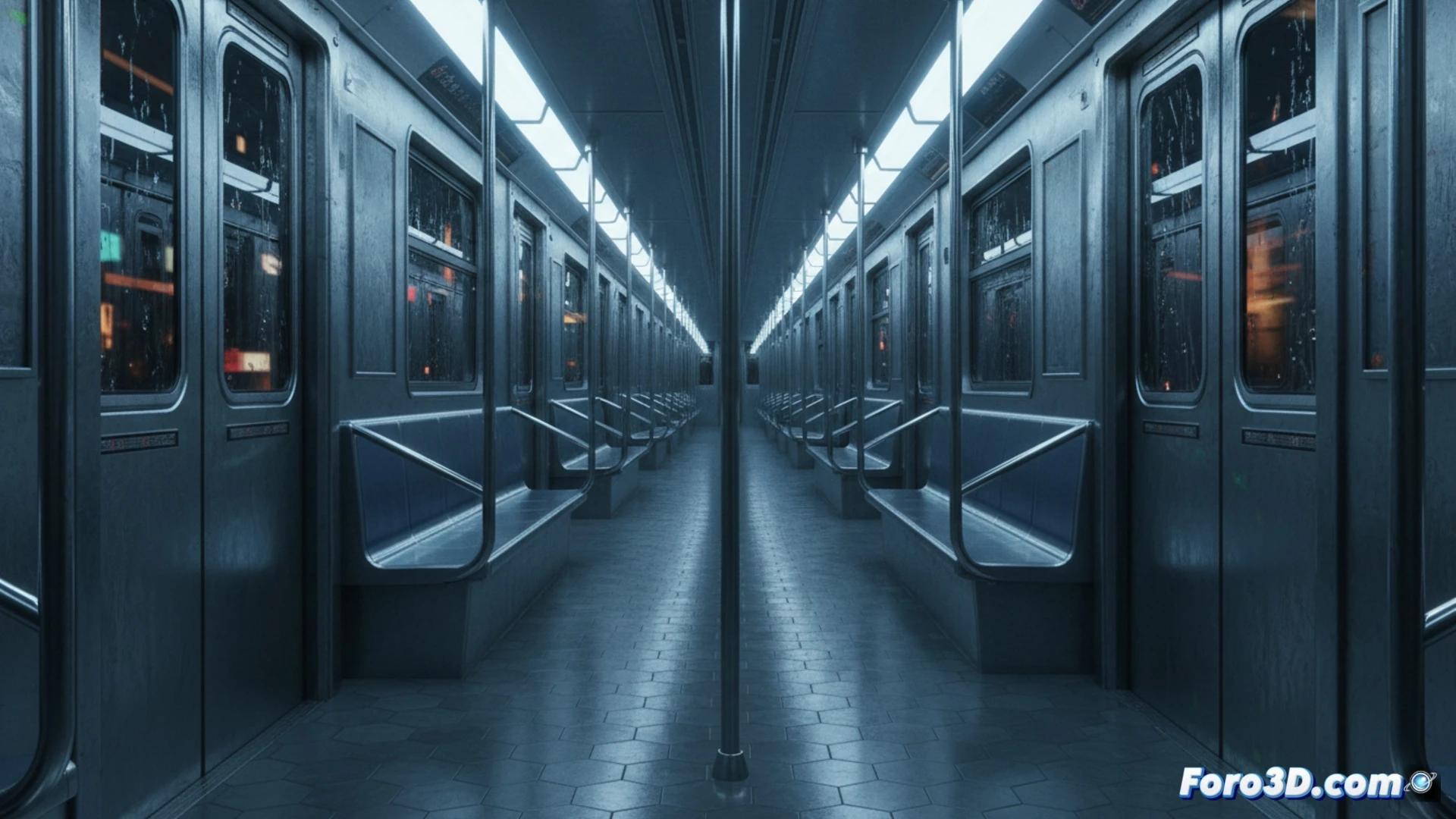
Advanced Shading Techniques in UE5 for Metals and Glass 🔧
Unlike the original, which used static lighting and flat textures, Platform 8 implements shaders based on the microfacet model with real-time ray tracing support. For metals, the anisotropic roughness parameter is used in the master material, simulating scratches and wear typical of a real train. For glass, the refraction node is combined with the chromatic dispersion effect, causing light to bend when passing through double windows. The key lies in using Lumen for dynamic reflections and integrating ambient occlusion maps generated in Substance Designer, which avoid the plastic look of assets. For indie developers, the recommendation is to start with UE5's default glass material and adjust the opacity parameter with a Fresnel gradient, rather than creating a complex shader from scratch.
How Visual Perfection Breaks Immersion 🌀
Photorealism in Platform 8 is not an ornament but a narrative tool. By accurately replicating details like the reflection of a seat in metal or the distortion of a number on glass, the player's brain assumes the environment is real. When an object subtly changes position or a reflection doesn't match the light source, confusion is immediate. This technique, known as environmental uncanny valley, is more effective than direct jump scares. To replicate it, it's crucial to use high-frequency normal maps and avoid texture repetition, as the human eye quickly detects patterns in enclosed spaces.
As a developer, what was the biggest technical challenge in implementing photorealism in Unreal Engine 5 to create disorientation and psychological horror in Platform 8, considering the game's claustrophobic and limited environment?
(PS: 90% of development time is polishing, the other 90% is fixing bugs)