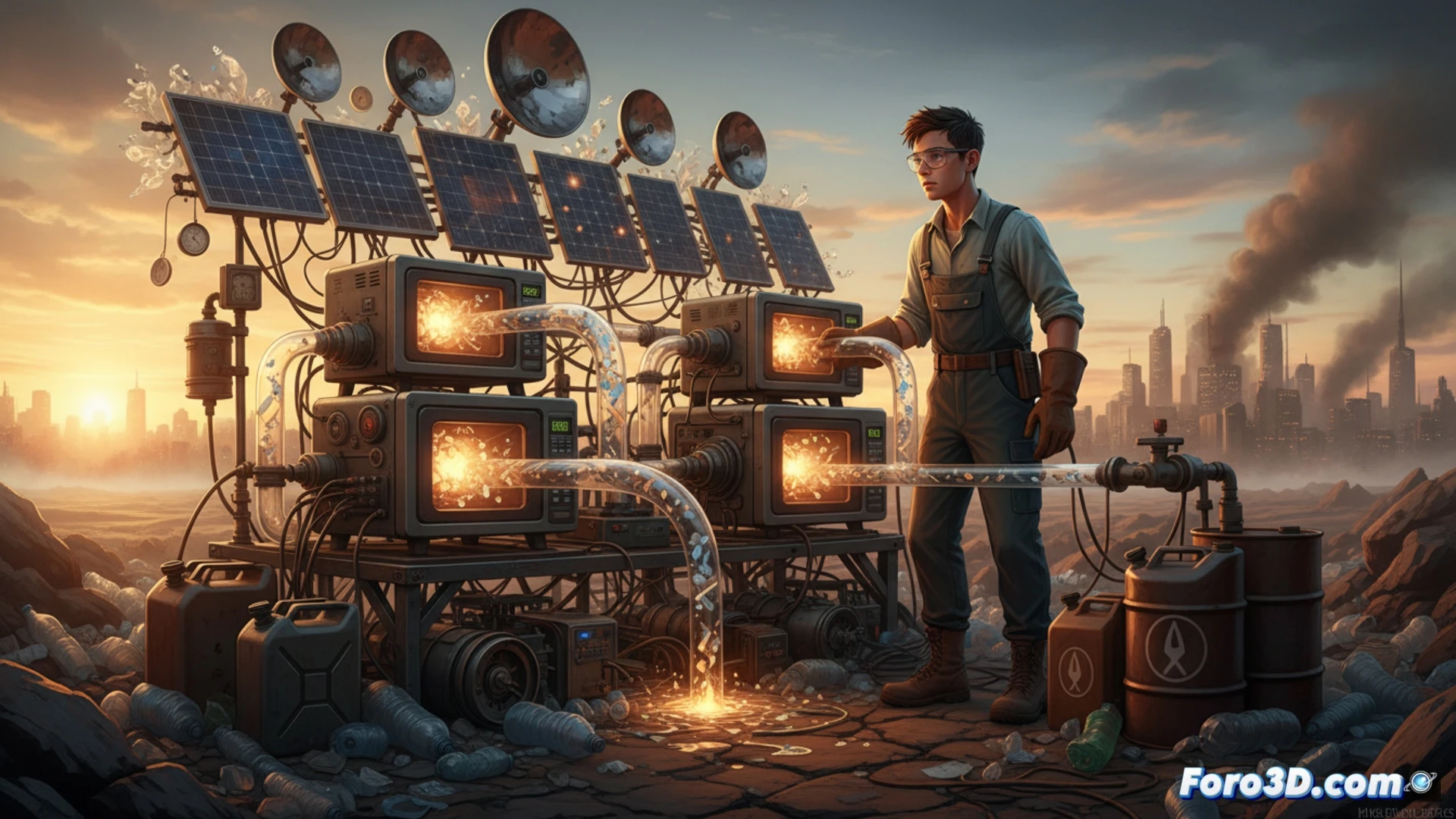
A 21-year-old has developed a system that converts plastic waste into gasoline using microwave magnetrons and solar energy. The process, based on microwave-assisted pyrolysis, heats plastic without oxygen to break it down into liquid hydrocarbons. This solution aims to tackle the pollution crisis and energy demand with a decentralized approach.
How microwave pyrolysis works with sunlight ⚡
The technology uses microwave magnetrons to generate direct heat on the plastic, reaching temperatures that break its molecular chains. By not using oxygen, combustion is avoided and hydrocarbons are obtained that can be refined as fuel. Solar energy powers the magnetrons, reducing operating costs and emissions. The system is compact, allowing installation in communities without complex infrastructure, transforming global waste into a local energy resource.
Homemade gasoline: now we just need the car to run on bottle caps 🚗
The invention sounds so good that you almost expect the next step to be filling the tank with bottle caps. While big oil companies invest in drilling holes, this kid has discovered that the neighbor's trash is worth more than a barrel of crude. Of course, we'll have to see if the resulting gasoline smells like a clean beach or a recycled landfill. For now, at least, plastic has a brighter future than a bag in the ocean.