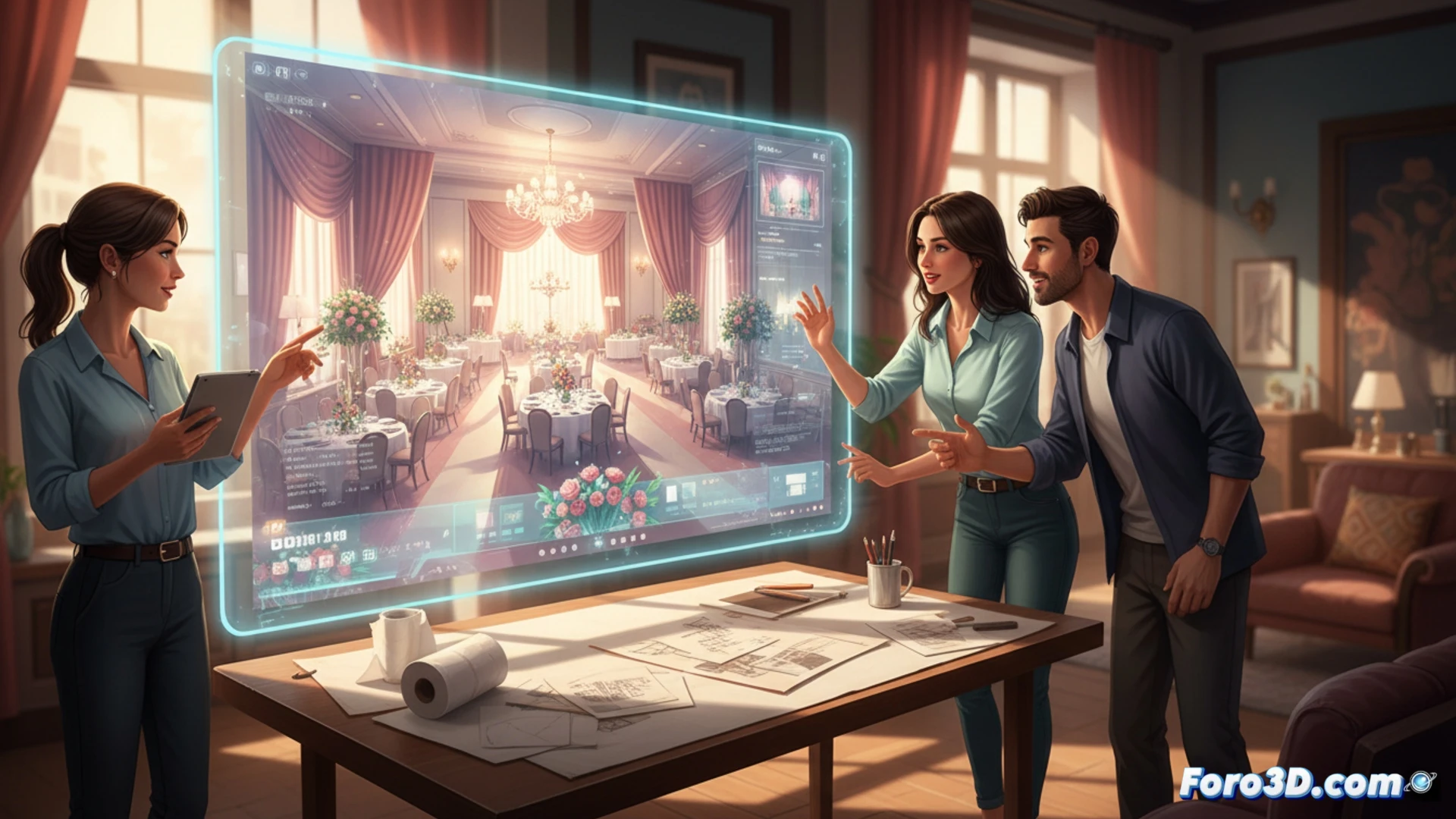
A wedding planner organizes tables, flowers, and candles, but often the client cannot visualize the result until the wedding day. 3D technology allows creating a digital twin of the real space, adjusting colors, chair layout, or centerpiece height before spending a single euro. Last-minute surprises are avoided and arguments with the catering provider are saved.
Key software for setting up the virtual banquet 🎂
To model the room and furniture, programs like SketchUp or Blender are sufficient. For fast, realistic rendering, Twinmotion allows lighting with natural or artificial light in real-time. For quick changes to tablecloth texture and color, the free tool Planner 5D offers a simple interface. The workflow consists of importing the floor plan, placing round or rectangular tables, assigning materials to chairs, and rendering a top-down view or a view from the entrance. The result is a virtual tour the client can see on their mobile phone.
The virtual groom who never argues about the budget 💍
The good thing about the 3D model is that you can move a potted plant a thousand times without anyone complaining. The bad thing is that when the client sees the render, they usually ask for the florist to look like a botanical garden and for the DJ to fit behind a 40 cm column. In the end, the 3D file becomes a battlefield between desire and budget, but at least no one cries over a real tablecloth.