The series Planetes, created by Makoto Yukimura, is set in 2075 and follows a group of space debris collectors. What sets it apart is not just its existential plot, but its obsession with technical verisimilitude. Every ship, every tool, and every spacesuit is drawn with engineering manual precision, while the characters' faces convey an overwhelming emotional fragility. This contrast is a masterclass for any 3D artist seeking to balance technological realism and human narrative in cinematic previsualization. 🚀
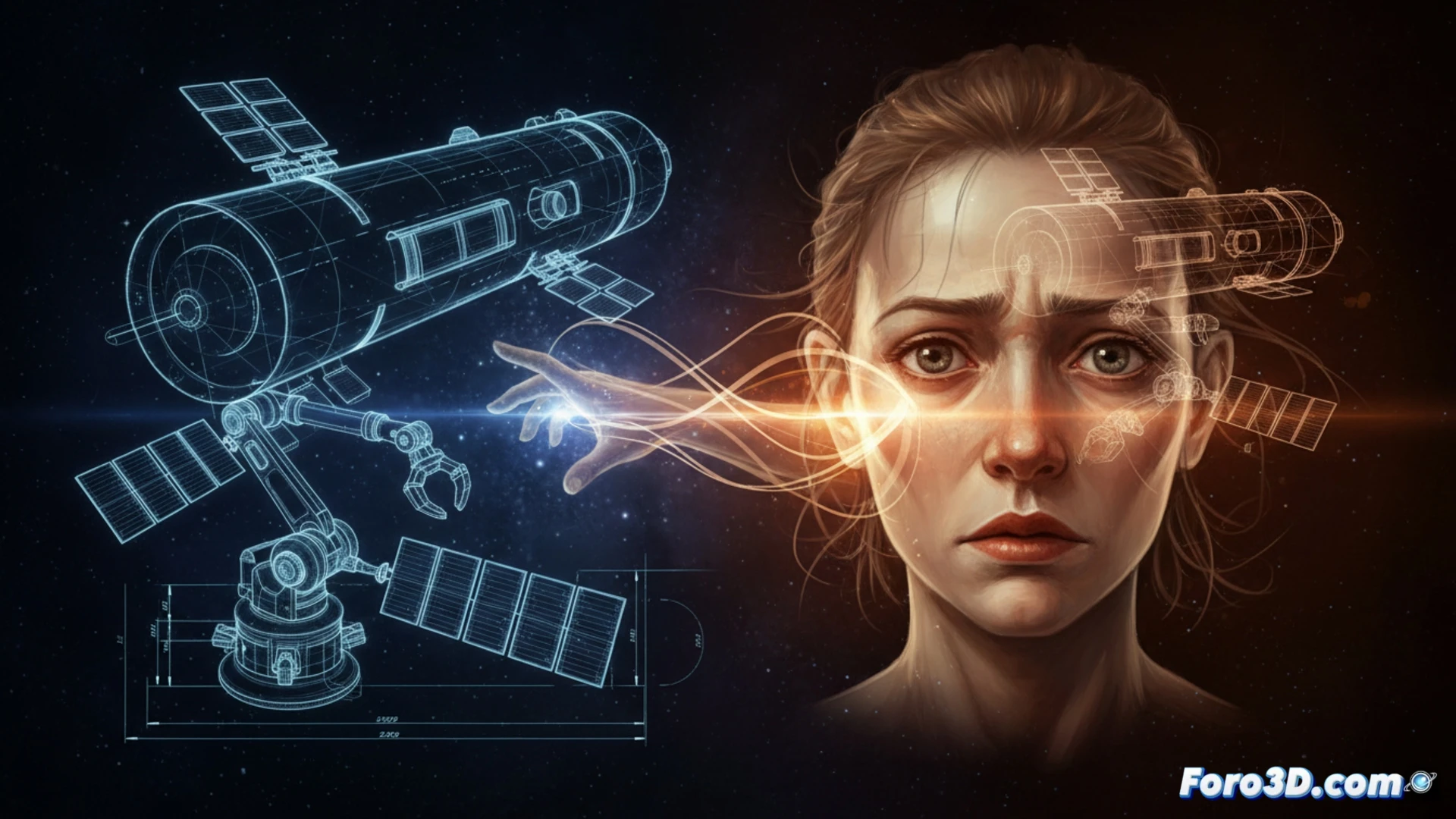
Technical modeling and zero-gravity simulation in 3D 🛰️
Planetes' approach demands a workflow where modeling ships and space stations must start from real references from NASA and JAXA. In 3D preproduction, this translates into creating assets with functional geometry: solar panels with hinges, detailed docking modules, and plausible propulsion systems. Zero-gravity simulation is another fundamental pillar. To capture the feeling of isolation, animators must use rigid body dynamics and slow-motion constraints, avoiding the dramatic accelerations of conventional fiction. Films like Gravity demonstrated that ambient lighting, with a single hard light source (the Sun) and high-contrast shadows, is key to conveying the immensity and loneliness of the void, a resource Planetes constantly uses in its quietest panels.
Existential lighting and the dilemma of the void 🌌
The deepest lesson from Planetes for 3D storyboarding is how lighting defines the emotional state. In orbital repair scenes, light bouncing off Earth can create a cold backlight that isolates the character. When modeling these scenes in previsualization, priority should be given to using directional and volumetric lights to create halos of dust or frozen particles. The Martian and Planetes share this technique: space is not a background, but an active character that presses down on the protagonists. Designing shots where the ship occupies only a third of the frame, leaving the rest to absolute black, visually reinforces the existential crisis of the solitary collector.
How technical precision in the designs of space debris and ships in Planetes influences the creation of realistic 3D assets for cinematic preproduction
(PS: Previs in film is like the storyboard, but with more possibilities for the director to change their mind.)