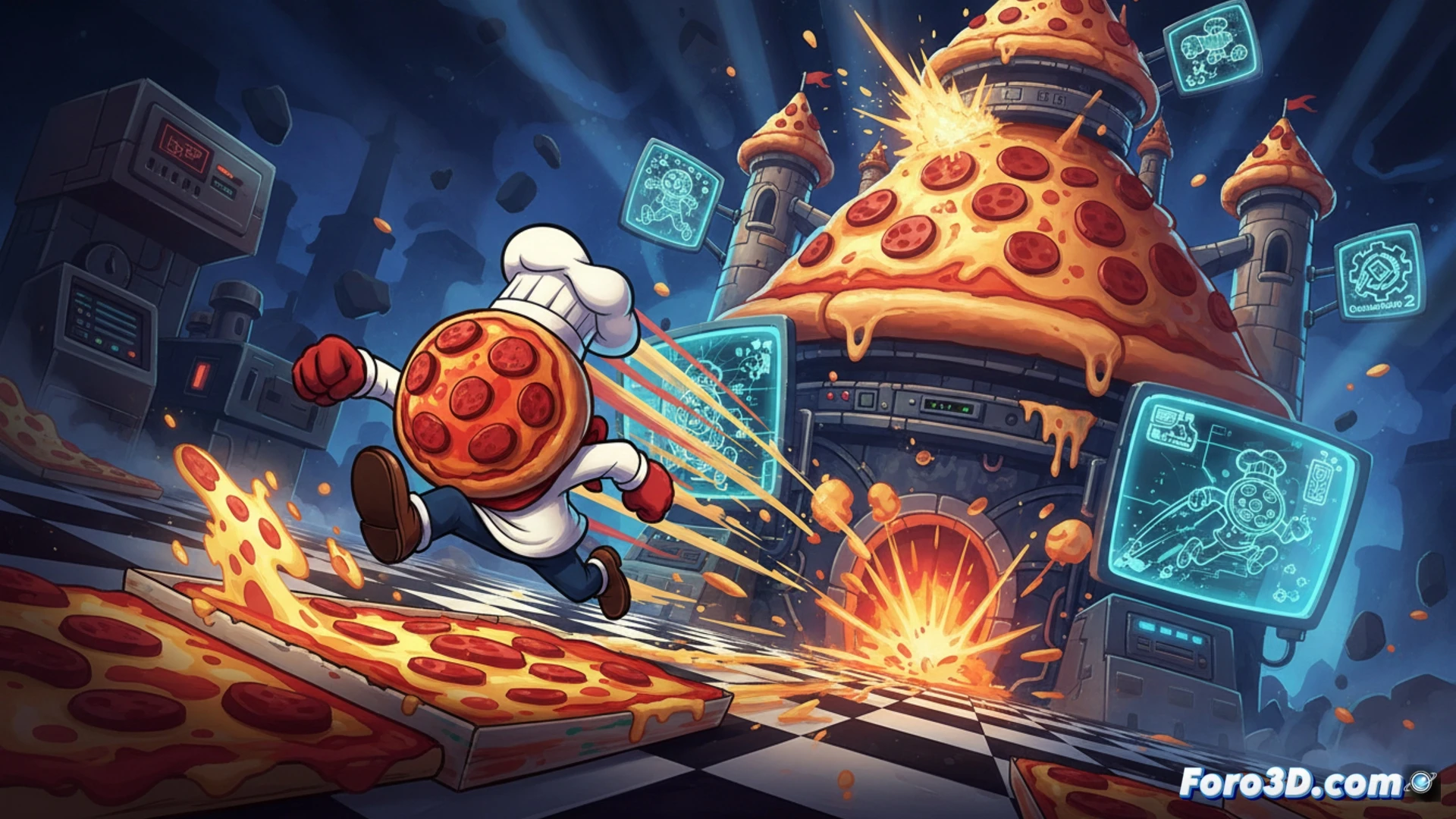
Pizza Tower is not just an indie success, but a case study on how to combine classic animation with modern programming. Its frenetic pace and 90s cartoon aesthetic are no accident. Behind every jump and every turn lies a meticulous choreography between Aseprite and GameMaker Studio 2. We analyze the techniques that allow a 32x32 pixel character to move with the agility of Wile E. Coyote.
Animation techniques and physics for speed 🎮
The secret lies in the synchronization between frame-by-frame art and the physics engine. In Aseprite, sprites are drawn with a minimum of 12 frames per second of animation, but are rendered at 60 FPS. This creates the illusion of elastic movement without saturating memory. The trick is to use sprites with a low base resolution (32x32) and scale them without filters, keeping the pixel art sharp. In GameMaker, the physics logic is simplified to the maximum: no complex collisions are used. Instead, rectangular hitboxes are employed, updated every frame, allowing the character to accelerate from 0 to its maximum speed in less than 0.1 seconds. The key is that the animation does not dictate the movement, but adapts to it: the sprite changes pose based on instantaneous speed, not the other way around. To maintain the rhythm, animation transitions are pre-calculated in Aseprite and stored as sequential spritesheets, avoiding real-time calculations that would slow down the game.
Lessons for indie developers 🛠️
To replicate this fluidity, prioritize consistency over detail. Define a limited color palette (maximum 16 colors per sprite) so that GameMaker processes frame changes without latency. Use the engine's alarm system to synchronize animations with physics, not the other way around. If your game aims to be frenetic, forget long transition animations; every frame must immediately communicate the character's state. Pizza Tower demonstrates that with accessible tools and a design focused on reaction speed, you can achieve a unique visual style that doesn't sacrifice performance.
How does Pizza Tower integrate classic animation principles like squash and stretch and expressive timing into its game engine without sacrificing the responsive fluidity required by a modern platformer?
(PS: game jams are like weddings: everyone is happy, nobody sleeps, and you end up crying)