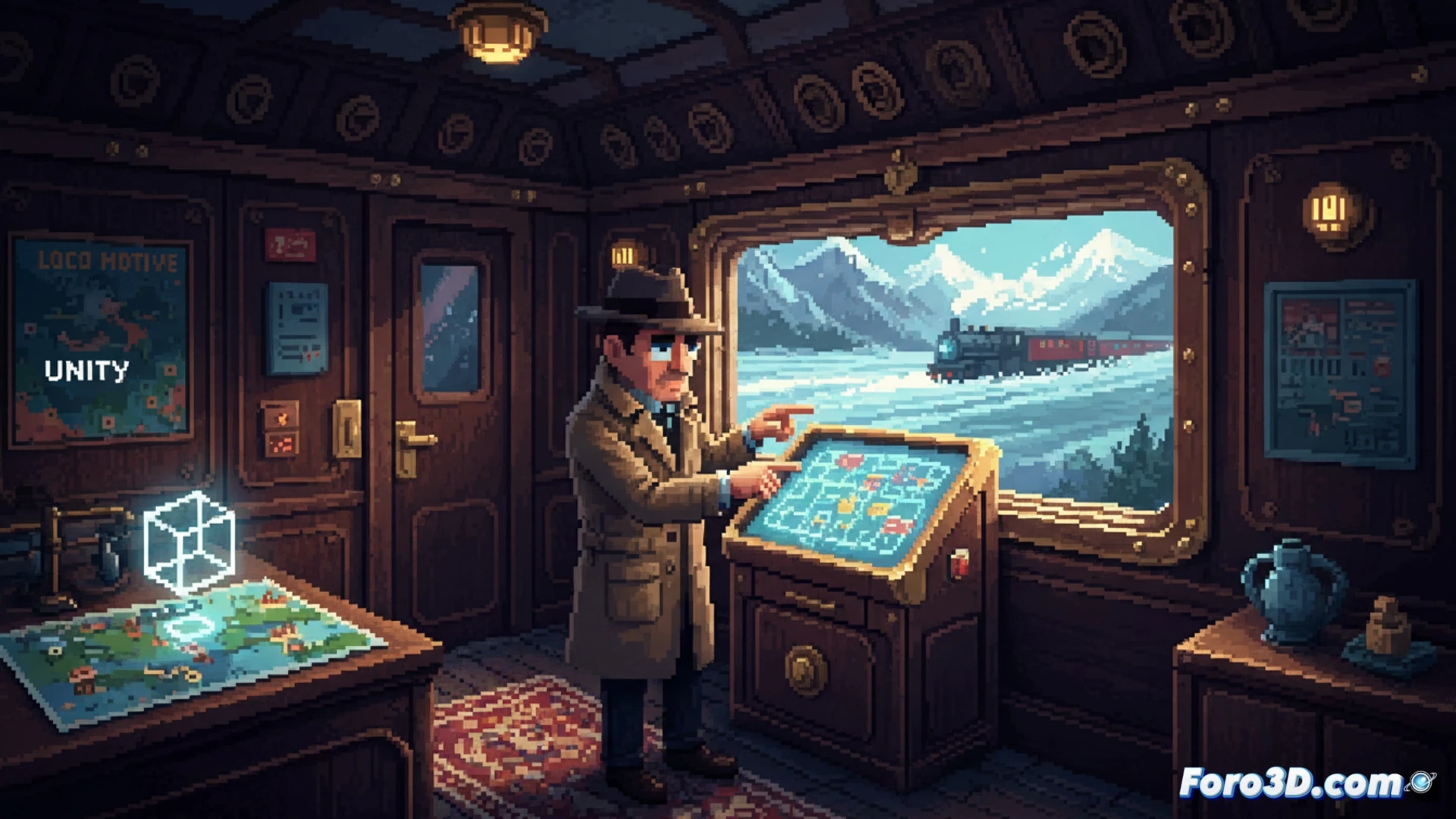
Loco Motive is a clear example of how the Unity engine can adapt to genres that seemed forgotten. This independent title bets on a point-and-click experience that pays homage to LucasArts classics, but with a notable technical leap. The studio has achieved high-resolution pixel art that maintains the retro essence without sacrificing visual fluidity, demonstrating that the development engine does not limit the artistic style, but rather enhances it.
Animation and optimization techniques in Unity for pixel art 🎮
The development of Loco Motive relies on a precise synergy between Unity and Aseprite. The team uses Aseprite to create sprites with a limited color palette but with a much higher pixel density than 90s games. This allows that, when importing assets into Unity, the engine does not scale the image aggressively, avoiding the blurry effect. To achieve smooth animations, custom interpolation curves are implemented in Unity's Animator, avoiding the classic flickering of low-resolution sprites. Additionally, the Tilemap system is used for the background, allowing static scenes to be rendered with high detail without consuming texture memory excessively.
Narrative and puzzle design: The legacy of LucasArts 🕵️
Beyond the engine, the soul of Loco Motive lies in its puzzle and narrative design, directly inspired by titles like Monkey Island and Day of the Tentacle. The team has managed to translate the absurd logic of those classics into a modern environment. The puzzles are not based on randomness, but on observing the environment and combining objects, a design that Unity facilitates through inventory systems and modular dialogues. The key is that the engine does not dictate the gameplay; the engine serves as a canvas for the narrative legacy of LucasArts to come to life with a technical fluidity that was previously impossible.
As an independent developer, what specific technical challenges did you face when combining the pixel art aesthetic with Unity's 3D capabilities to create the backgrounds and characters of Loco Motive, and how did you make that blend feel coherent with the classic graphic adventure genre?
(PS: 90% of development time is polishing, the other 90% is fixing bugs)