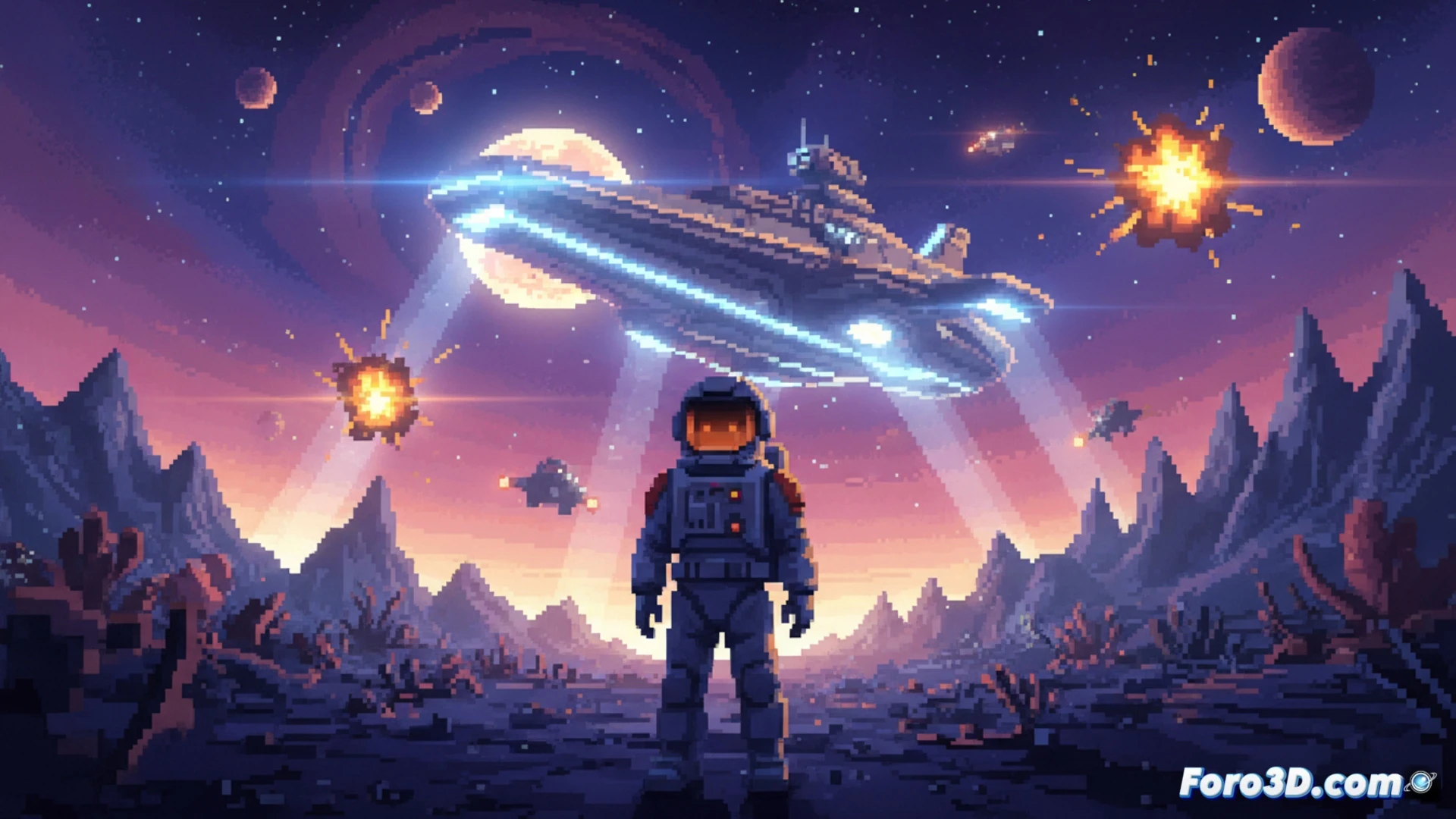
Beyond Galaxyland is an adventure RPG that demonstrates how cinematic 2.5D aesthetics can emerge from the fusion of classic pixel art and modern lighting effects. Created in Unity, the game pays homage to 80s science fiction cinema, using Photoshop for the art and the Unity engine to give depth and life to each scene. We analyze with its developer the technical process behind this unique visual proposal.
Asset optimization and 2.5D level construction 🎮
To achieve the sense of depth without sacrificing performance, the team worked with layers of sprites on parallel planes within Unity. The pixel art backgrounds, created in Photoshop with fixed resolutions, were imported as textures with point filtering to maintain sharpness. The key technical trick was the use of directional lights and 2D point lights from Unity's URP system, illuminating assets that originally lacked shadows. The developer highlights that the biggest challenge was managing the sorting layers so that characters interacted correctly with the lighting without breaking the pixel-perfect illusion. In level design, illuminated points of interest were prioritized to guide the player, leveraging the contrast between dark areas and bright neon lights.
Lessons for indie creators from the Steam release 🚀
Publishing a game with this aesthetic on platforms like Steam requires visual consistency from the first trailer. The developer recommends creating an asset pipeline in Photoshop that exports directly to formats compatible with Unity (uncompressed PNG) and using prefabs for the most repetitive lighting elements. The key is not to force real 3D: the magic of Beyond Galaxyland lies in tricking the eye with layers and lights, a technique accessible to any small studio wanting to make a qualitative leap without abandoning pixel art.
What specific technical challenges did you face when integrating 2.5D dynamic lights with pixel art sprites in Unity to avoid visual artifacts and maintain the retro aesthetic in Beyond Galaxyland?
(PS: 90% of development time is polishing, the other 90% is fixing bugs)