Pixel art is not a simple technical regression, but a first-rate narrative and aesthetic tool. It allows everything from the relaxed simulation of a garden to the tension of a desperate escape. Each block of color reinforces the game's visual identity, creating atmospheres that hyper-detailed realism often dilutes. It's not about nostalgia, but a design decision that prioritizes essence over visual noise.
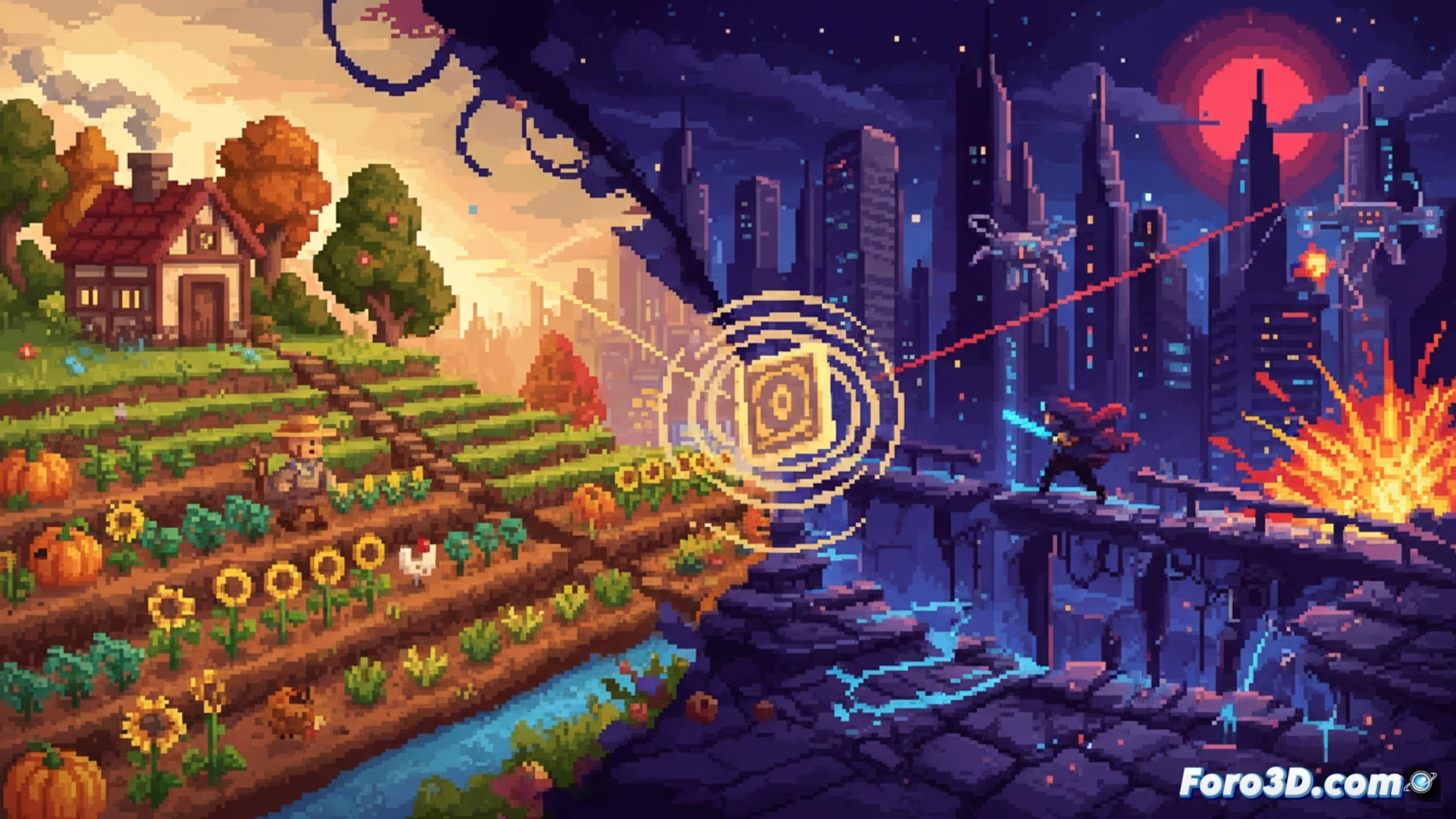
The logic behind the grid: optimization and style 🎨
From a technical standpoint, pixel art offers concrete advantages. The limited color palette reduces texture weight and speeds up loading times. Sprites, being smaller, consume less video memory, allowing smooth animations to run on modest hardware. Furthermore, pixel-by-pixel design forces the artist to be precise: every point counts. There is no room for filler; each element must communicate form, light, or texture with the minimum possible information. It is an exercise in visual synthesis.
When your character has more pixels than your patience 😅
Of course, then you show up and spend three hours adjusting a single pixel of your protagonist's eye because, if you don't, it looks like they have a nervous tic. And in the first minute of the game, the player sees it from a top-down perspective and doesn't even look at the eyes. But that's the beauty of it: that level of obsession is what separates a charismatic character from a pile of poorly placed squares. Pixel art is, in the end, the art of sweating over details that no one will see, but that are noticeable if they are missing.