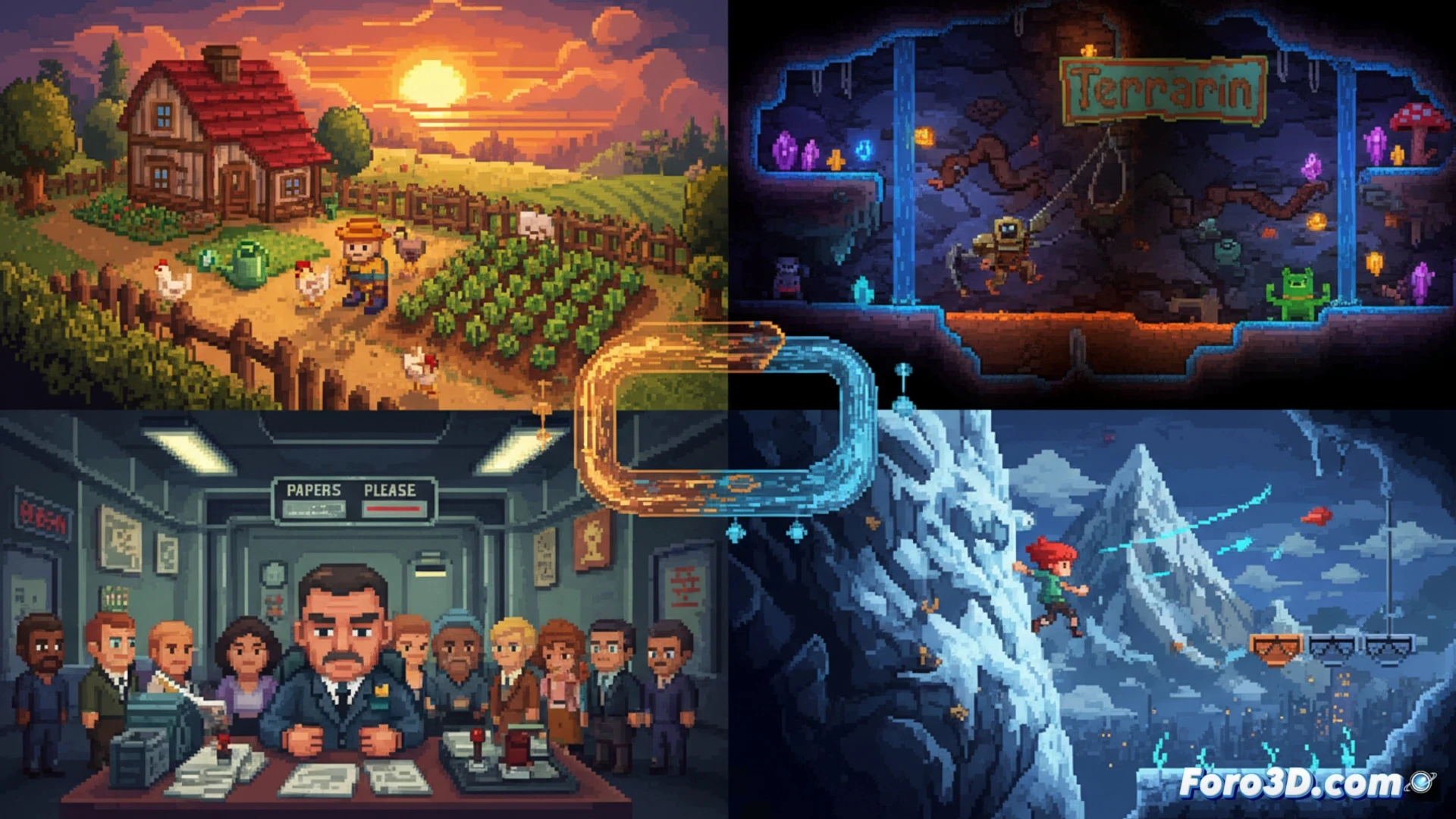
Pixel art is neither a niche nor a passing fad. Titles like Stardew Valley, Terraria, Papers, Please, and Celeste prove that this visual style adapts to genres as diverse as farming simulation, exploration, bureaucratic management, and platformers. They all share a retro aesthetic but offer radically different gameplay experiences, proving that form does not limit function.
The technique behind visual limitation 🎨
Pixel art demands rigorous control of the color palette and resolution. Each sprite is built with individual pixels, forcing developers to prioritize visual clarity over detail. In Celeste, the protagonist's few animation frames convey movement and weight. In Papers, Please, a muted palette reinforces the oppressive atmosphere. This technical discipline, far from being a limitation, is a narrative and design tool.
The day a pixel makes you cry at customs 😅
It's curious that a handful of little squares can cause you more stress than a tax report. Papers, Please turns you into a pixel-faced bureaucrat and makes you care whether a fictional family crosses the border or not. Meanwhile, in Stardew Valley, you cry over a harvest of virtual turnips. And then there's Celeste, where a 16x16 pixel character reminds you that climbing mountains is easy; the hard part is stopping playing.