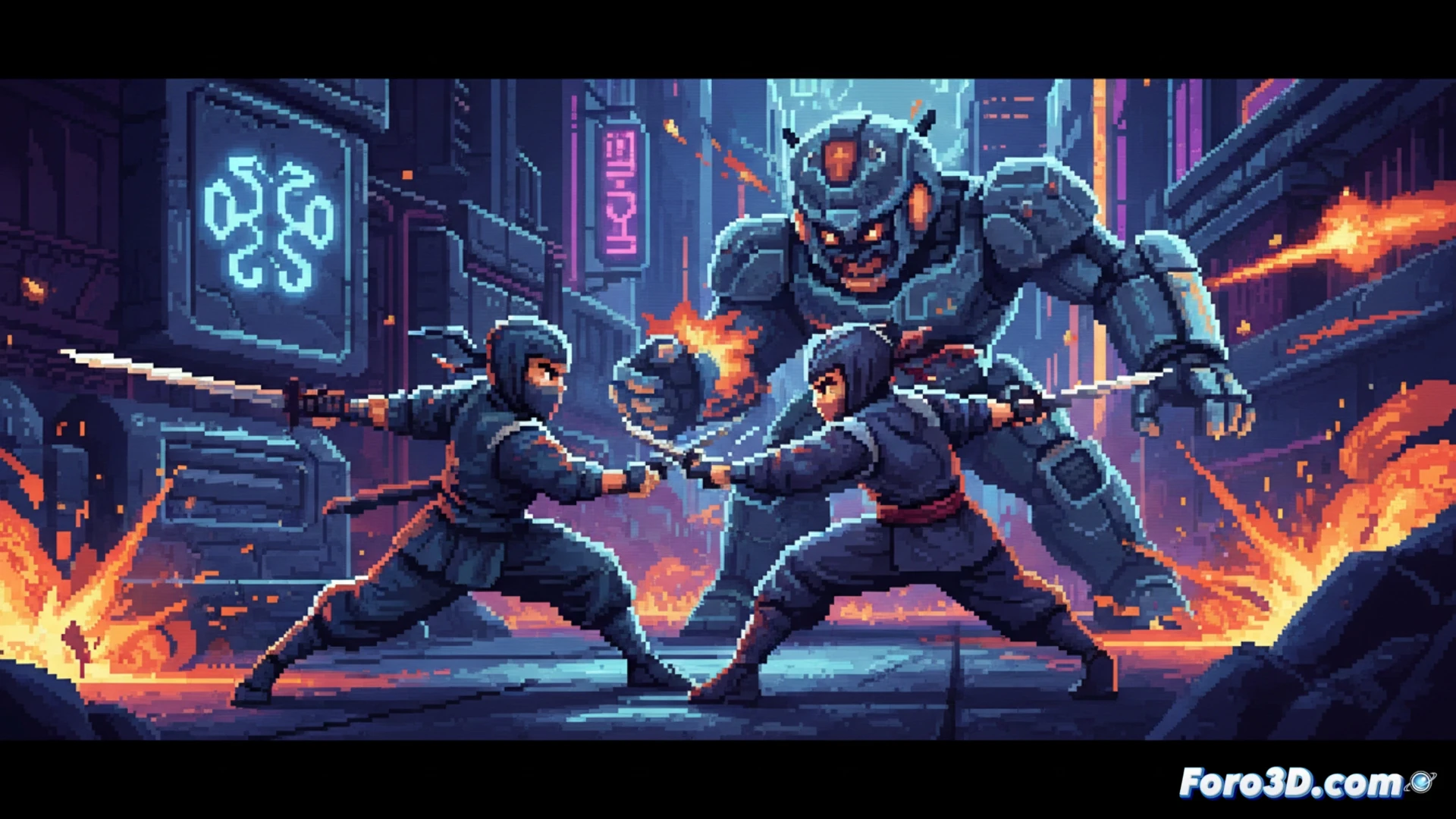
The announcement of Shadow of the Ninja - Reborn has reignited the debate about the limits of pixel art in the modern era. Developed by Tengo Project on Unity, this remake of the NES classic is not content with a simple visual restoration. Its proposal is radical: 2D sprites with a frame density and level of detail that emulate the flicker and solidity of high-end arcade machines from the 90s, but rendered in real-time with current technology.
High-density animation and optimization in Unity 🎮
The technical key lies in managing sprites with a massive number of frames per action. While an original NES game might use 4 or 5 frames for an attack, Tengo Project multiplies that number to achieve smooth transitions and a visual weight reminiscent of titles like Metal Slug. The challenge in Unity is twofold: first, avoiding excessive VRAM consumption by managing gigantic texture atlases through intelligent compression. Second, synchronizing game logic at 60 FPS without sacrificing instant input response, a challenge they solve with custom NatsumeAtari tools that allow pre-caching animation sequences and adjusting timing frame by frame, mimicking the arcade feel.
Lessons for current indie development 💡
The approach of Shadow of the Ninja - Reborn demonstrates that pixel art is not obsolete, but rather evolves towards a neo-retro aesthetic. For independent developers, the lesson is clear: quality depends not only on the engine, but on craftsmanship in animation and resource optimization. Investing in a high-density sprite pipeline, although costly in production time, can differentiate a product in a saturated market. Unity, combined with custom tools, remains the perfect ally for those seeking that balance between nostalgia and technical performance.
How does Shadow of the Ninja Reborn manage to combine classic pixel art techniques with modern tools to create a visual aesthetic that is perceived not as retro but as contemporary?
(PS: optimizing for mobile is like trying to fit an elephant into a Mini Cooper)