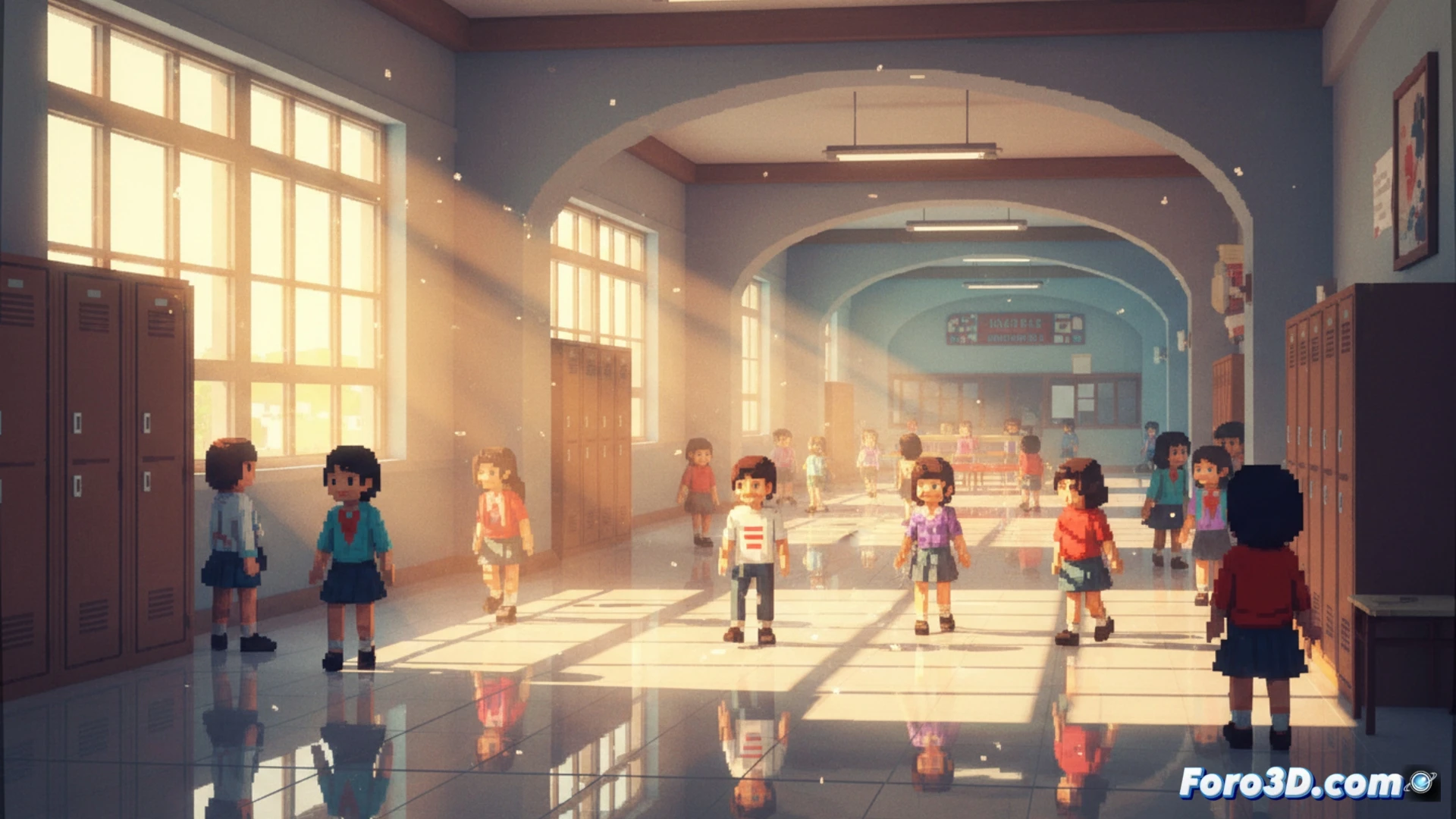
Until Then, developed in Unity, has captured the industry's attention with its visual proposal: combining 2D pixel art sprites with three-dimensional environments that incorporate dynamic lighting and post-processing effects. The result is a style they call nostalgic realism, where the rawness of pixels coexists with modern lens reflections and blurs. We analyze the technical workflow behind this aesthetic, from asset creation to real-time integration. 🎮
Workflow: From Aseprite to Unity with post-processing 🛠️
The Until Then pipeline begins in Aseprite, where characters and 2D elements are designed with a limited color palette and frame-by-frame animations. These sprites are exported as sprite sheets or individual PNG files. In parallel, textures for the 3D environments are created in Photoshop, using wear and detail layers to maintain consistency with the pixel art. In Unity, the trick lies in Shader Graph: a stylized shading is applied to the 3D models that emulates the flat lighting of pixel art, but reacts to real light sources. The camera is configured with a post-processing volume that includes Depth of Field (lens blur) and soft Bloom, allowing the 2D sprites to integrate seamlessly into the 3D space without breaking immersion.
The paradox of nostalgic realism 🤔
The biggest technical challenge in Until Then is balancing the simplicity of pixel art with the complexity of 3D lighting. If the effects are too realistic, the pixel art looks out of place; if they are too flat, the depth is lost. The solution involves using subtle Reflection Probes and soft ambient light, avoiding sharp shadows that would reveal the polygonal geometry. This approach demonstrates that Unity allows merging techniques from different eras of development, prioritizing visual coherence over raw realism. A valuable lesson for any indie developer seeking a distinctive style without sacrificing performance.
How does Until Then maintain visual coherence between the 2D pixel art sprites and the 3D environments in Unity without the contrast of styles breaking the player's immersion?
(PS: 90% of development time is polishing, the other 90% is fixing bugs)