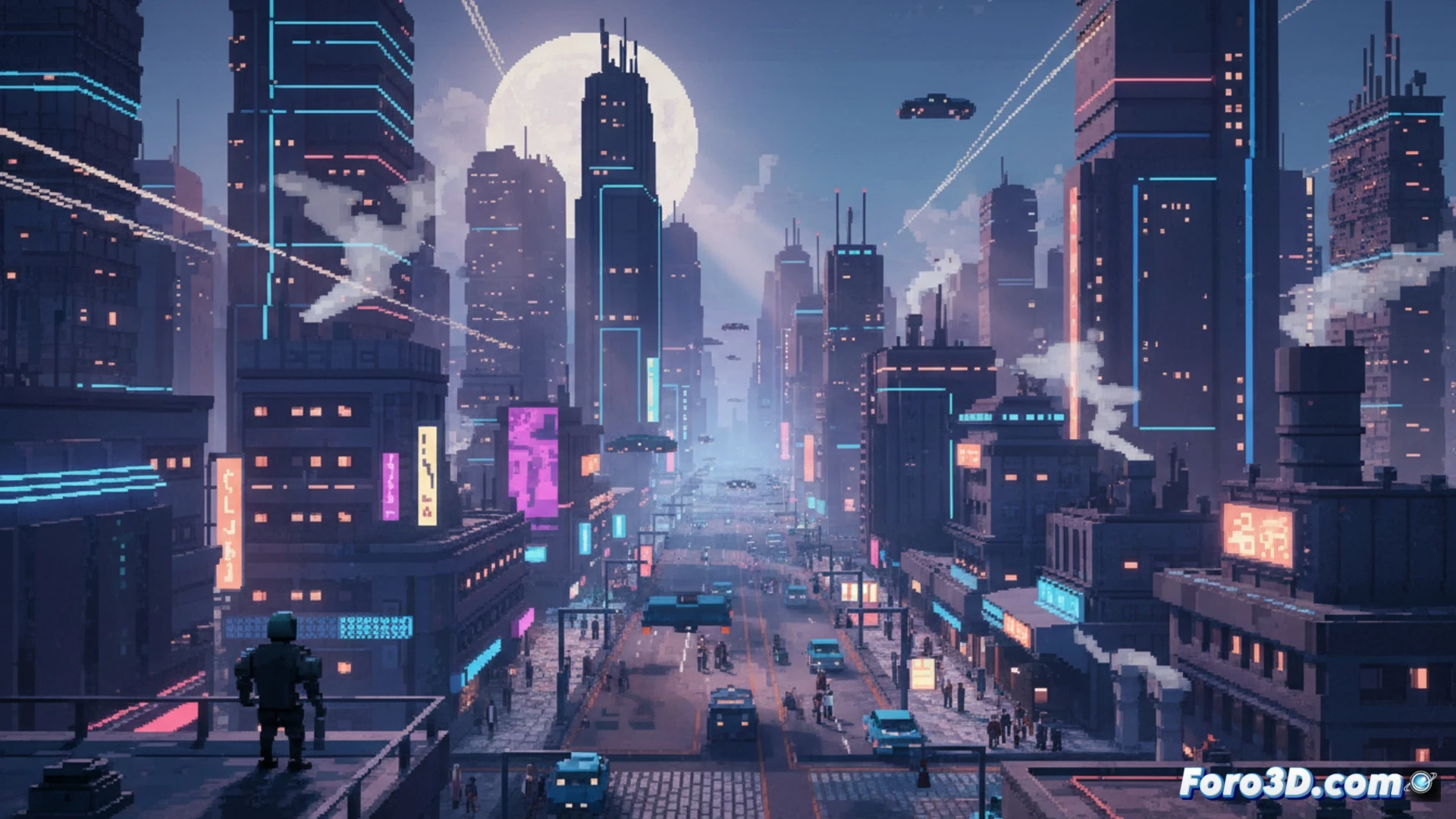
The fusion between classic pixel art and modern post-processing techniques defines a new aesthetic frontier in video game development. In this analysis, we break down how a highly modified Unity engine achieves convincing 2.5D rendering. It's not just about flat sprites; the key lies in a dynamic lighting system that respects pixel resolution, combined with cinematic depth of field that gives volume to a retro-futuristic world. 🎮
Engineering layered animation for retro fluidity 🛠️
To achieve fluidity without breaking the pixelated aesthetic, a layered animation system was implemented in Unity. Each character is composed of independent sprites (torso, legs, head) generated in Photoshop with limited color palettes. The engine orchestrates these layers using a 2D bone system that allows rotation and position interpolation, avoiding forced scaling that would degrade quality. The technical trick lies in the custom Shader Graph: it applies point filtering to textures, but allows dynamic lighting (point and directional lights) to be calculated in a high-resolution world space, projecting soft shadows onto a 2.5D mesh that simulates depth.
The dilemma of the workflow between Photoshop and Unity 🎨
The biggest challenge is not technical, but artistic pipeline. Pixel art requires millimeter control that Unity's automatic filters can destroy. The solution was to develop internal post-processing tools that respect the hard edges of pixel art while applying bloom and specular reflections. Photoshop acts as the source of truth for the base resolution (16x16 or 32x32 pixels per unit), while Unity scales these assets using an orthographic camera system with fixed render resolution. This methodology allows the game to look sharp on 4K monitors without losing the retro essence, demonstrating that aesthetic optimization is as crucial as performance optimization.
How to implement a dynamic lighting system in Unity that respects the aesthetic of 2.5D pixel art without breaking the visual coherence of layered animations?
(PS: a game developer is someone who spends 1000 hours making a game that people complete in 2)