The development of SteamWorld Heist II represents a fascinating case study within the indie video game niche. Thunderful has opted for a proprietary engine based on SDL2, moving away from commercial solutions like Unity or Unreal. This technical decision, combined with an artistic pipeline centered on Photoshop and Illustrator, allows for granular control over 2D vector rendering and the implementation of parallax depth layers, achieving a unique robotic aesthetic and exceptionally fluid mechanical animations. 🤖
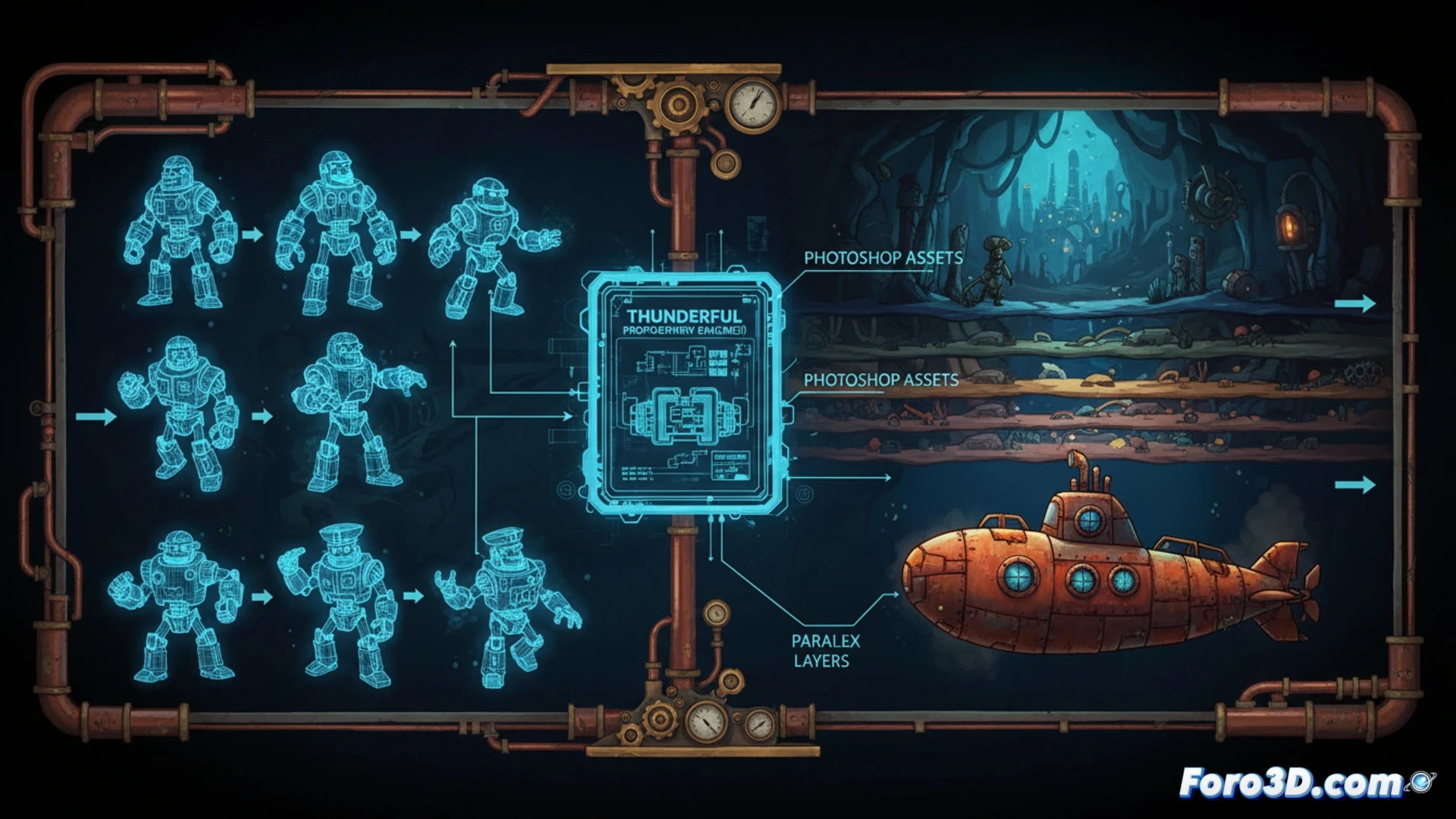
Modular animation and parallax layer rendering 🎨
The modular design of the robotic characters is key to the pipeline. In Illustrator, artists build each robot from independent vector pieces: arms, heads, torsos, and joints. These pieces are exported as optimized SVG files and imported into the proprietary engine. There, the SDL2 animation system interpolates the transformations of each module independently, generating smooth mechanical movement without the need for pre-rendered sprites. Visual depth is achieved through a parallax layer system: the background, foreground elements, and the characters themselves are rendered on separate planes with differentiated scrolling speeds. This creates a sense of three-dimensionality without resorting to 3D models, leveraging the efficiency of vector rendering to maintain stable performance even on modest hardware.
Advantages of a proprietary engine over commercial solutions ⚙️
The choice of a proprietary engine over commercial alternatives offers concrete advantages for this type of project. By not relying on a generic rendering system, Thunderful can optimize the pipeline exactly for its vector assets, eliminating the overhead of unused functions. Direct integration with Illustrator files allows iterating on robot design without going through complex conversion or compilation processes. In my opinion, this approach demonstrates that for 2D games with a very defined visual identity, the flexibility of a custom engine can surpass the convenience of a commercial ecosystem, as long as the team has the technical expertise to manage it.
How does the Thunderful Development team optimize the use of vectors and parallax effects in SteamWorld Heist II to maintain smooth performance on low-power consoles without sacrificing the game's characteristic visual depth?
(PS: a game developer is someone who spends 1000 hours making a game that people complete in 2)