Warhammer 40,000: Chaos Gate - Daemonhunters represents a fascinating case study on how the combination of Unreal Engine 4, Autodesk Maya, and Substance Painter brings the gothic science fiction aesthetic to life in real-time. The game achieves a balance between dense volumetric lighting and high fidelity in the ornate armor of the Grey Knights, demonstrating a robust artistic pipeline for environmental destruction.
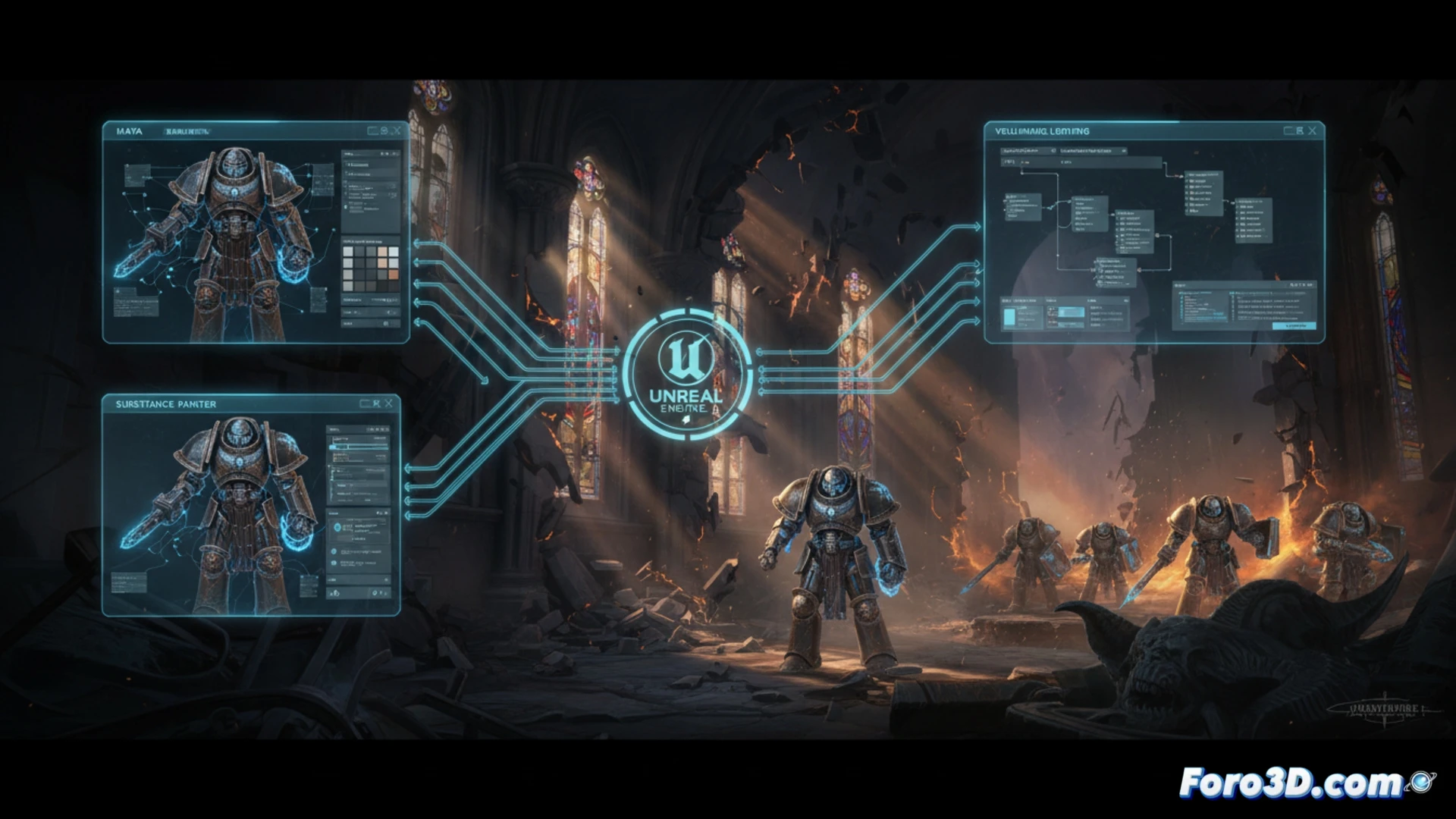
Asset and shader pipeline for dark gothic 🎨
The workflow begins in Autodesk Maya for sculpting and retopology of armor models, where the intricate reliefs and ornamental details characteristic of the Imperium are defined. Subsequently, Substance Painter handles PBR-based texturing, generating wear maps, dirty metals, and ecclesiastical varnishes that reinforce the visual narrative. The real leap in quality occurs in Unreal Engine 4, where custom shaders process volumetric lighting. Fog effects and dynamic light combine with particle systems to simulate scene destruction, using decals and geostructures that respond to weapon impact, all optimized to maintain performance in tactical turn-based combat.
Lessons on visual identity and performance ⚙️
This project demonstrates that visual fidelity in a strategy game depends not only on texture resolution but on technical coherence between tools. The use of Unreal Engine 4 as the central hub, supported by Maya for structure and Substance Painter for surface detail, allows developers to create an oppressive and believable atmosphere without sacrificing gameplay. The key lies in understanding that volumetric lighting and environmental destruction are not just effects, but narrative elements that reinforce the Warhammer 40,000 universe.
How the technical pipeline of Warhammer 40,000: Chaos Gate in Unreal Engine 4 balances the graphical complexity of futuristic grimdark with stable performance in turn-based combat featuring multiple destructible units
(PS: game jams are like weddings: everyone is happy, no one sleeps, and you end up crying)