The development of Splatoon 3 for Nintendo Switch represents a fascinating case study in pipeline optimization. Although Nintendo's internal engine is not open-source like Unreal Engine, the techniques used to achieve its stylized urban aesthetic are transferable to any project. This article breaks down the technical workflow, from Inklings animation in Autodesk Maya to advanced fluid shading and the creation of the game's visual identity through Photoshop. 🎮
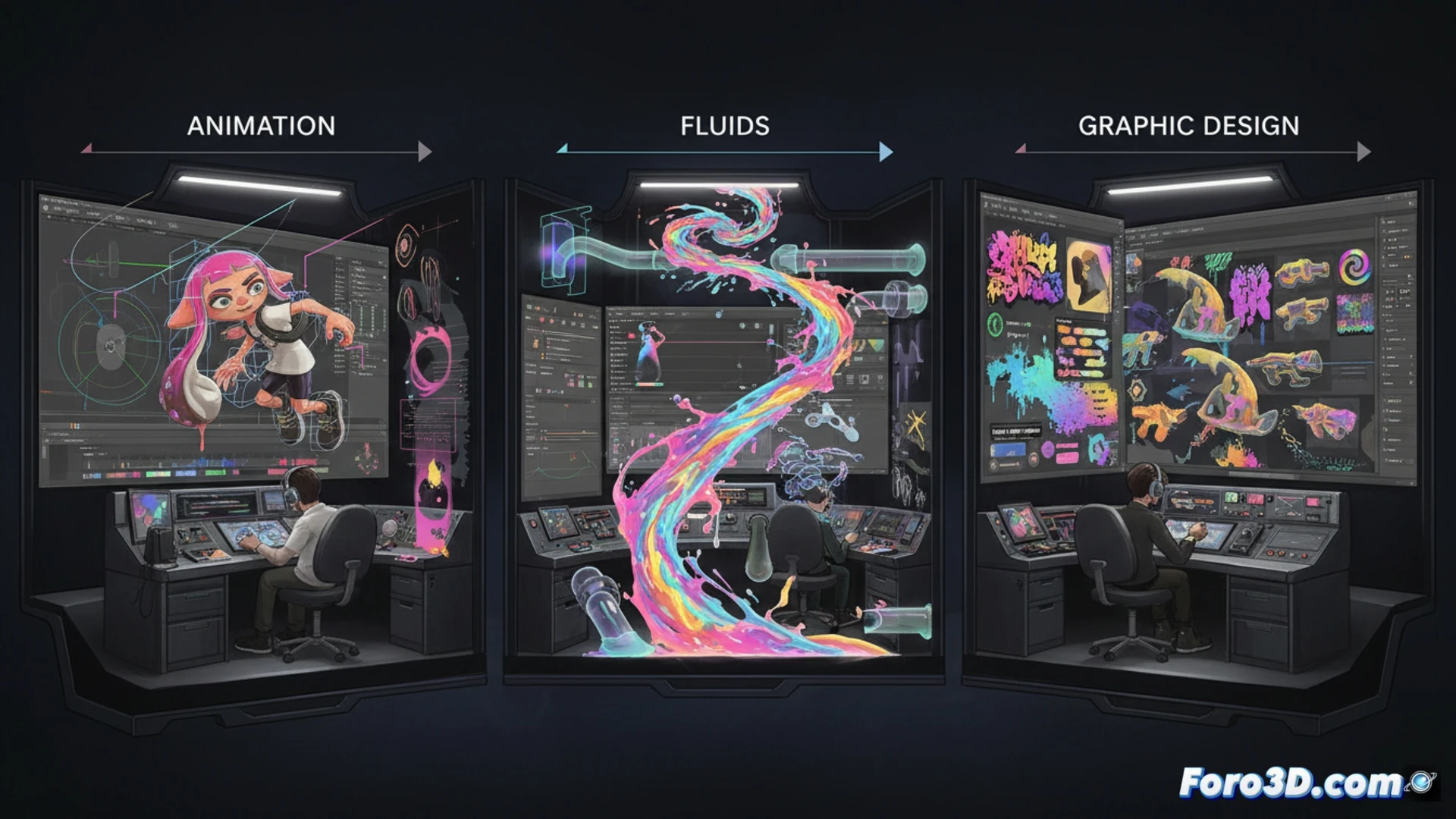
Animation in Maya and fluid shading with displacement maps 🖌️
The art team relies on Autodesk Maya for animating Inklings and Octolings. The key to success lies in the smooth transition between humanoid forms and squid transformations, requiring dynamic rigging that does not sacrifice performance on the console. For the ink system, Nintendo implements advanced shading that combines displacement maps to simulate the volume and texture of the fluid on surfaces, along with real-time reflections that react to the scene's lighting. This technique avoids the computational cost of a full physical simulation, achieving a viscous and shiny look that is the game's hallmark. Optimization for the Switch means these shaders are calculated on the GPU with varying levels of detail depending on camera distance.
Photoshop and visual identity: branding the chaos 🎨
An underrated aspect of the pipeline is graphic design. The world of Splatoon 3 is saturated with fictional brands, clothing logos, and advertising posters. To manage this vast amount of assets, designers use Photoshop as a central tool to create textures and vector graphics. Each piece of clothing and each paint splatter on the map has a unique design that reinforces the game's urban culture. This branding work is not only aesthetic; from a technical standpoint, these elements are packed into texture atlases to minimize draw calls, demonstrating that concept art and technical optimization must go hand in hand in video game development.
How does Splatoon 3's animation pipeline maintain character fluidity and real-time ink simulation without sacrificing performance within the hardware limits of the Nintendo Switch?
(PS: a game developer is someone who spends 1000 hours making a game that people complete in 2)