The development of F.I.S.T.: Forged In Shadow Torch represents a fascinating case study on how a small team can achieve a high-budget visual finish. The key lies in the integration of an asset creation pipeline that combines Autodesk Maya for base modeling, ZBrush for high-resolution detail, and Substance Painter for texturing realistic metallic materials, all rendered in real-time using Unreal Engine 4.
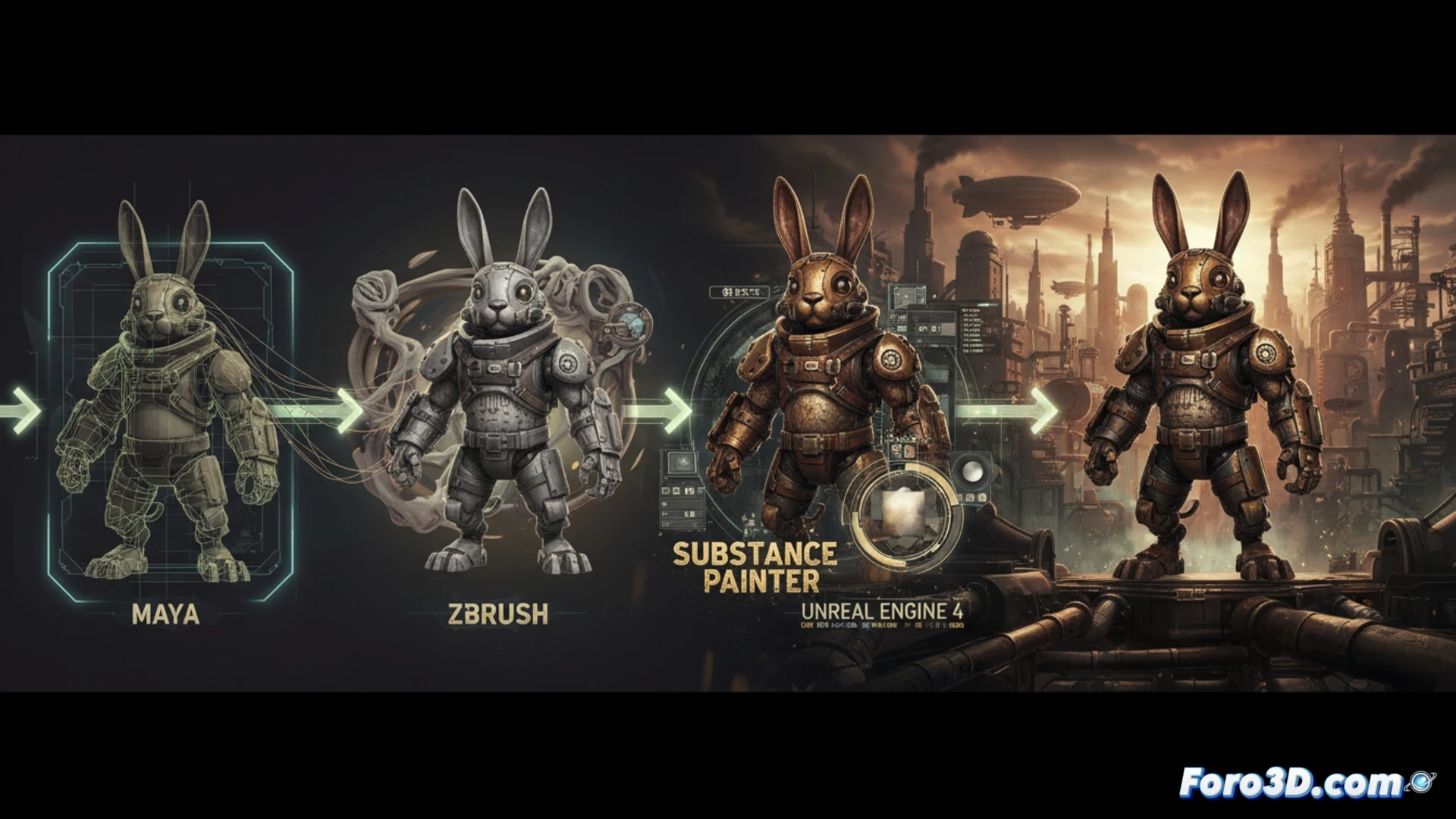
Metallic and neon material pipeline in Unreal Engine 4 🎨
The game's oriental dieselpunk blend rests on two technical pillars: the treatment of rusted surfaces and neon lighting. In Substance Painter, artists generate roughness and metalness maps with localized wear, using position masks to simulate rust on corners and joints. Subsequently, in Unreal Engine 4, master materials are applied that combine these maps with a dynamic lighting system based on saturated color point lights. Metallic surfaces respond to high-frequency specular reflections, while neon elements use emissives with bloom controlled by post-processing, achieving a contrast between rusted technology and classical architecture without breaking visual coherence.
Optimization and lessons for independent studios ⚙️
The case of F.I.S.T. demonstrates that aesthetics depend not only on the engine but on how tools are orchestrated. The use of ZBrush to sculpt details on armor and gears, combined with high-to-low polygon normal baking in Maya, allows maintaining solid performance on eighth-generation consoles. The lesson for other developers is clear: investing time in creating smart materials in Substance Painter and configuring neon lights as volumetric sources in Unreal Engine 4 can transform a generic scene into a living, atmospheric world without needing 8K textures.
As a small team, what key decisions in the technical pipeline allowed optimizing resources to achieve the complex dieselpunk aesthetic without compromising performance in F.I.S.T.: Forged In Shadow Torch
(PS: a game developer is someone who spends 1000 hours making a game that people complete in 2)