The team at Tindalos Interactive achieved in Aliens: Dark Descent one of the most oppressive atmospheres in the genre, using Unreal Engine 4 as its foundation. The key to success lies in a meticulous pipeline that combines high-precision modeling in Autodesk Maya with ultra-realistic materials created in Substance Designer. The result is a decaying industrial aesthetic where every shadow and texture contributes to the constant tension of the strategy game.
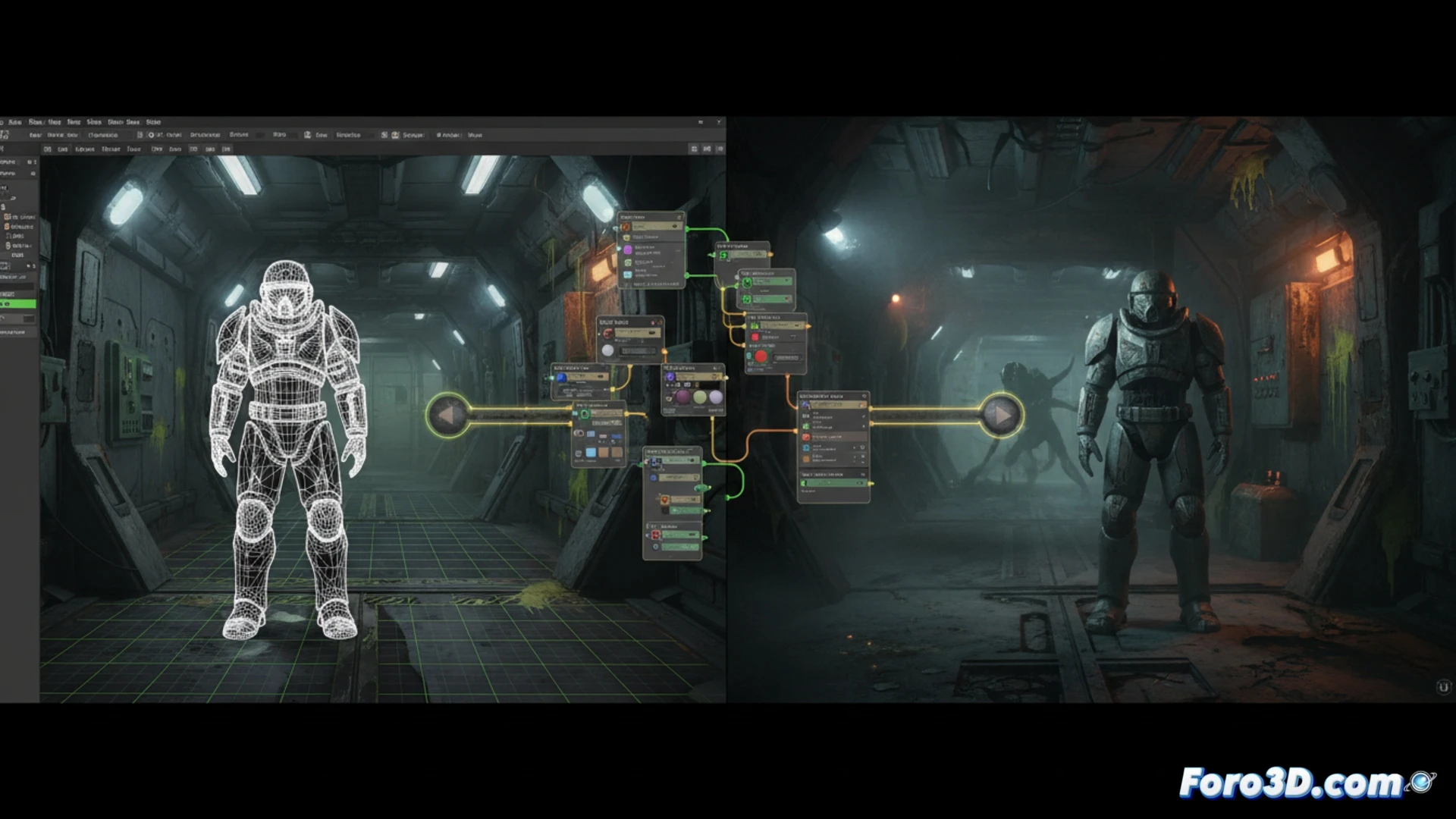
Organic modeling and procedural materials for terror 🎭
For the Xenomorphs, artists used Autodesk Maya, focusing on the franchise's characteristic biomechanical silhouette. Modeling prioritized visual legibility under low-light conditions, with topologies optimized for smooth animations and dynamic shadows. In parallel, Substance Designer was fundamental for generating the worn metallic materials of the colonial bases. Using procedural node graphs, patterns of rust, scratches, and dirt were created that dynamically respond to Unreal Engine 4's lighting, avoiding repetitive textures and enhancing the feeling of abandonment.
Integration of volumetric fog and shadows for tension 🌫️
The real magic happened during integration within Unreal Engine 4. The Substance Designer materials were combined with high-resolution dynamic shadows and a custom volumetric fog system. This fog not only visually conceals the enemy but also interacts with flashlight beams and weapon flashes, creating a claustrophobic environment. The pipeline demonstrates how a solid technical foundation in modeling and materials allows the graphics engine to enhance visual narrative without sacrificing performance.
How did Tindalos Interactive manage to integrate Maya and Substance with Unreal Engine 4 to create the oppressive atmosphere and dynamic lighting of Aliens: Dark Descent without sacrificing real-time performance?
(PS: shaders are like mayonnaise: if they break, you start all over again) 🎮