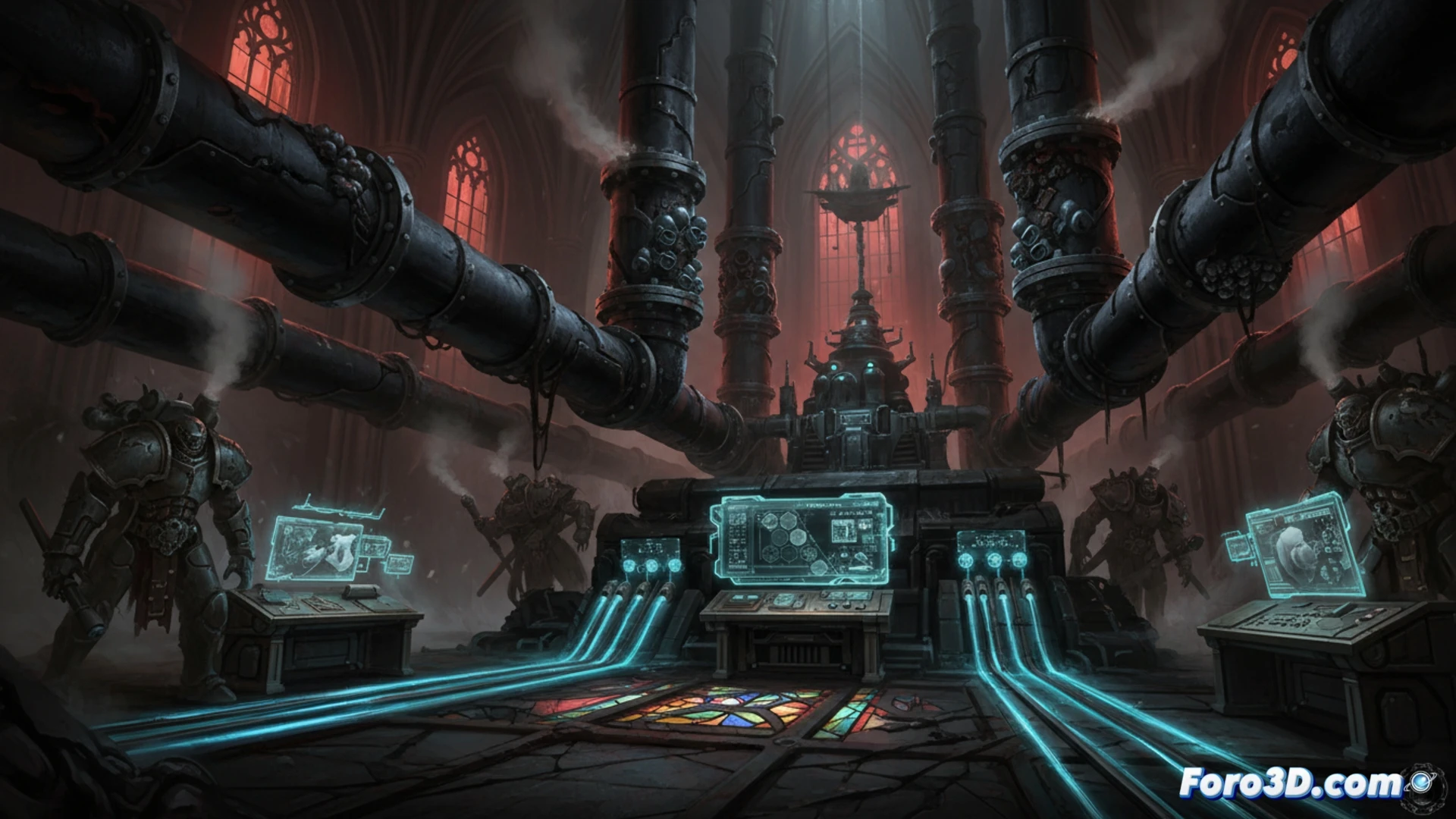
The release of Warhammer 40,000: Darktide left us with a key technical lesson: how to squeeze a discontinued engine like Autodesk Stingray (BitSquid) to achieve massive global illumination in gothic-industrial environments. Fatshark bet on a pipeline where the environmental oppression is not a post-process effect, but a direct consequence of geometry and texturing. We analyze the tools and processes that made this atmosphere possible, offering a practical guide to replicating these techniques in modern engines.
Global Illumination and Massive Scale in Stingray 🎮
The Stingray engine, although abandoned by Autodesk, proved competent in handling massive scene volumes thanks to its baked global illumination system combined with dynamic light probes. To achieve the long corridors of Hive City Tertium, the team used a texture and mesh streaming system based on load grids, avoiding visual pop-in. The technical key lay in using high-resolution lightmaps with precalculated indirect light bounce, which simulated the light pollution of industrial spotlights on metallic and stone surfaces. For independent developers in Unreal Engine, it is recommended to replicate this using the Lightmass system with high-quality bakes and Volumetric Fog to emulate the oppressive atmospheric density, adjusting the Exponential Height Fog to create the feeling of claustrophobic depth.
From ZBrush to Substance: The Art of Deterioration 🛠️
The design of imperial armor and enemies in Darktide is a case study in the visual narrative of wear and tear. In ZBrush, artists sculpted gothic filigree details and rivets, but the real dirty work happened in Substance Painter. Here, they applied masks of dirt, rust, and cracking using smart generators that responded to the model's curvature and occlusion. The technical trick was using height-based wear maps to simulate rubbing on edges and corners. For an indie developer, it is suggested to create a master material in Unreal Engine that combines a global dirt map with a mask-based wear parameter, using the Distance to Nearest Surface node to replicate the effect of accumulated dust in armor joints.
What was the biggest challenge when integrating assets sculpted in ZBrush and textured in Substance Painter into the Autodesk Stingray pipeline to achieve the gothic-industrial aesthetic of Darktide without sacrificing performance?
(PS: a game developer is someone who spends 1000 hours making a game that people complete in 2)