A hydrogen-powered autonomous bus caught fire after a sudden explosion. Forensic investigators deployed a digital pipeline to determine if a pothole in the road caused a gas leak. This workflow integrates four key tools: PC-Crash, FARO Zone 3D, SolidWorks, and Lumion. The goal was to reconstruct the chassis, locate the fuel cells, and simulate the impact to verify the accident hypothesis.
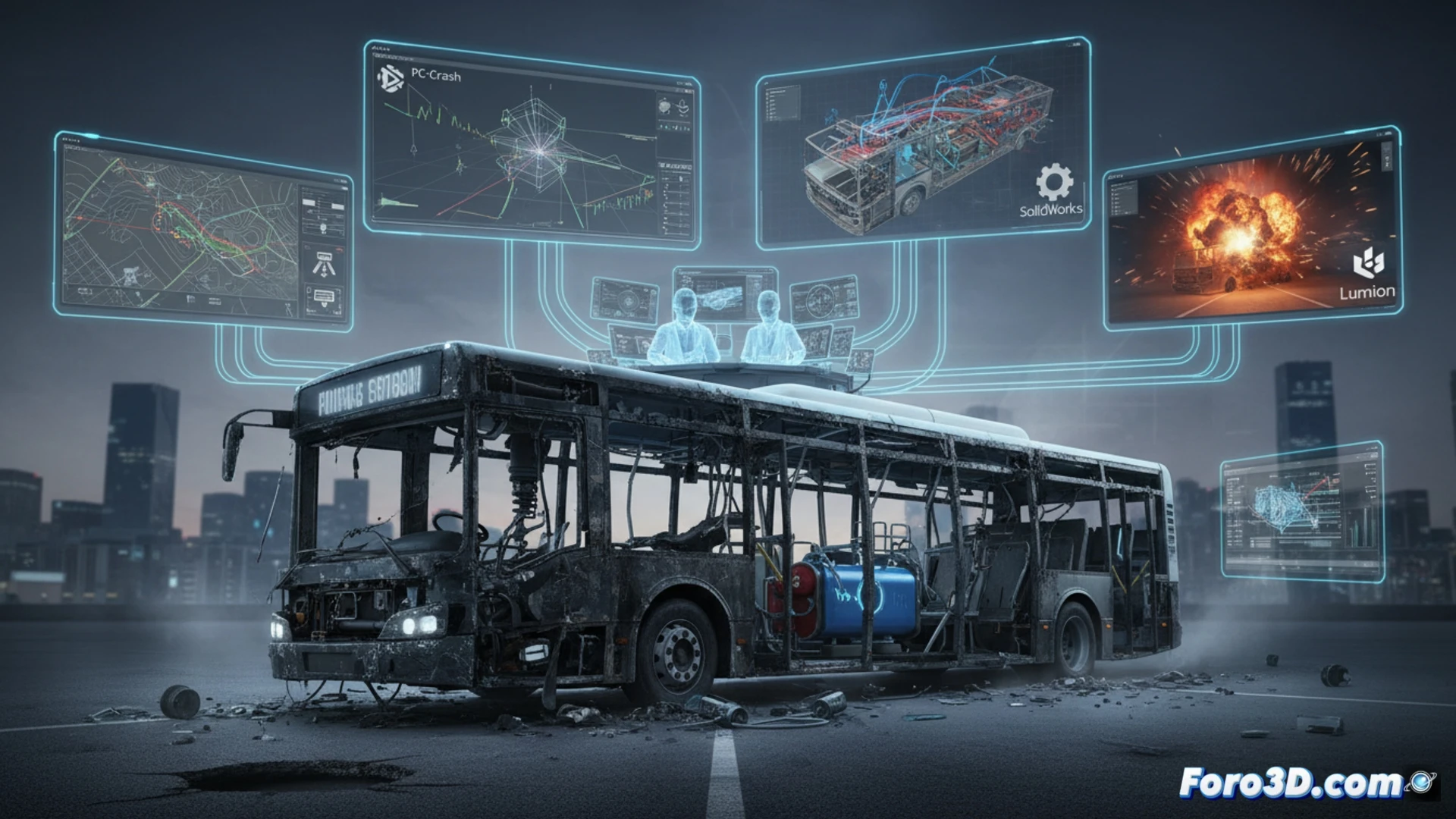
Dynamic reconstruction and forensic diagramming of the incident 🚍
The process begins with PC-Crash, where the bus trajectory and the exact moment of impact against the pothole are modeled. This software allows recreating the vehicle dynamics and calculating the forces applied to the chassis. Then, FARO Zone 3D is used to diagram the scene: laser scan data from the incident site is imported, and the hydrogen cells are precisely located on the frame. This combination establishes the correlation between the impact point and the possible deformation of the gas tank. FARO's millimeter precision is crucial to not miss any detail in the accident geometry.
Mechanical validation and visualization of structural failure 🔧
With the deformation data, SolidWorks performs an assembly analysis to evaluate the integrity of the fuel cell supports. The impact load is simulated, and stress points that could have fractured the hydrogen valves or pipes are identified. Finally, Lumion renders a forensic animation showing the accident sequence, from the pothole to the explosion. This visualization not only serves for the expert report but also allows investigators to present the evidence clearly in a technical trial.
How the 3D forensic pipeline ensures traceability and evidentiary validity of data during the reconstruction of a hydrogen autonomous bus explosion.
(PS: In the forensic pipeline, the most important thing is not to mix the evidence with the reference models... or you'll end up with a ghost in the scene.)