3D technology does not seek to replace the painter's stroke, but rather to offer them tools to plan complex compositions or study light without staining a canvas. A clear example is scanning a real sculpture to then paint it digitally from all angles, later transferring that information to the canvas.
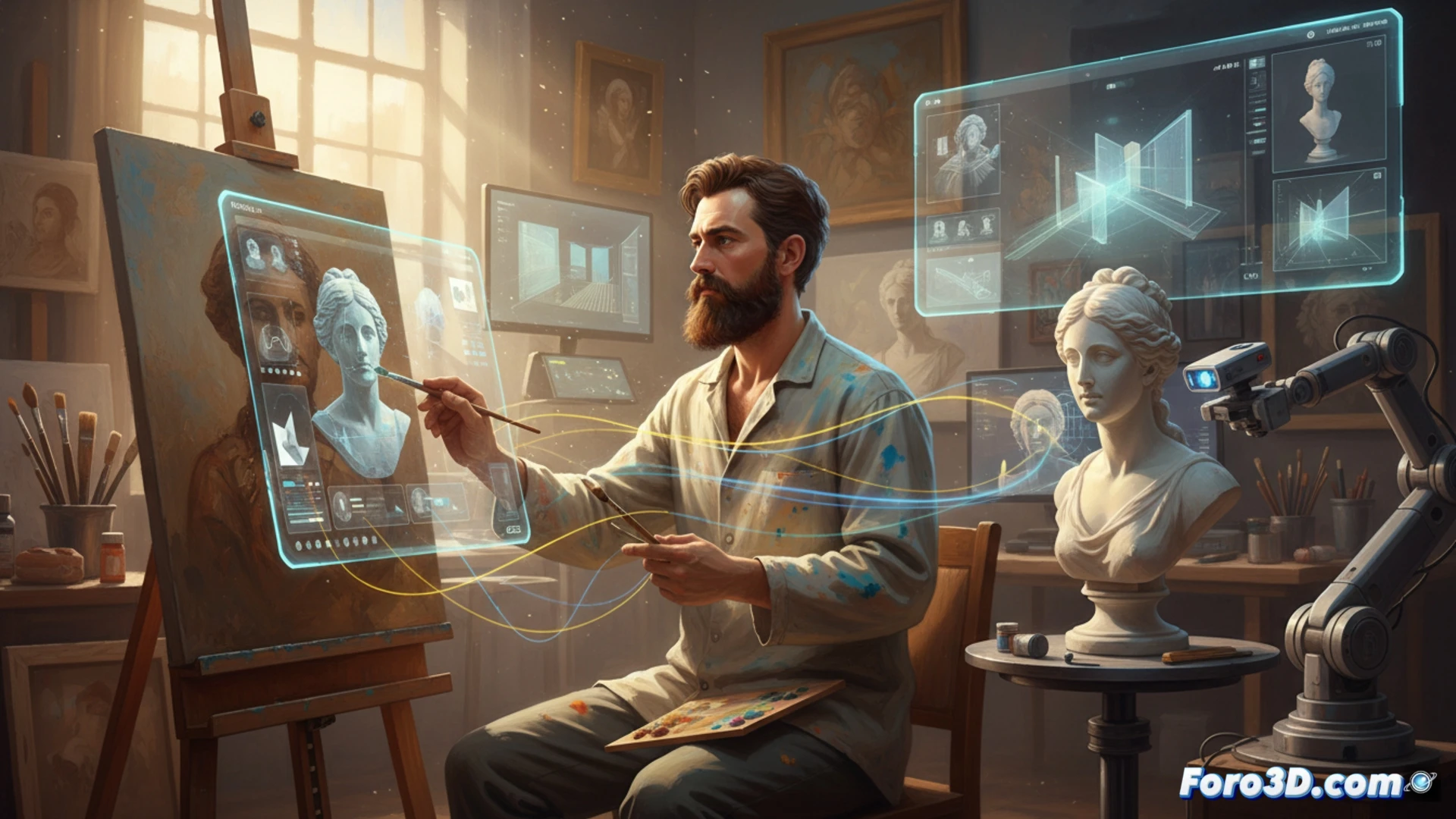
Virtual modeling and exact reference for the artist 🎨
Programs like Blender or ZBrush allow creating 3D models of still lifes, figures, or imaginary landscapes. The painter adjusts the virtual lighting, rotates the object, and studies the shadows before making the first brushstroke. Substance Painter is also used to preview textures on the 3D model, saving hours of later corrections on the physical support.
When the easel plugs into the power outlet ⚡
Some purists say using 3D is cheating, but surely those same people cried when oil paint in tubes was invented. Now, instead of spending three weeks drawing a hand that looks like a knot, you open the 3D model, rotate the camera, and that's it. Technology doesn't paint for you, but at least it saves you from having to justify why your still life looks like a traffic accident.