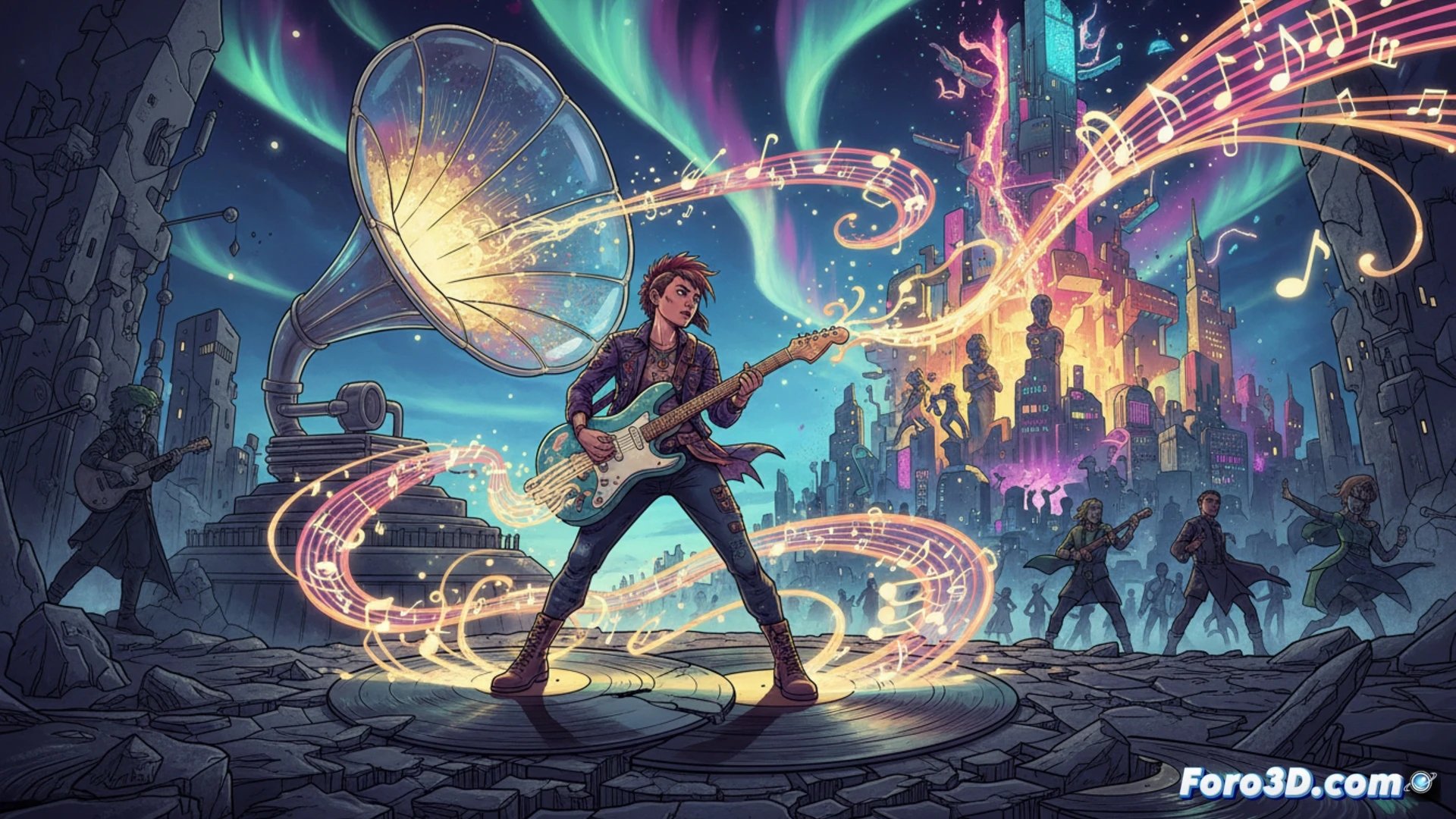
In the universe of Kieron Gillen and Jamie McKelvie, music is not just art; it is a tangible force. Phonogram introduces us to the Phonomancers, individuals capable of channeling the energy of specific songs and albums to cast spells, manipulate emotions, and cross dimensions. Far from being mere fantasy, this premise functions as a powerful metaphor for the transformative power that art exerts over society, especially in the context of British music culture, where a simple riff can define a generation.
Pop design and aesthetics as a tool for social criticism 🎨
McKelvie's graphic line is a visual manifesto. His characters, with a pop and modern aesthetic, not only wear the fashion of the indie scene but embody the ideology of a movement. Each panel is composed with the precision of a concert poster, using flat colors and clean compositions reminiscent of contemporary digital graphic design. This visual clarity is no coincidence: it allows the narrative to directly critique cultural consumerism and nostalgia, showing how digital activism and subcultures can appropriate the magic of music to generate real change, challenging the status quo from the aesthetic itself.
Magic as a driver of cultural activism ✨
Phonogram transcends the comic to become a manual of artistic resistance. By equating an album with a spell, the work suggests that art is the most powerful tool for social transformation. In the digital age, where content goes viral, this premise resonates strongly. The comic reminds us that true cultural activism not only denounces but creates alternative realities, using the magic of music and design to inspire, connect, and subvert the established order.
How can a work like Phonogram, which explores the magical power of music, inspire new forms of digital activism where sonic aesthetics become a tool for cultural change?
(PS: pixels also have rights... or at least that's what my latest render says)