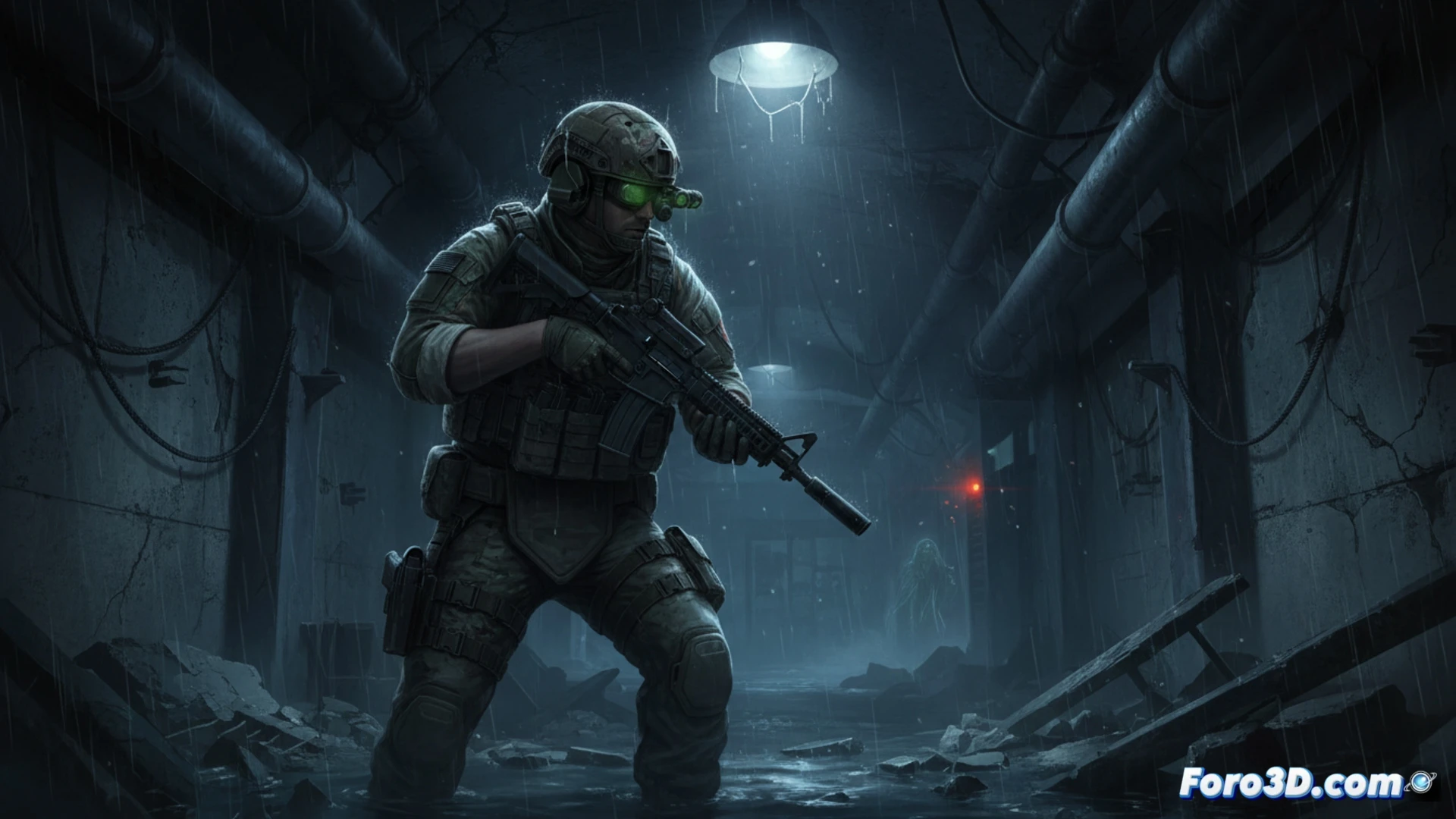
Phantom Line is shaping up to be a paranormal tactical shooter that bets on extreme realism in its visual assets. Developed in Unreal Engine 5, the title seeks to immerse the player in dark and claustrophobic environments where volumetric lighting and the detail of military uniforms take center stage. To achieve this level of fidelity, the team has implemented a pipeline that combines ZBrush and Marvelous Designer, key tools in the creation of characters and clothing. 🎯
Modeling Pipeline: From Marvelous Designer to UE5 🧵
The process of creating military uniforms in Phantom Line begins in Marvelous Designer, where the fabric and folds of each garment are physically simulated. This software allows adjusting the drape of clothing, pockets, and tactical gear straps with a realism that would be difficult to achieve through manual sculpting. Once the simulation is approved, the patterns are exported to ZBrush to add high-frequency details, such as seams, wear, and dirt, as well as to integrate the gear with the character's body. Finally, the assets are imported into Unreal Engine 5, where volumetric lighting and the Lumen system work together to render soft shadows and reflections on fabrics, enhancing the oppressive atmosphere of the indoor environments.
Volumetric Lighting as a Narrative Engine 💡
The decision to prioritize dark interiors is no coincidence. Phantom Line uses UE5's volumetric lighting not only as a technical achievement but as a level design tool to conceal threats and direct the player's attention. The combination of dynamic fog, shadows cast by point light sources, and the reflectance of military uniforms creates a layer of immersion that reinforces the tension inherent to the genre. For developers, mastering this balance between realistic rendering and gameplay is the true challenge, and Phantom Line appears to be taking solid steps in that direction.
In Phantom Line, by integrating ZBrush and Marvelous Designer workflows into Unreal Engine 5, what specific mesh optimization and fabric simulation techniques do they employ to maintain tactical realism without sacrificing real-time performance?
(PS: 90% of development time is polishing, the other 90% is fixing bugs)