The release of Phantom Fury has reignited the debate on how to update the aesthetic of 90s FPS games without losing their essence. Developed in Unreal Engine 4, the title achieves a unique balance: it retains the vibrant palette and low-resolution textures characteristic of the genre, but incorporates cutting-edge physics and extreme interactivity in the scenarios. This technical analysis breaks down the tools and decisions that enable this evolution, offering a roadmap for indie developers looking to emulate this style.
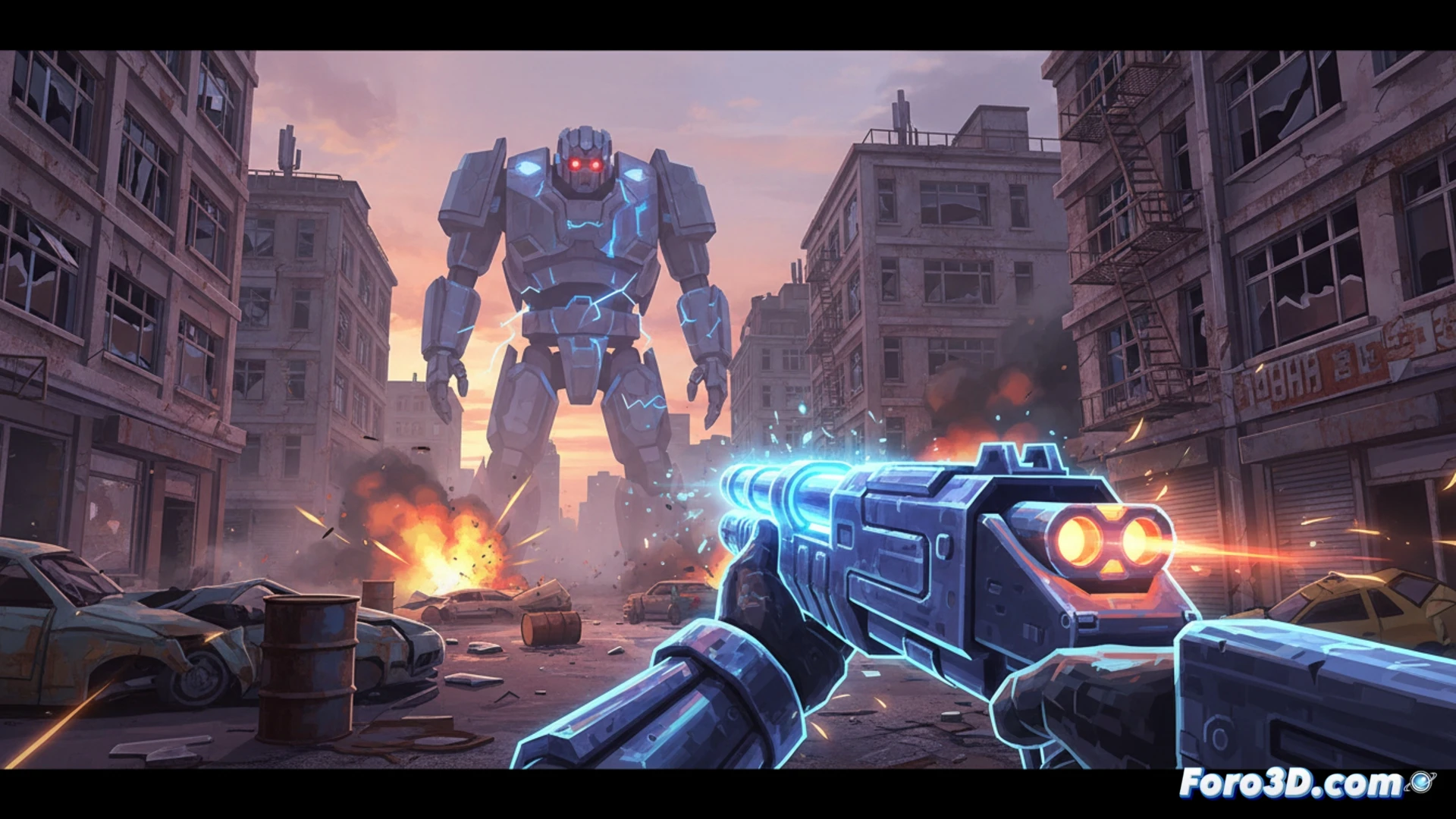
Technical Pipeline: From Blender to Unreal Engine 4 🛠️
The secret of Phantom Fury lies in a hybrid workflow. The 3D models are sculpted in Blender with detailed geometry, but the textures are painted with intentionally low resolution to evoke the 90s chipset. When imported into Unreal Engine 4, materials that simulate vertex lighting are applied, and anisotropic filters are disabled to maintain pixelated edges. For special effects (particles, weapon sprites, and explosions), the team uses Aseprite, creating frame-by-frame animations that are then integrated as flipbooks into the engine. The key is that advanced physics (environment destruction, interactive objects) operate on this retro base, generating a visual contrast that the player perceives as familiar yet surprisingly modern.
Lessons for Indies: How to Replicate the Formula 💡
For developers wanting to emulate this evolved Boomer Shooter, the main advice is to prioritize visual consistency over graphical fidelity. It's not about using 4K textures, but ensuring every element (model, light, particle) respects the same screen resolution and limited palette. Phantom Fury demonstrates that Unreal Engine 4 can render low-resolution assets without them looking sloppy if subtle post-process effects are applied, such as a slight bloom or color grading inspired by 256-color palettes. Additionally, using Blender for modeling allows full control over topology, while Aseprite ensures sprites maintain the pixelated aesthetic without scaling artifacts. Extreme interactivity is the final hook: the more objects that can be broken or moved, the more justified the use of a modern engine becomes.
In Phantom Fury, how does Unreal Engine 4 balance dynamic lighting and volumetric effects to evoke the boomer shooter aesthetic without falling into the modern realism that breaks the 90s arcade immersion?
(PS: optimizing for mobile is like trying to fit an elephant into a Mini Cooper)