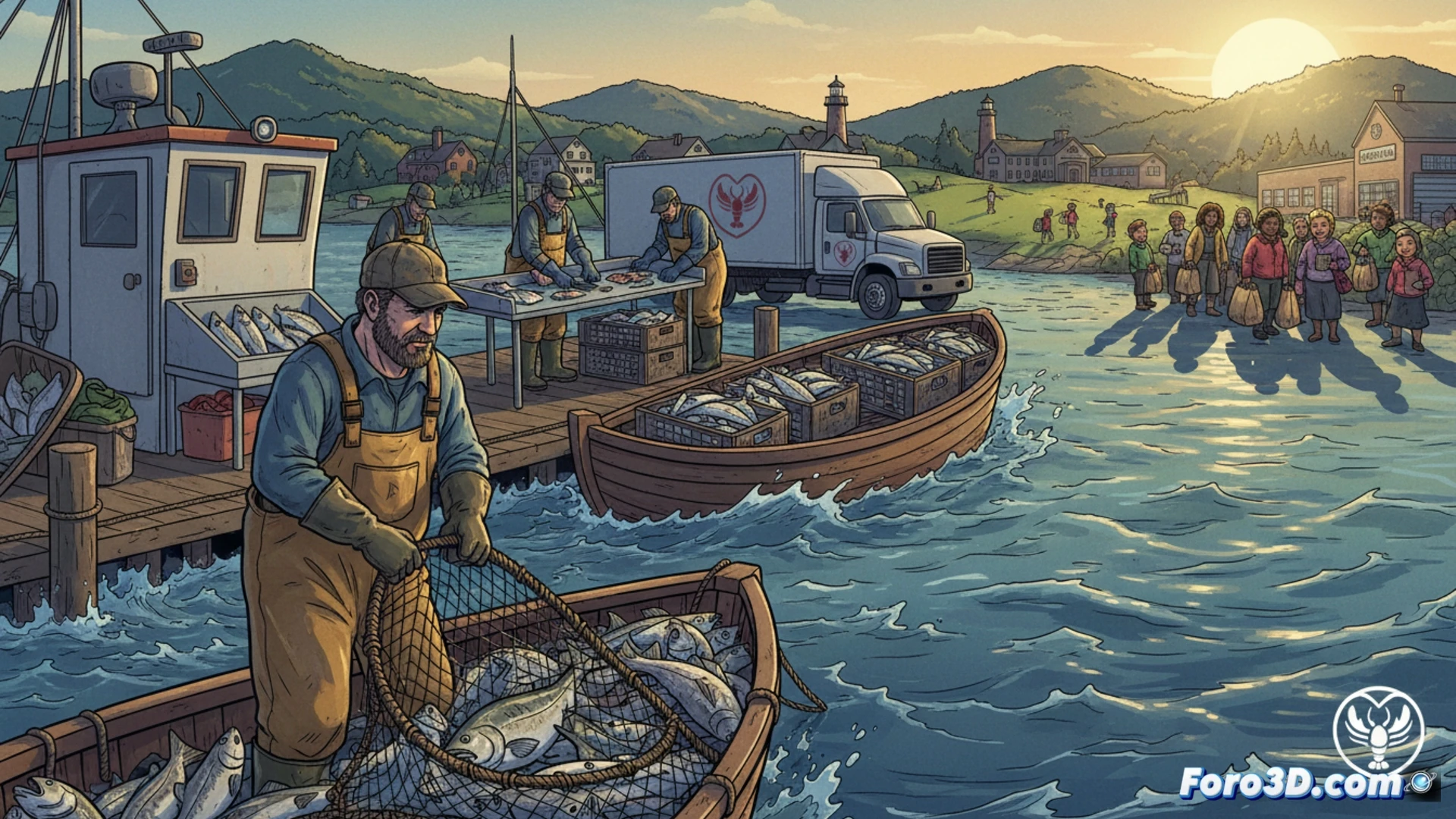
Born in 2020, the Fishermen Feeding Mainers program turns crisis into opportunity. With fish prices at rock bottom and fuel costs rising, this initiative buys local catch, processes it, and donates frozen fillets to schools and food banks. To date, it has mobilized over $4 million to process 1.3 million pounds of fish, sustaining fishermen and feeding communities.
Cold Logistics: The Chain That Doesn't Break 🧊
The program's key lies in its processing and freezing infrastructure. Fish is filleted and frozen quickly after unloading, using industrial cold equipment to maintain quality without preservatives. Distribution relies on a network of refrigerators and insulated trucks connecting ports with school pantries and food banks. This logistical model prevents waste and ensures the product arrives in optimal condition, optimizing routes and cold storage.
Fish That Travels Instead of Sinking at the Auction 🐟
While economists debate supply chains, in Maine they have solved the problem with a freezer and goodwill. Fishermen, who once saw their work go to waste, now deliver catches that end up on a schoolchild's table. Ironically, fish, which used to be a luxury for a few, is now given away like bread. Perhaps capitalism should take notes from this recipe: buy, freeze, and donate.